Arsenal Best Attackers Ever: No2 – Our Top Scorer Six Seasons in a Row

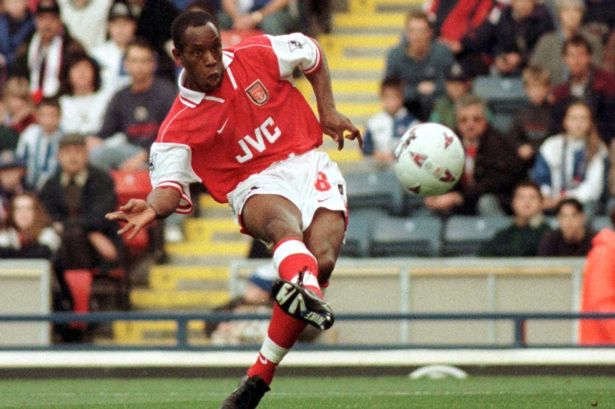
Arsenal’s Century Club – Ian Wright – Wright – Wright
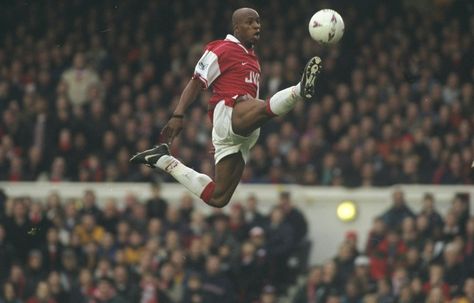
ian wright 8 (1)

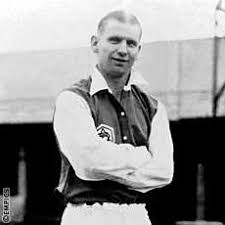
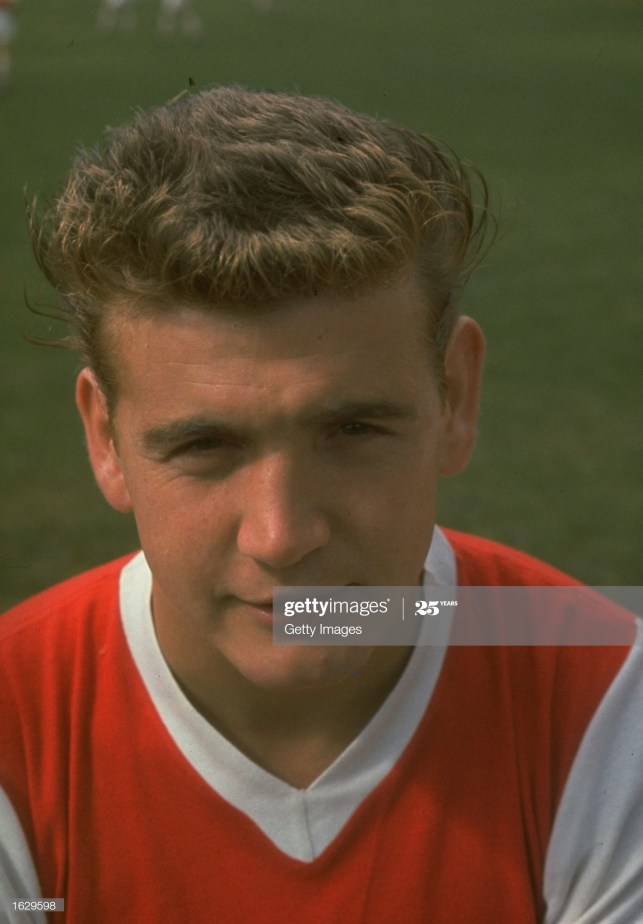
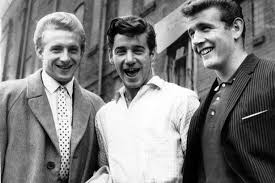
Ian Edward Wright, MBE (born 3 November 1963) was born in Woolwich, London.

Wright’s father absconded and left his mother Nesta to raise her family in a one-bedroom house in Brockley, South London. Ian said “That house wasn’t a good place for me, which is probably why I would stay outside kicking a tennis ball against a brick wall for hours on end,” He was bullied by an older step-brother, but it was his step-father’s cruelty which caused him most pain. “One of the few things my brother and I looked forward to in the house was Match of the Day, and my step dad used to take that away from us – just because he could.”
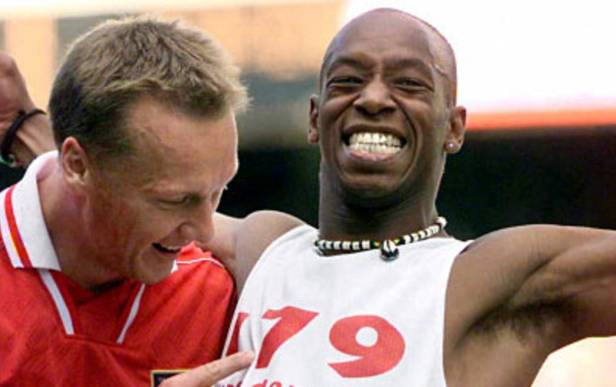
Ian wright 1 (1)

Wright’s primary school teacher Sydney Pigden taught him to read and write and made him the register and milk monitor. Tony Davis and Harold Palmer, who ran a local football team Ten-Em-Bee used pick him up at his house and drive him directly to training in an effort to keep him focused and out of trouble with the police. However in 1982, at 19 years old, he ended up in Chelmsford Prison for two weeks for non-payment of driving fines.

Despite having had trials at Southend United and Brighton during his teens, he was unable to attract sufficient interest to win a professional contract offer. Reverting to playing for amateur and non-league teams, he was left disillusioned about his chances of a career as a professional footballer.

But he eventually overcame his deprived childhood, his abusive step-father and a spell in prison to become a professional footballer relatively late in life. A Crystal Palace talent scout, Peter Prentice, happened to see Wright playing for Dulwich Hamlet and invited him to have a trial at Selhurst Park. “It was only a three-month trial but I’d done it: I was able to call myself a professional footballer,” Wright said. “After nearly 11 years of rejection, bullying, prison and all sorts of nonsense, and I had finally gotten my dream.”

Having impressed then-manager Steve Coppell, he signed professional terms for Crystal Palace in August 1985, just three months short of his 22nd birthday. He quickly made his mark in his first season, scoring nine goals to finish as Palace’s second-highest scorer. When Mark Bright arrived on the Palace scene the following year the duo soon established a successful striking partnership and it was largely their goals which took the club to top flight via the playoffs in 1989. Ian was particularly instrumental that season, scoring 24 goals in the Second Division and a grand total of 33 in all competitions.

An ankle injury reduced his initial impact in the First Division. However, after recovering from the injury he made a dramatic appearance as a ‘super-sub’, in the 1990 FA Cup Final against Manchester United. He equalised for Palace a few minutes after coming onto the field forcing extra time, then putting them ahead in extra time. The eventual score was 3–3, but Palace lost the replay 1–0.

With attention-grabbing goals in the league and in the 3-3 FA Cup Final draw against Manchester United in 1990, it was little surprise when Wright gained the attention of bigger clubs. Arsenal paid a club record £2.5 million for the striker in 1991. At the time Arsenal were reigning champions and there were question marks over the necessity of the signing: Alan Smith, Kevin Campbell, Paul Merson and Anders Limpar were already among the clubs’ ranks

He scored on his debut against Leicester City in a League Cup tie, and then scored a hat-trick on his League debut against Southampton. He won the Golden Boot in his first season by scoring 29 league goals, five of which were for Palace, and 31 in all competitions. He scored a hat-trick in the final game of the season against Southampton; his third goal being the last ever scored in the old First Division.

 He went on to be Arsenal’s top scorer for six seasons in a row. He played a major part in the club’s success during the 1990s, winning an FA Cup and League Cup double in 1993; he scored in both the FA Cup Final and the replay against Sheffield Wednesday. Ian also helped Arsenal reach the 1994 UEFA Cup Winners’ Cup Final, although he was suspended for the final in which Arsenal beat Parma 1–0.
ian wright 6 (1)

The period that followed proved to be a difficult time for both Ian and Arsenal, manager George Graham was dismissed over illegal payments, and under caretaker Stewart Houston they could only manage a 12th place finish in the league. The arrival of Bruce Rioch heralded a bleaker time; the two did not get on and eventually Wright handed in a transfer request, which he later retracted. The arrival of Dennis Bergkamp heralded a brief but fruitful striking partnership, and in their first season playing together they helped Arsenal finish fifth in the league and qualify for the UEFA Cup. They also reached the Coca-Cola Cup semi-finals, where they went out on away goals to eventual winners Aston Villa.

By the time Arsène Wenger had arrived at Arsenal in September 1996, Ian was nearly 33. Despite his age, he continued to score regularly (being the second highest Premier League scorer in 1996–97 with 23 goals), and on 13 September 1997 he broke Cliff Bastin’s Arsenal goal scoring record with a hat-trick against Bolton Wanderers. His final goal at Highbury came on 4 October 1997 against Barnsley and was his 300th career goal for both Crystal Palace and Arsenal. He scored his final goal for Arsenal on 6 January 1998 in a League Cup quarter-final victory against West Ham United.

While he was still a professional footballer at Arsenal, he published his autobiography, Mr Wright. In 1993, he wrote and released a single called “Do The Right Thing”. The song was co-written and produced by Chris Lowe (of Pet Shop Boys) and reached #43 the UK Singles Chart.

In total he registered 185 goals for Arsenal; a record that has since been passed only by fellow Hall of Fame and Arsenal legend, Thierry Henry. On 15 July 2008, he finished 4th in ‘50 Greatest Gunners’ listed on the Arsenal website.

Wright went on to play for West Ham, Nottingham Forest, Celtic and finally Burnley (helping them to win promotion) before his retirement in 2000. Since retirement Wright has made a career in punditry and television work.

Clubs: Crystal Palace, Arsenal, West Ham, Nottingham Forest, Burnley
Caps: 33, 9 goals
Honours: 1 Premier League, 2 FA Cups, 1 League Cup, 1 Cup Winners’ Cup

Shortly after his retirement from playing in 2000, Ian was awarded the MBE for his services to football.

Arsenal’s Century Club
# Player Years Games ** Goals GPG
2 Ian Wright 1991-98 288 143 185 0.64
3 Jimmy Brain 1923-31 232 144 140 0.60
4 Jack Lambert 1923-33 161 149 109 0.68
5 Reg Lewis 1935-53 176 152 118 0.67
6 Joe Baker 1962-66 156 152 100 0.64
7 David Jack 1928-34 208 156 124 0.60
8 Doug Lishman 1948-56 244 163 137 0.56
9 David Herd 1954-61 180 165 107 0.59
10 Cliff Bastin 1929-46 396 174 178 0.45
11 Thierry Henry 1999-07 377 181 226 0.60
12 Olivier Giroud 2012-18 253 237 105 0.42
13 RVP 2004-12 278 238 132 0.47
14 Alan Smith 1987-95 347 251 115 0.33
15 Frank Stapleton 1972-81 300 276 108 0.36
16 Denis Bergkamp 1995-06 423 296 120 0.28
17 John Radford 1962-76 481 306 149 0.31
18 Joe Hulme 1926-38 374 307 125 0.33
19 Theo Walcott 2005-18 397 370 108 0.27
** Games played to reach 100 goals.

Ian scored his 100th goal for Arsenal against Crystal Palace at Highbury on October 1st, 1994.

GunnerN5


Arsenal Best Attackers Ever: No3 – Shared Record Hattrick Scorer/ First to Leave for Spurs

Arsenal’s Century Club – Jimmy Brain

Jimmy Brain 4 (1) 

Well here we are – we have now reached the top 3 in Arsenal’s Century Club.

James (Jimmy) Brain was born in Bristol on 11th September 1900. He played in local football in Wales before joining Arsenal at the age of 23 in August 1923. He did not make his league debut until the following season he played against Tottenham Hotspur on 25th October 1924 and scored the only goal of the game (what a way to make yourself known to Arsenal fans). During the 1924-25 season he scored 14 goals in 31 games, including a hat-trick against Burnley and four in a game against Leeds United.

Arsenal manager Leslie Knighton was sacked at the end of the 1924-25 season and Herbert Chapman, the manager of Huddersfield Town, was persuaded to join Arsenal.

The first man that Herbert Chapman signed was Charlie Buchan, who had scored 209 goals in 380 games for Sunderland. Chapman also purchased Herbert Roberts, Joe Hume and Cliff Bastin. In the 1925-26 season Arsenal finished in second-place to Huddersfield Town. The top scorer was Jimmy Brain with 37 goals in 47 games. This included four hat-tricks against Everton (2), Cardiff City and Bury.

The Arsenal chairman, Henry Norris did not allow Chapman to buy new players to strengthen his team and in the 1926-27 season Arsenal finished in 11th position. Brain scored 34 goals in 44 games that season which included a hat-trick against Cardiff City and scored four against Sheffield Wednesday and Burnley. In the 1927-28 season Brain scored 29 goals in 44 games. This included two hat-tricks against Derby County and Liverpool. Arsenal finished 9th in 1928-29 and Jimmy scored 22 goals in 42 games.

Jimmy Brain 1 (1)

Herbert Chapman gradually adapted the “WM” formation that had originally been suggested by Charlie Buchan. Chapman used his full-backs to mark the wingers (that job had previously been done by the wing-halves). He also developed what became known as the counter-attacking game. This relied on the passing ability of Alex James and goal scoring forwards like Jimmy Brain, David Jack, Joe Hume, Cliff Bastin, and Jack Lambert. Chapman also built up a good defence that included players such as Bob John, Eddie Hapgood, Herbert Roberts, Alf Baker, Tom Parker and George Male.

arsenal-badge


Jimmy’s form dropped off in 1929-30, and he competed for his position with Jack Lambert, David Jack and Dave Halliday, meaning he only played six league matches in that season. He missed the Gunners’ 1930 Cup final win over Huddersfield Town; David Jack and Jack Lambert led the line that day. However, the following season, 1930-31, Jimmy finally won a medal as Arsenal won their first ever First Division Championship with a record 66 points. The Gunners only lost four games that season. Jack Lambert was top-scorer with 38 goals. Brain scored 4 goals in 18 games and therefore qualified for a league championship medal. His final appearance in an Arsenal shirt was a 2-0 win over Sheffield Wednesday on 21 March 1931.

Crossing the North London divide between Arsenal and Tottenham can be one of the most inflammatory actions in English football. Sol Campbell, Emmanuel Adebayor, and William Gallas have all done it in recent times, all feeling the wrath of both sides supporters. But who was the first to do it?

The man with this dubious badge of honour is none other than Jimmy Brain. In September 1931 Brain was transferred to Tottenham Hotspur. Over the next three years he scored 10 goals in 45 games.

He played his final years out at Swansea Town and Bristol City. After retiring as a player, he managed first King’s Lynn and then Cheltenham Town from 1939 until 1948, after which he retired completely from football.

Arsenal’s Century Club
# Player Years Games ** Goals GPG
3 Jimmy Brain 1923-31 232 144 140 0.60
4 Jack Lambert 1923-33 161 149 109 0.68
5 Reg Lewis 1935-53 176 152 118 0.67
6 Joe Baker 1962-66 156 152 100 0.64
7 David Jack 1928-34 208 156 124 0.60
8 Doug Lishman 1948-56 244 163 137 0.56
9 David Herd 1954-61 180 165 107 0.59
10 Cliff Bastin 1929-46 396 174 178 0.45
11 Thierry Henry 1999-07 377 181 226 0.60
12 Olivier Giroud 2012-18 253 237 105 0.42
13 RVP 2004-12 278 238 132 0.47
14 Alan Smith 1987-95 347 251 115 0.33
15 Frank Stapleton 1972-81 300 276 108 0.36
16 Denis Bergkamp 1995-06 423 296 120 0.28
17 John Radford 1962-76 481 306 149 0.31
18 Joe Hulme 1926-38 374 307 125 0.33
19 Theo Walcott 2005-18 397 370 108 0.27
** Games played to reach 100 goals.

In total, he scored 140 goals in 232 appearances for Arsenal, making him the Gunners’ joint-fifth top scorer of all time. However, he never played for England; he managed to secure a trial for the national team but was never actually selected.

Jimmy Brain and Jack Lambert share the record of each scoring 12 hat tricks for Arsenal.

He scored his 100th goal against Sheffield United on January 7th, 1928.

He died in 1971, at the age of 71.

GunnerN5

Yippie! Finally Arsenal Have Again a Midfielder Who Can Score From Outside the Box

Football is a simple game. Score one more goal than the opponent and you take all the points. It is also a no-brainer to state that normally most goals are scored by the attack, followed by midfield and then defence.

joe w and marti new

So long-gone are the days of perfect harmony between midfield and attack of the first-third and second-third periods of the Wenger years. Goals from Henry and Bergkamp in attack and Vieira, Ljunberg and Pires in midfield just gave us the perfect balance. Then there was the period of Nasri, Cesc, Rosicky and Hleb adding goals to the attackers’ successes.

After that we started to struggle with goals from midfield positions, and these days we seldom get one from them.

Instead we rely heavily on our attackers and in particular on Aubameyang. Going forward, Arteta will have to re-establish that midfield/attack balance again… But who is going to score the goals from the central area?

Xhaka is no longer allowed to pull the trigger from well outside the box these days; Torreira seldom scores; Ozil has always been more the assister than the goal-scorer and now hardly ever scores; Guendouzi lacks power behind his shots but he is still young; Ceballos can dance with the ball but also misses that much-needed goal-killer-instinct. It is quite a dire story.

We had a midfielder who scored regularly – if and when he was fit and back to his best – in Ramsey, but he chose the zebra outfit to sit on the Turin-bench most of the time. Surprise, surprise there are now rumours of the Old Lady trying to make some money out of him by flogging the Welsh wizard back to the PL. You’ve got to laugh.

I really like it, though, that our young all-round wing-players – whether it is in defence, midfield or attack – Saka, Nelson and Martinelli have scored goals in their first half-proper season playing in the mighty red and white colours. They are in reality more attackers than midfielders but these areas are getting much closer to each other in the modern game, so we should be encouraged.

Yet we also need goals from the central midfield positions, and there is a player who is looking very promising: Super Joe(y) Willock. The boy (still to become 21) has all you wish for in a midfielder, it seems. I love his ability to dribble with the ball and his passing; then there is good height (186cm), athleticism and a strong central/upper core when running and combatting the oppositions’ midfielders.

But there is more. Not only does Joe score goals inside the box – regularly being at the right place and right time – he also likes to score goals from outside the box, which is such a rarity at Arsenal these days. He scored one in each half he played in during the recent friendlies; and the way he took his goals, one with his left foot and one with his right one, has really got me excited again.

I know, I know it is early days but maybe this time it will all come good. After so many recent desillusions – Diaby, Wilshere, Ramsey, etc – let’s have all our digits crossed that this one WILLock come good!

By TotalArsenal.

Arsenal Best Attackers Ever: No4 – Slow Starter But Then He Got Going!

Arsenal’s Century Club – Jack Lambert

Jack Lambert 3 (1) 

Born in Greasbrough near Rotherham, Yorkshire, Lambert was turned down by Sheffield Wednesday after a trial in 1921, so he started his career playing for Rotherham County in 1922. He soon made a move to Leeds United, but spent three years there with little success. He finally came to prominence after becoming a regular goal scorer for Doncaster Rovers, joining the side in January 1925.

Playing in Yorkshire, he had attracted the attention of Herbert Chapman when the latter was manager of Huddersfield Town. Chapman became Arsenal manager in 1925 and needing a quality centre-forward, he signed Jack for £2,000 in June 1926. Lambert initially struggled to get into the first-team and he did not make his league debut until the beginning of the following season against Bolton Wanderers on 6th September 1926.

Lambert scored only one goal in 16 appearances that season and was not selected for the FA Cup Final against Cardiff City. Over the next two seasons he was reserve centre-forward to Jimmy Brain and only scored 4 goals in 22 appearances. 

When he appeared in the first-team he was often barracked by the crowd. Herbert Chapman was furious and proposed that barrackers should be thrown out of the ground if they did not respond to an appeal for fairness over the loud-speaker. 

He became a regular for the club towards the end of the 1929-30 season; scoring 18 times in only 20 league appearances. The following season (1930-31) he was even more successful, scoring 38 goals in just 34 games in the League, a club record at the time. Arsenal won their first ever First Division Championship with a record 66 points. The Gunners only lost four games that season. Jack Lambert was top-scorer with 38 goals. This included seven hat-tricks against Middlesbrough (home and away), Grimsby Town, Birmingham City, Bolton Wanderers, Leicester City and Sunderland.

Jack Lambert 5 (1)

In the 1932-33 season Arsenal won the First Division by four points. Lambert only played in 12 games that season but he still scored 14 goals. This included five in a 9-2 win over Sheffield United. By now Jack was over 30 and only a bit-part player (Ernie Coleman having led the front line through most of 1932-33), and the signing of Jimmy Dunne in September 1933 forced him out of the side; his last game came on 13 September 1933 against West Bromwich Albion.

Herbert Chapman seemed to have lost confidence in Jack and frustrated by his lack of first-team opportunities, he agreed to be transferred to Fulham for £2,500 in October 1933. He only played for two more seasons before retiring in 1935. The following year he became coach of Margate (who at the time were Arsenal’s “nursery” club) and returned to Arsenal in 1938 as a coach of the club’s reserve side.

Overall he scored 109 goals in 161 games for the Gunners, a very high ratio of .68 goals per game, but it wasn’t enough for him ever to be selected for England.

Jack scored his 100th goal for Arsenal on Guy Fawkes Day 1932 against Wolves at Molineux Stadium.

Arsenal’s Century Club
# Player Years Games ** Goals GPG
4 Jack Lambert 1923-33 161 149 109 0.68
5 Reg Lewis 1935-53 176 152 118 0.67
6 Joe Baker 1962-66 156 152 100 0.64
7 David Jack 1928-34 208 156 124 0.60
8 Doug Lishman 1948-56 244 163 137 0.56
9 David Herd 1954-61 180 165 107 0.59
10 Cliff Bastin 1929-46 396 174 178 0.45
11 Thierry Henry 1999-07 377 181 226 0.60
12 Olivier Giroud 2012-18 253 237 105 0.42
13 RVP 2004-12 278 238 132 0.47
14 Alan Smith 1987-95 347 251 115 0.33
15 Frank Stapleton 1972-81 300 276 108 0.36
16 Denis Bergkamp 1995-06 423 296 120 0.28
17 John Radford 1962-76 481 306 149 0.31
18 Joe Hulme 1926-38 374 307 125 0.33
19 Theo Walcott 2005-18 397 370 108 0.27
** Games played to reach 100 goals.

Tragically, he died at the age of 38, killed in a car accident (during WW11) in Enfield, Middlesex.

GunnerN5

Arteta’s Revolution: AMN/ Eddie/ Nelson edging Xhaka/ Laca/ Pepe? 8 Observations Arsenal v Charlton

This morning PBarany wrote:

“The club website shows only the starting line-up. But based on the video highlights this is my take on the guys played yesterday:

Starting XI: Leno; Bellerin, Mustafi, David Luiz, Tierney; Guendouzi, Maitland-Niles; Nelson, Ozil, Aubameyang; Lacazette

2nd half XI: Martinez (assumed), Sokratis(!), Mari, Holding, Kolasinac, Xhaka, Ceballos, Willock, Martinelli, Pepe, Nketiah

Absentees: Macey (3rd keeper), Saka, Torreira, Soares (injured), Chambers (started light training)

The 2 goals in the first half were beautiful, but in the 2nd half we didn’t even concede a chance (worthy of showing among the highlights) and the boys scored 4. Even taking the opponent into consideration it was a promising display.”

Arsenal v Charlton Athletic: Friendly

I agree with PB that it was a promising display, even if we have only the highlights for analysis. The scoreline is more than respectable and the team looked sharp. What is interesting is the way we lined up in the first half. It looks like that was Arteta’s strongest-11, and it could be the Basque’s favourite team to help him beat his former master on 17 June.

Let’s have a closer look at the first half starting eleven:

  1. Leno in goal is no surprise, but the CB pairing of Mustafi-Luiz seems to indicate that Arteta will continue with them when the season recommences. Sokratis, Mari and Holding may be seen as back up CBs, as they are all fit but did not start. If anything will get JW1 back on the blog, it will be Arteta’s inclusion of his beloved Mustafi 😉 Key is here that Arteta wants mobility in defence and players who can play the ball out from the back. Both Mustafi and Luiz have defensive frailties and their concentration levels is their worst enemy, but they are dynamic passers of the ball, and this may swing it for them at the moment.
  2. The thing I have been looking forward from the start of the season, which really feels an eternity away, is both Tierney and Bellerin in the full backs / wing backs positions. Both are very much Arteta-Ball players and to see them start ahead of other options is promising. These positions are so important to get right in the modern game, and we can only hope that Arteta will get this right now (and is lucky with injuries from now on).
  3. The biggest surprise is AMN in midfield. Xhaka did not start but was fit enough to play in the second half. Is this the moment we see Ainsley move into his beloved central midfield position? The other surprise was Guendouzi starting ahead of Ceballos and Willock and the (injured?) Torreira. So this left us with the combo of Guendo-AMN in midfield. There is high hopes for both players but can we really see them played in the heart of midfield v Guardiola’s globetrotters? I am a big fan of both Xhaka and Torreira but also realise that this duo has not been working that well together. Arteta will need to do something to make us more effective in this pivotal area. So this may be it!
  4. We need more goals from the deeper (D)M positions and AMN got himself into promising positions a few times from what I could see. Unfortunately, he did not convert but at least he was in the right place at the right time which is half the job. Joe Willock had a strong half from what I could see, however, with an assist and a goal, but I assume that was from the nr10 position rather than from the deeper midfield positions. But Arteta will have noticed how well Joe took his goal compared to the tamer efforts of AMN.
  5. Laca and Auba each scored and especially the former produced a beauty – together with Willock’s bullet in the top corner the pick of the bunch. It was good to see them hungry and sharp, and if Arteta can lift Laca up to his very best levels then we could finish the season strongly. Auba will always score but we all know that Laca is less prolific at times.
  6. Having said that, the biggest plus to take from this relatively tame friendly is of course Eddie’s three well-taken goals; and Arteta may now be in the luxury position of having real competition for the CF position between Laca and the academy graduate. A shift may be imminent.
  7. Nelson v Pepe. The promising graduate v the big buy from League1… Arteta went for the ball-tight Nelson in the first half and I must say I am not surprised. Pepe has underwhelmed until now, blowing hot and cold in each game he starts, and Arteta seems to prefer Nelson’s all-round footballing ability. It will be interesting to see who will get the preference for the remaining games this season..
  8. Finally, as per PB’s comment, we did not concede a goal and appeared to not have allowed Charlton many chances, perhaps even none in the second half. Keeping clean sheets or at least defending much better is of course also important going forward, and the team has to start somewhere if they want to turn things round…

By TotalArsenal. 

Arsenal Best Attackers Ever: No5 – One of Our Greatest with 392 Goals in 451 Games

Arsenal’s Century Club – Reg Lewis

Reg Lewis 5 (1)

Reginald (Reg) Lewis was born in Bilston on 7th March 1920. He played local football for Nunhead and Dulwich Hamlet Juniors before joining Arsenal as a professional in March 1937.

Lewis scored on his debut against Everton on 1st January 1938. He joined a team that included Cliff Bastin, Eddie Hapgood, George Male, Ted Drake, Leslie Jones, George Swindin, George Hunt, Bernard Joy, Alf Kirchen, Leslie Compton and Dennis Compton.

However, as Lewis was only 18 and Ted Drake was the first-team centre-forward, he was only given four games in the 1937-38 season. The following season he created a club record by scoring 43 goals in 31 games for the reserves. He also scored 7 goals in 15 first-team appearances.

In 1945 Lewis was a member of the British Army of the Rhine in Occupied Germany. He continued to play for Arsenal and shone as a natural goal scorer; although wartime appearances and goals are not officially counted, he scored 143 goals in 130 games, including four in the 1943 War Cup Southern Final, in a 7-1 demolition of Charlton Athletic. Towards the end of the war he served in the British Army of the Rhine in Occupied Germany, but returned to play for Arsenal once first-class football resumed in 1946. Although most of the Arsenal side of the 1930s were past their best by this time, Reg was still only 26 and he continued to be a regular in the first team throughout the remainder of the 1940s. He was the club’s top scorer in 1946-47 with 29 goals this included a hat-trick against Preston North End and four against Grimsby Town. Jeff Harris, the author of Arsenal Who’s Who, argues: “His ability and knack of scoring goals were attributed to his fine positional sense when finding space in the box as well as being cool, calm and collected.”

Reg Lewis 2 (1)

The following season (1947-48), he partnered new signing Ronnie Rooke and between them they scored 47 goals as Arsenal won the First Division title; however, Lewis suffered from a series of injuries that year but still scored 14 goals in 28 games.

In the first game I watched at Highbury on November 22nd 1947 – GN5 was fortunate to see Reg Lewis play. Also playing that day were – Jimmy Logie, Wally Barnes, Les Compton, Ronnie Rooke, Don Roper and Doug Lishman. Rooke and Logie both scored in a 2-0 win over Huddersfield).

Despite only playing 25 games in the 1948-49 season he still ended up as top scorer with 16 goals. In the 1949-50 season Lewis scored 19 goals in 31 games. He also scored both goals in Arsenal’s 2-0 victory over Liverpool in the 1950 FA Cup Final.

During the early 1950s, Lewis became constantly afflicted with injuries, and he made only 12 appearances in 1951-52 and none at all in 1952-53. In the close season of 1953, he retired from the game at the age of 33. After retiring he first ran a pub and then worked in insurance.

Reg Lewis 3 (1)

His tally of 118 in 176 first-team games puts him 13th in the all-time list but his total figure from 1935 to 1953 was a staggering 392 in 451 matches (an incredible .87 goals per game). His finest hour came in the 1950 FA Cup final, when he scored both goals in a 2-0 win over Liverpool.

Reg scored his 100th goal for Arsenal against Huddersfield, at their Leeds Road ground, on January 20, 1951.

Arsenal’s Century Club
# Player Years Games ** Goals GPG
5 Reg Lewis 1935-53 176 152 118 0.67
6 Joe Baker 1962-66 156 152 100 0.64
7 David Jack 1928-34 208 156 124 0.60
8 Doug Lishman 1948-56 244 163 137 0.56
9 David Herd 1954-61 180 165 107 0.59
10 Cliff Bastin 1929-46 396 174 178 0.45
11 Thierry Henry 1999-07 377 181 226 0.60
12 Olivier Giroud 2012-18 253 237 105 0.42
13 RVP 2004-12 278 238 132 0.47
14 Alan Smith 1987-95 347 251 115 0.33
15 Frank Stapleton 1972-81 300 276 108 0.36
16 Denis Bergkamp 1995-06 423 296 120 0.28
17 John Radford 1962-76 481 306 149 0.31
18 Joe Hulme 1926-38 374 307 125 0.33
19 Theo Walcott 2005-18 397 370 108 0.27
** Games played to reach 100 goals.

Reg Lewis passed away in his 77th year in1997.

GunnerN5

The PL season Starts Again on 17 June: Is This Right or Wrong?

Newhaven

Light philosophical thoughts from the Costa Del Forth. 

The club-season-football should have finished by now, but we all know that the invisible-to-the-naked-eye enemy that is killing hundreds of thousands of people across the world has made this football season very different from any others before. It looks like the PL will be recommenced despite hundreds of people still dying of Covid-19 in the UK alone on a daily basis. About 40000 people died in the UK alone until now. Must the show go on?

I am conflicted re the necessity of finishing off the season and the joy to be had from it.

The WSL will not finish its season and The Netherlands, Belgium, Scotland and France have decided to call it a day too. The PL is based on a mega-capitalist system that is foreign to building up fat for (unexpected yet severe) leaner times. It shows time and again that capitalism, with all its benefits and downsides during normal times, is incapable of dealing with a mega-crisis without asking for enormous financial injections by the much kept at a distance, and often undermined/underappreciated, national and international governments.

cropped-104683668_arsenalbadge2.jpg

The constant footie costs remain high, the income has plummeted and clubs have been making losses almost instantly. Apparently dozens of British clubs are at risk of going under in the next twelve months which would of course be a gigantic disaster. It is all about TV money but also about ticket sales, especially for Arsenal with apparently 40% of all players’ wages funded through loyal, paying Ashburton Grove spectators. By reconvening PL football TV money can flow back into the clubs so I get why everybody is keen to get going again, but it also saddens me that we cannot just cancel the season in respect for all those people killed by the virus and focus on the new season instead.

So here are some questions for you:

  1. Is it safe for the players and support staff, and for their families at home, to resume the competition on the 17th?
  2. How much are you looking forward to watching Arsenal again in a couple of weeks?
  3. Is football without spectators actually football?
  4. Does the show always need to go on?

Anti+Racism+training

Equality and Inclusion for All!

By TotalArsenal


Arsenal Best Attackers Ever: No6 – Even Better Goals Per Game Average Than TH14!

Arsenal’s Century Club – Joe Baker

Joe Baker 7 (1)

Joseph Henry Baker (17 July 1940 – 6 October 2003) was born in Woolton in Liverpool, England however he spent virtually his entire childhood growing up in Motherwell, Scotland. Joe Baker’s mother was Scottish. His father was also born in Woolton and was a sailor; while living in New York in 1938, Joe’s elder brother, Gerry, was born. Early on in the Second World War the family returned from the United States to their hometown Liverpool as Joe’s father George felt he had to enlist and do his bit to help with the war effort and follow the example of his four brothers who were all serving in the British navy.

Liverpool became a prime target for the Luftwaffe. After London it was the second most important port with the docks being heavily blitzed with 4,000 people losing their lives. Joe’s mother Lizzie wasn’t going to let her boys become victims and the family moved up to Wilshaw just outside Motherwell in Scotland to stay with Joe’s grandmother to escape the bombing when Joe was just six weeks old.

In 1944 George’s ship was blown up when returning home across the English Channel. Ironically it was a British mine that blew it up. George was one of the few survivors but was badly injured and had a lump of shrapnel in his stomach. He also lost his bladder and was constantly in and out of hospital over the next four years before finally succumbing to his injuries and losing his battle for life.

Joe, who was a centre forward spent a month on trial with Chelsea as a youngster, but was not signed. However he signed professional terms with Hibernian after playing junior football for local Coltness United, and was then farmed out to another junior team, Armadale Thistle. In his first season with Hibs, the 17-year-old Baker scored all four goals in Hibs’ 4–3 victory over city rivals Hearts in the quarter-final of the 1958 Scottish Cup. Baker played in the 1958 Scottish Cup Final, which Hibs lost 1–0 to Clyde. He also scored nine goals in a Scottish Cup tie against Peebles Rovers. Baker was Hibs’ top goal scorer for four consecutive seasons, scoring a club record 42 goals in 33 league games during the 1959–60 season. He scored 102 goals in just 117 league games and 159 goals in all competitions for the Edinburgh club.

Joe Baker 1 (1)

In 1961, Baker was transferred to Torino after the Hibs board refused to give him a £5 wage increase from his existing wage of £12 a week. Torino paid £75,000 for him and he shared a flat in the city with fellow new boy, Denis Law. He began well, scoring twice on his home debut, though his proudest achievement was definitely bagging the winner against Juventus in the Turin derby. It endeared him to fans, but his fondness for nightclubs brought unwanted attention from paparazzi and in one argument with a photographer, the snapper ended up in a Venetian lake.

Joe Baker 3 (1)

His time at the Italian club was short and almost ended in tragedy. Baker was involved in a serious car crash, which meant that he needed life-saving surgery and spent over a month on a drip feed. It was a generally unhappy spell as Baker did not like the press intrusion, which meant that he and team mate Denis Law spent most of their time in their Turin apartment.

Joe Baker car crash (1)

Baker recovered from his injuries and he returned to the UK in July 1962, joining Billy Wright’s Arsenal who, following a string of intense medical tests, paid a club record £70,000 for the 22-year-old. It was at Arsenal where he regained the prolific form which had initially earned him a move abroad. Strong, skilful and quick, Baker was deadly in the box and scored on his debut against Leyton Orient and finished as top scorer in all four of his seasons. Having been used to the tight marking of Italian defenders, all of a sudden he had space to play and he certainly made it count by scoring 100 goals in 156 games for the Gunners.

At 5ft 7in, he was a fearless striker, who in addition to goals, made sure his opponents knew he was not to be messed with. Liverpool’s 6ft 2in Ron Yeats found that out when he was floored by Baker during a game at Highbury, which saw both players sent off.

Frank McLintock said this about him “Joe Baker was a phenomenal player. He was all you could want in a goal scorer – equally adept with both feet and with the sort of pace Ian Rush later used to such advantage. I love players like Joe, with the economical grace of Jimmy Greaves, the short back-lift when they shot and the bravery that distinguishes the great from the merely good. Joe once knocked out Ron Yeats with a punch, which, of course, I can’t condone. But there’s a part of me that admired his courage in even trying it on with someone as intimidating as Liverpool’s tough as teak centre half”

On another occasion during a pre-season tour of the West Indies, Baker’s aggression is said to have caused a riot. ‘He head-butted one of the Jamaican players and the game got abandoned,’ Peter Storey said.

After a disappointing 1965–66 season Wright sold Baker to Nottingham Forest for £65,000. Baker had a successful 1966/67 at Forest, as the club finished runners-up in the top division to the following season’s European Cup Winners, Matt Busby’s Manchester United who included Baker’s ex Torino team mate, Denis Law.

After three years at Forest, Baker had scored 41 goals in 118 league games. He then moved to Sunderland for a fee of £30,000. Baker spent the following two seasons playing for the Black Cats. Baker returned to Hibernian for a second time in 1971 and scored 12 goals in 30 appearances. He moved to Raith Rovers in 1972. He retired in 1974, having in all scored 301 league goals in 507 games.

He is notable for being the first professional player to have played for England without having previously played in the English football league system, and for scoring over 100 goals in both the English and Scottish leagues.

He scored his 100th and final goal for Arsenal against Sheffield Wednesday at Highbury on December 28th, 1965.

Joe suffered a heart attack during a charity golf tournament and passed away in Wishaw General Hospital soon after, he was only 63 years old.

Arsenal’s Century Club
# Player Years Games ** Goals GPG
6 Joe Baker 1962-66 156 152 100 0.64
7 David Jack 1928-34 208 156 124 0.60
8 Doug Lishman 1948-56 244 163 137 0.56
9 David Herd 1954-61 180 165 107 0.59
10 Cliff Bastin 1929-46 396 174 178 0.45
11 Thierry Henry 1999-07 377 181 226 0.60
12 Olivier Giroud 2012-18 253 237 105 0.42
13 RVP 2004-12 278 238 132 0.47
14 Alan Smith 1987-95 347 251 115 0.33
15 Frank Stapleton 1972-81 300 276 108 0.36
16 Denis Bergkamp 1995-06 423 296 120 0.28
17 John Radford 1962-76 481 306 149 0.31
18 Joe Hulme 1926-38 374 307 125 0.33
19 Theo Walcott 2005-18 397 370 108 0.27
** Games played to reach 100 goals.


GunnerN5

Arsenal Best Attackers Ever: No7 – One of the Finest Inside-Rights Ever Seen

Arsenal’s Century Club – David Jack

David Jack 4 (1) 

Born in Bolton, Lancashire, David started his career with his father’s club, Plymouth Argyle in 1919. There he scored 15 goals in 48 appearances in all competitions. In 1920 he returned to the town of his birth, moving to Bolton Wanderers for £3,500. He spent eight seasons with the Trotters, forming a formidable partnership with Joe Smith, and between them they scored over 300 goals. While at Bolton, he made history by being the first person to score a goal at Wembley Stadium, in the 1923 FA Cup Final; Bolton won 2–0 and Jack earned his first medal.

David Jack 2 (1)

A year later, he won his first England cap, in a 1–2 defeat against Wales on 3 March 1924. In eight years he played eight times for his country and scored three times. He continued to have success with Bolton, winning the FA Cup again in 1925–26, scoring the only goal in a 1–0 win over Manchester City. He was the club’s top scorer for five of the eight seasons he was there, scoring 144 goals in 295 league matches.

In 1928, with Bolton in financial trouble, he was signed by Herbert Chapman’s Arsenal for £10,890 (nearly double the previous record).

Here is the complete story of when Herbert Chapman signed David Jack.

Once upon a time, Arsenal actually spent big in order to attract quality players and their free spending ways attracted criticism from the Football Association.

David Jack was well known to football fans when Arsenal manager Herbert Chapman signed him for a record £10,890 in 1928.

The striker had scored the first ever goal at Wembley (the stadium had just been built) when his Bolton team beat West Ham in the 1923 FA Cup final, but the fee appalled some.

Sir Charles Clegg, head of the Football Association, believed no player was worth £10,000, but it could have been worse given Bolton initially asked for £13,000 – double the previous transfer record set by Sunderland when they bought Bob Kelly from Burnley in 1925.

Chapman, though, had a trick up his sleeve according to club secretary Bob Wall when he invited a Bolton delegation to London for drinks.

Wall was just 16 at the time and carrying out minor admin duties when he accompanied Chapman to the ‘meeting’.

Instructing the barman to give his guests whatever they wanted as long as they were double measures, Chapman explained he would be drinking gin and tonic and his young assistant was on the whiskey and ginger.

Except the barman, whose pockets were now stuffed with Chapman’s cash, was to leave the gin and whiskey out.

So, many rounds later when the Bolton lot were feeling merry, a very sober Chapman was able to haggle the price.

…………………………………………………………………………………………………….

But surely Jack was passed his best at 29 years old anyway?

No is the simple answer. He finished the season as top scorer and in 1930 won the FA Cup again to become the first player to win the trophy with two different clubs at Wembley.

They were magical times for Gooners, with Jack playing in one of the most devastating attacks the game has seen alongside Joe Hulme, Alex James, Jack Lambert and Cliff Bastin who was dazzled by his team-mate’s talent.

“David was one of the finest inside-rights I ever saw,” he explained in his autobiography Cliff Bastin Remembers.

“An amazing natural body swerve and a terrific shot made him a terror to defences,” he added.

In addition to FA Cup glory, Jack won three league titles and scored 124 times in 208 matches before retiring in 1934.

Intended as a replacement for retired captain Charlie Buchan, David was a success at Highbury. He made his debut against Newcastle United on 20 October 1928, and became a regular straight away. He was the club’s top scorer for the 1928–29 season. Although less prolific than centre-forward Jack Lambert, he still scored important goals, including the one in the 1929–30 FA Cup semi-final against Hull City which sent Arsenal through to the final; Arsenal beat Huddersfield Town 2–0 in the final and he became the first player to win the Cup at Wembley with two different clubs.

David Jack 1 (1)

He continued to feature for Arsenal through the early 1930s, recording a personal best of 34 goals in Arsenal’s First Division-winning season of 1930–31. He won two more titles in 1932–33 and 1933–34; however by the time of the latter he was in his mid-30s and reaching the end of his career, with competition for his place from new signing Ray Bowden meant Jack played only 16 matches that season. He retired soon after winning his third league medal, in May 1934. In all he scored 124 times in 208 matches for Arsenal.

Arsenal 1930 FA Cup winners medal (1)

After retiring from playing, he went on to become manager of Southend United, and then Middlesbrough. He also managed League of Ireland side Shelbourne from the summer of 1953 to April 1955.

He passed away 1958, aged 59.

David’s 100th goal for Arsenal was scored against Sheffield Wednesday at Highbury on April 16th 1932.

Arsenal’s Century Club
# Player Years Games ** Goals GPG
7 David Jack 1928-34 208 156 124 0.60
8 Doug Lishman 1948-56 244 163 137 0.56
9 David Herd 1954-61 180 165 107 0.59
10 Cliff Bastin 1929-46 396 174 178 0.45
11 Thierry Henry 1999-07 377 181 226 0.60
12 Olivier Giroud 2012-18 253 237 105 0.42
13 RVP 2004-12 278 238 132 0.47
14 Alan Smith 1987-95 347 251 115 0.33
15 Frank Stapleton 1972-81 300 276 108 0.36
16 Denis Bergkamp 1995-06 423 296 120 0.28
17 John Radford 1962-76 481 306 149 0.31
18 Joe Hulme 1926-38 374 307 125 0.33
19 Theo Walcott 2005-18 397 370 108 0.27
** Games played to reach 100 goals.

GunnerN5


‘I Love my Club but I don’t Like it’: What Arteta Needs to Do to Win the Fans Back

‘I love my club but I don’t like it’, or something of that notion, is what a few bloggers here on BK said a few weeks ago. I think we can all sympathise with this notion to at least some extent. It is becoming harder and harder to identify with our beloved club and I reckon the main reason for this is a lack of vision and deterioration of our values. And that we live in dangerous times for football clubs, further exasperated by the colossal impact of Covid-19, you don’t need me to tell you. The club cannot afford to sit around and do nothing.

arsenal-badge

Arsene’s initial success of winning, beautiful football – playing football the Arsenal Way – has been superseded by other clubs – by first copying us successfully, and then building further on this and outpacing us with both money AND vision. Liverpool and Man City play football that is not too dissimilar to Arsenal’s version of total football between 1996-2006, but, for various reasons, Arsenal did not build further on its earlier successes; and in the process we have not only lost our connection to the top (four) but also our relatively recent acquired reputation of a club with a strong vision and values, and quality, entertaining football to boot. Gazidis picked the wrong coach and then departed himself, just six months after the biggest managerial appointment in over 20 years at Arsenal.

Some will argue that our vision and values were lost after Arsene finally departed but I think it goes deeper than that. Some, if not many, blame the owners fully for this but I reckon they are only partly to blame. The essence for me is that a successful club, in terms of having loyal supporters who not only love their club but also really like it, makes its supporters feel at home based around a vision for the future and values that will optimise the quality of football, both in terms of winning silverware but also a brand of football that delights the heart and gains the respect of all Arsenal – as well as many non-Arsenal – fans.

There is real hope that Arteta will be successful and so gain time and support from the BoD to return Arsenal to its former glory and reputation. This will go a long way in making the supports like the club again, but something else is needed. We need to attract and then bind players to the club we can all associate with. Wenger may have replaced British players with often cheaper and better foreign players, but those who came from European and African soils would love the club and stay loyal in most cases.

Over the last few years we have seen players come and go as they, and the club, please. We have become a stepping-stone club rather then a place to stay put and shoot roots. We have let genuine shirt-lovers like Giroud, Koscielny en Monreal go and have replaced them with new, and exciting, players who could be sold again in the (near) future, possibly with a juicy profit. Those French and Spanish players seemed to understand what it meant to wear the shirt and we fans felt that they were fighting for us. We could associate with them.

Auba does his best to connect with the club and I like Leno, Torreira and Xhaka too. There are a few others who have the potential to become stalwart Gunners but all of the players mentioned in the previous sentence could also be sold in just a few months. I have no doubt that Arteta’s vision and strategic plans will move us upwards and onwards, but in order to lay a strong foundation and get the supporters really back he will need to establish a core of intrinsically motivated, shirt-loving Gunners who will make Ashburton Grove their home of football. He cannot do it alone; the BoD need to support him all the way. 

By TotalArsenal.