The beauty and horror of Arsenal’s ‘socialist’ pay-structure

images

When Arsene called our club’s wage structure ‘a more socialist model’ fans groaned and balked across the globe. Socialism was quickly confused with communism, as many believed that Arsene wants to play every player the same.

This has never been the case, and it is also not what Wenger wants. I reckon when he used the word ‘socialist’, he meant fair, more equal; as in a more equal, fairer model. Arsene believes Arsenal’s wage structure should be economically viable and not see some players paid significantly more compared to others; as he put it:  “to pay something that makes sense and is defendable in front of every single player”, and adding: “We make exceptions sometimes but they are not maybe so high. If you want to keep making profit you have to respect that.”

Nobody really likes to read that a football club wants to make a profit; the idea of a football club being an ordinary business is unpalatable to most of us. But it is what it is, and running a football club comes with considerable risks, which need to be managed sensibly. Only those clubs with rich billionaire owners who have a purely ‘charitable’ attitude towards their huge financial investments, can function outside the capitalist reality of having to make a profit, or at least break even – the latter not being very attractive to investors in the club, unless they are fervent supporters who want to help the club as much as possible.

But let me not digress too much. The crux of it all is that Wenger does not believe in paying a few players significantly more compared to the rest. The Telegraph reports that Podolski is apparently on about £100k per week and that many squad players are on £60k. Theo is seeking to get close to £100k as well, and Arsene appears to be dithering about sanctioning it.

Football is a team sport and all have to work hard, and for each other, to get results. I can therefore understand why Arsene feels strongly that the wage gap should not be more than say double between his ‘first eleven’ players. Of course age and experience should be factored in, but more importantly players should be paid for the significance of their contributions to their team. It is fairer and more likely to produce the necessary team spirit.

However, with other clubs being able, and morally prepared, to pay top star players well above the reported £100k per week we pay for our top earner, the club will run a constant risk of losing our best players at the end of each season. The latter is unacceptable, and will simply mean we will remain in transition every season, as we have been experiencing for the last two years.

On top of that, there is a risk that some players are paid above their market value, as Arsene is no doubt a generous person. The Telegraph is reporting that Arsenal’s average wage is only £3000 less than Manchester United’s (£61k per player per week, compared to £64k). Luckily, we continue to see a shifting out of players who have not made the grade – albeit slowly and on loan deals rather than selling them all – which should reduce the total wage bill, although not necessarily the average wage by much.

So should the club ditch Arsene’s honourable ‘socialist’ wage structure and go for Manchester United’s polarised ‘market-value’ system, where Rooney and Van Judas are paid around £225k per week each – £1m per month – while others are paid a third to a quarter, or less than that?

Looking at what Van Judas is currently doing, it is hard to argue he is not worth the money he is being paid. He is carrying the horrible Mancs on his traitor’s back at the moment. But then looking at Shrek’s contributions in return for his £12m per year, and you can see what the risks are of giving somebody a long term contract with a huge weekly wage.

Van Judas has netted twenty times this season, but Rooney only eight times. Hernandez has scored 50% more goals than Rooney, yet is likely to be earning not more than a third of Shrek’s beastly weekly wage. How fair is that and what does this do for team morale?

Van Judas and Shrek have scored 28 goals until now this season, and are paid £2m per month for it. Theo (14) and Giroud (9) – who have not played together much – have scored 23 goals between them and are currently earning a fraction of the Manc’s ugly couple’s wages. I predict that by the end of the season our two strikers will still not be far off, or equal, to the Mancs’ couple.

Van Judas could get injured any time, and the club will have to pay his wages and get nothing back for it. After recovering from his injury he might never be the same, and yet the club have to fork out an incredible £48m in wages plus an additional £24m to Arsenal to obtain his services: this liability will not go away.

I am gutted we let him go to the Mancs; the club I despise most of all. They took an enormous risk in signing Van Judas up but they are currently reaping the benefits. It all remains to be seen whether it will pay off for them long term.

But the fact is, Arsenal let him go, and he deserted us, the fans, for lots more money and the hope for a better chance to win something. Nasri and Song also left to get more money somewhere else, and we are likely to face similar issues every summer as long as Arsenal are not prepared to adjust their wage structure in order to attract and keep the best players.

Maybe the Financial Fair Play regulations will make a real difference, but I cannot see it changing the Mancs and others being able to pay some of their best players huge wages, whilst others earn significantly less. It is more a question of ideology and approach to taking risks than anything else.

I love Arsene’s ideological approach, as morally I am totally with him on this, but in the uber/post capitalist reality of modern football in England, I reckon it will be almost impossible to sustain. Reality sucks.

Written by: Total Arsenal.
Arsene Wenger gets unexpected praise from Johan Cruijff

teaser-cruijf

It has been tough for Arsene over the last few weeks with a disappointing run of form and an embarrassing exit from the League Cup. Both praise and support have become a rarity lately; in fact, a number of ex-players and pundits have been highly critical of Arsene’s tactics, general style of management and player purchases.

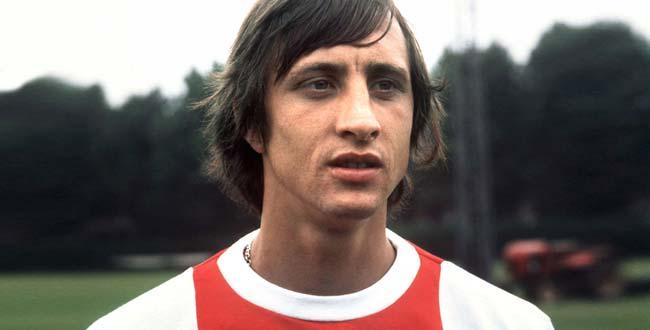
All of this cannot be easy for the beleaguered Wenger at the moment, so, it must be great for him that nobody less than the most famous Dutch master of football, Johan Cruijff himself, is using Arsenal as an example of how Ajax should organise itself.

Cruijff wrote today, in his personal column in the Dutch paper ‘De Telegraaf’, that Arsene Wenger has found the right formula on how to be successful in top football without jeopardising the club’s financial position. He said: ‘His [Wenger] work is also for Ajax an example of how it should be done. Don’t let yourself get crazy by the rest, but stick with what you are good at. So, that means education, efficient scouting, and sharp dealings with regards to buying and selling players.’

Cruijff believes this is the best way forward and that it is important to stick with it, especially when a team goes through turbulent times: ‘It can happen now and again you suffer from a set-back, as is currently the case at Arsenal, but in the end things will come good again by sticking with this formula.’

And there is further praise for Arsene: ‘I think it is incredibly impressive, that under his [Wenger’s] management the club [Arsenal] have remained at the top for years, without getting into depth once. Arsene has turned out to be able to identify himself as one with Arsenal.’

And Cruijff wants his Ajax to stick to the same formula: ‘That is what we should do with Ajax. We should profile ourselves as the great youth educator of Europe: because a restriction does not always mean a shortcoming.’

I bet this will bring a rare smile to Arsene’s face, and if Cruijff says it, it must be true: because he really knows! 😉

Total Arsenal.

Arsenal: Profits or Trophies – Which is it to be?

Image


Written by Red Arse.

The Annual Accounts for Arsenal have been made public and I thought I would try and write a précis to show what is going on, but without the accountants’ love of a figures fest!

Some task! So, let’s get down to it.

Arsenal made a profit of £37m in the year 2011/2012, which on the face of it is very impressive. Much has been made of our self sustainability model, and these figures bear that out – right? Well, that depends on how you like your sustainability model buttered, because everything comes with a price tag in life, and footie is no different.

This huge profit increase has arisen mainly out of the massive surplus on the sale of two important and, some might say, key players, Cesc and Nasri, however contentious that may be.

I can hear some of you asking why that transfer profit has not been ploughed straight back into purchasing other equally good, if expensive, player replacements. The answer from the Board’s viewpoint is that without those sales bringing in roughly £65m, the club would not have made a profit, but would have incurred a loss of £28m, and that goes against their avowed self sustainability model, and so we go around in a bloody great circle.

Put plainly, Arsenal are punching well above their weight by finishing in the top 4 of the EPL every year, which in turn releases funds for our having qualified for the Champions League. Despite reassurances from the management to the contrary, the loss of that income would make matters very difficult, indeed, in terms of self sustainability.

The careful management of the club’s finances, which are significantly boosted by the shareholders not taking out dividends, are a credit to the club in achieving their self imposed self sustainability target, but in the cold light of day, and leaving aside the slightly unrealistic hopes of some of the more devoted fans, it seems very unlikely that this policy will result in us winning either the EPL or the Champions League trophies in the near future.

The club executives hopes in this respect are leaning heavily on the successful implementation of the European FFP rules, and the agreement of similar rules to govern the EPL clubs, which they hope will bring the big, oily spenders and benefactors to heel. ‘Chance’ and ‘fat’ spring to mind!

What is painfully obvious from the Accounts is that our overall commercial revenue streams are simply not keeping up with those of our main competitors. We recorded income of £53m in this respect, as compared with £118m for the Mancs.

This comparative revenue deficit problem has its origins in the need, at the beginning of the project, to enter into cast iron commercial deals to help fund the Emirates, at what are now seen to be calamitous rates, but was seen, rightly, at the time to be absolutely essential for its success.

To put this commercial revenue problem into proper perspective, at the present time, Bayern Munich, Barca and Real Madrid all gross around £160m and Manure approximately £118m compared with our measly £53m!!!

To begin to see the gap between us and the other clubs close we will have to wait until the end of 2013/14 when new commercial deals will hopefully come on stream. The problem with that hope is that all the above plus City and the Chavs will, no doubt, also significantly increase their commercial revenues too. Damnation!

At the moment, our biggest revenue earner comes from match day sales totalling £95m per annum which is approximately £3m per (home) match. This is the consequence of having one of the highest seat ticket costs in Europe. Any further increase in ticket costs would receive a furious backlash from fans and would be potentially counterproductive so that any further such increase is very unlikely to happen for the foreseeable future.
In addition to the above, there will be a further increase in revenue as a result of the monies flowing from our share of the new £3 billion EPL deal, but that will also be shared out with our rivals, so the gap between us and the other tops teams will remain all too large.

I can hear you say ‘enough with the figures’, but one final glimpse at overall revenues is important to show the gulf between ourselves and our competitors. Our recent ‘total’ turnover amounted to £227m, which sounds pretty good, except Real Madrid’s amounted to £433m; Barca’s to £407m; and manure’s to £331m. That is one hell of a difference!!

I have probably raised more questions than answers in this Post, but hopefully it will put some of the key financial considerations which govern Arsene Wenger and his quest to bring in new quality players into perspective.

All of us want to see trophies. Many of us do not want to see trophies at the expense of the club’s future financial stability. So perhaps financial self-sustainability, at the moment, will eventually lead to financial superiority and successful achievement of trophies in the near future!

 Once a Gooner – always a Gooner!