Arsenal v Manchester United Away – September 30, 2019

Manchester United was formed in 1878 as Newton Heath LYR Football Club by the Carriage and Wagon department of the Lancashire and Yorkshire Railway (LYR) depot at Newton Heath. The team initially played games against other departments and railway companies, but on 20 November 1880 they competed in their first recorded match; wearing the colours of the railway company – green and gold – they were defeated 6–0 by Bolton Wanderers’ reserve team. By 1888, the club had become a founding member of The Combination, a regional football league. Following the league’s dissolution after only one season, Newton Heath joined the newly formed Football Alliance, which ran for three seasons before being merged with The Football League. This resulted in the club starting the 1892–93 season in the First Division, by which time it had become independent of the railway company and dropped the “LYR” from its name. After two seasons, the club was relegated to the Second Division.
In January 1902, with debts of £2,670 – equivalent to £280,000 in 2019 – the club was served with a winding-up order. Captain Harry Stafford found four local businessmen, including John Henry Davies (who became club president), each willing to invest £500 in return for a direct interest in running the club and who subsequently changed the name; on 24 April 1902, Manchester United was officially born. Under Ernest Mangnall, who assumed managerial duties in 1903, the team finished as Second Division runners-up in 1906 and secured promotion to the First Division, which they won in 1908 – the club’s first league title. The following season began with victory in the first ever Charity Shield and ended with the club’s first FA Cup title. Manchester United won the First Division for the second time in 1911, but at the end of the following season, Mangnall left the club to join Manchester City.
In 1922, three years after the resumption of football following the First World War, the club was relegated to the Second Division, where it remained until regaining promotion in 1925. Relegated again in 1931, Manchester United became a yo-yo club, achieving its all-time lowest position of 20th place in the Second Division in 1934. Following the death of principal benefactor John Henry Davies in October 1927, the club’s finances deteriorated to the extent that Manchester United would likely have gone bankrupt had it not been for James W. Gibson, who, in December 1931, invested £2,000 and assumed control of the club. In the 1938–39 season, the last year of football before the Second World War, the club finished 14th in the First Division.………………………………………………………………………………………………
Arsenal v Manchester United
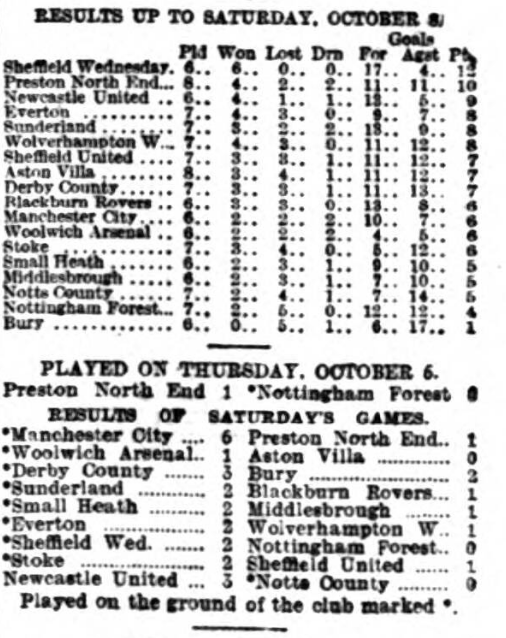
The first game between the two world famous clubs took place away at North Road, Manchester. It was played on Saturday October 13th 1894 and the game ended in a 3-3 draw. Both teams were in League Division 2 and at the time – United were known as Newton Heath and Arsenal as Woolwich Arsenal.
Here’s a look back at some memorable games between the two clubs.
Manchester United 2-0 Arsenal
2011 FA Cup – Quarter-Final
Neither side came into this clash high on confidence with Sir Alex Ferguson’s Manchester United having lost their previous two matches against Chelsea and Liverpool, while Arsene Wenger’s Arsenal had recently lost a League Cup final to Birmingham and been dumped out of the Champions League by Barcelona. Despite Ferguson naming an extraordinarily defensive side on paper, with seven defenders and Darron Gibson accompanying Wayne Rooney and Javier Hernandez, it was United who ran out 2-0 winners. Fabio da Silva opened the scoring and Rooney sealed it with a second soon after the break. The joy was short-lived however as United were beaten by rivals Manchester City in their Wembley semi-final.
Arsenal 0-0 (5-4 pens) Manchester United
2005 FA Cup – Final
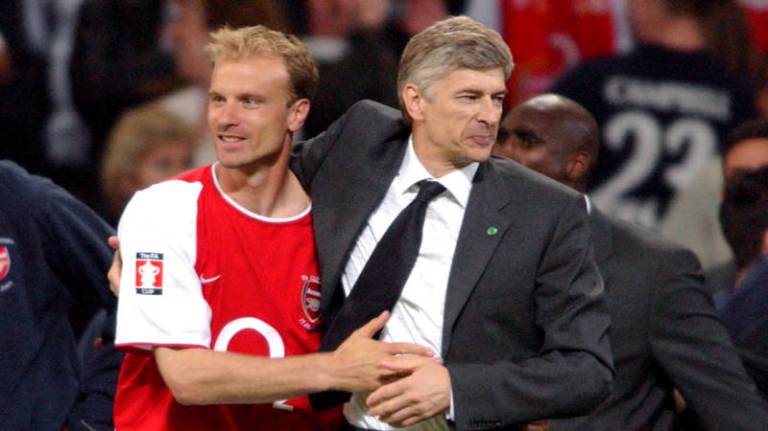
History was made in Cardiff when the FA Cup final was decided on penalties for the first time with Arsenal beating Manchester United 5-4 on spot-kicks after a goalless draw. United had enjoyed by far the better of the game itself with Wayne Rooney and Ruud van Nistelrooy each hitting the woodwork and when Jose Antonio Reyes was sent off in the final moments of extra-time their dominance was confirmed in numbers as well as chances. But the Gunners showed extraordinary resilience and were blemish-free from 12 yards, while Paul Scholes saw his penalty saved by Jens Lehmann. The winning kick was taken by Captain Patrick Vieira in what was to prove his final game for the club.
Manchester United 1-0 Arsenal
2004 FA Cup – Semi-Final
Arsenal had won the FA Cup in each of the previous two seasons and the Invincibles were en route to going unbeaten throughout an entire Premier League season when the sides met at Villa Park in April 2004. However, it was Manchester United who progressed to the final against lower-league Millwall thanks to a 1-0 win. Edu and Patrick Vieira both hit the woodwork for the Gunners but with Thierry Henry omitted from the starting line-up and Ruud van Nistelrooy injured for the Red Devils, it was left to Paul Scholes to provide the incision, firing home from close range just after the half-hour mark. United held on to end Arsenal’s 18-game unbeaten run in the competition and claimed the trophy when they defeated Millwall 3-0 the following month.
Manchester United 2-1 Arsenal
1999 FA Cup – Semi Final
This famous FA Cup meeting between the two clubs had enough drama for five classics. David Beckham opened the scoring by curling into the far corner – the first goal Arsenal had conceded in over seven hours. But Dennis Bergkamp equalised midway through the second half with a great turn and shot and the Gunners could’ve gone ahead when Nicolas Anelka had a goal disallowed for offside. When Roy Keane was sent off shortly afterwards, Arsenal were in the ascendancy and looked set to win it when Phil Neville conceded a last-minute penalty by bringing down Ray Parlour. But Peter Schmeichel saved brilliantly from Bergkamp and when Patrick Vieira surrendered possession to substitute Ryan Giggs, the Welshman scored one of the great solo goals. “The luckiest team won” said Arsene Wenger.
Manchester United 2-1 Arsenal
1983 FA Cup – Semi Final
The 1983 FA Cup semi-final was the second domestic cup competition in which the two teams had faced off that season, with Ron Atkinson’s United already 6-3 aggregate winners over two legs of the League Cup. England international Tony Woodcock gave the Gunners the lead at Villa Park but Bryan Robson came up with an equaliser just before half-time. A 17-year-old Norman Whiteside was the hero for United when he thumped in the winner. “It was a great moment,” Robson told the official Manchester United website recently. “To have won the semi-final and be on the way to Wembley was fantastic.” It was to get better for Atkinson’s team when they beat Brighton at the second attempt to lift the trophy with both Robson and Whiteside among the scorers.
Arsenal 3-2 Manchester United
1979 FA Cup – Final
The old cliché about never being more vulnerable than when you’ve scored a goal ought to have been written for this game as Alan Sunderland ensured United’s comeback counted for nothing. The Gunners had gone ahead through Brian Talbot before Frank Stapleton doubled the lead just before half-time with Liam Brady once again the architect. But Gordon McQueen pulled one back from a set-piece with just five minutes remaining and a late equaliser by Sammy McIlroy, wriggling free from his markers, seemed to complete the comeback. However, just as the momentum seemed to be with Dave Sexton’s side, Sunderland popped up at the far post to turn in Graham Rix’s cross and win it for Arsenal. No wonder it was dubbed the ‘Five Minute Final’.
Overall away game record
| Arsenal v Man U All Away Games | ||||||
| GP | League | W | D | L | GF | GA |
| 10 | Division 2 | 1 | 3 | 6 | 8 | 24 |
| 63 | Division 1 | 12 | 17 | 34 | 61 | 120 |
| 27 | Premier | 3 | 8 | 16 | 18 | 45 |
| 100 | Totals | 16 | 28 | 56 | 87 | 189 |
Premier League away game record
| Arsenal v Man U EPL Away Games | ||||||
| GP | Date | W | D | L | GF | GA |
| 1 | March 24, 1993 | 1 | 0 | 0 | ||
| 2 | September 19, 1993 | 1 | 0 | 1 | ||
| 3 | March 22, 1995 | 1 | 0 | 3 | ||
| 4 | March 20, 1996 | 1 | 0 | 1 | ||
| 5 | November 16, 1996 | 1 | 0 | 1 | ||
| 6 | March 14, 1998 | 1 | 1 | 0 | ||
| 7 | February 17, 1999 | 1 | 1 | 1 | ||
| 8 | January 24, 2000 | 1 | 1 | 1 | ||
| 9 | February 25, 2001 | 1 | 1 | 6 | ||
| 10 | May 8, 2002 | 1 | 1 | 0 | ||
| 11 | December 7, 2002 | 1 | 0 | 2 | ||
| 12 | September 21, 2003 | 1 | 0 | 0 | ||
| 13 | October 24, 2004 | 1 | 0 | 2 | ||
| 14 | April 9, 2006 | 1 | 0 | 2 | ||
| 15 | September 17, 2006 | 1 | 1 | 0 | ||
| 16 | April 13, 2008 | 1 | 1 | 2 | ||
| 17 | May 16, 2009 | 1 | 0 | 0 | ||
| 18 | August 29, 2009 | 1 | 1 | 2 | ||
| 19 | December 13, 2010 | 1 | 0 | 1 | ||
| 20 | August 28, 2011 | 1 | 2 | 8 | ||
| 21 | November 3, 2012 | 1 | 1 | 2 | ||
| 22 | November 10, 2013 | 1 | 0 | 1 | ||
| 23 | May 17, 2015 | 1 | 1 | 1 | ||
| 24 | February 28, 2016 | 1 | 2 | 3 | ||
| 25 | November 19, 2016 | 1 | 1 | 1 | ||
| 26 | April 28, 2018 | 1 | 1 | 2 | ||
| 27 | December 5, 2018 | 1 | 2 | 2 | ||
| Totals | 3 | 8 | 16 | 18 | 45 | |
I acknowledge that stats don’t count for anything on game day but they show that it takes a brave person to be confident of a win at Old Trafford – the writer is one of the brave but I once read that a coward dies a thousand deaths while a brave man only dies once, oh boy – am I prepared to die for the cause……………??
GunnerN5
TotalArsenal’s Favourite Line-Up to Slay the Mancs:

This is unlikely to be Emery’s line-up, but one can only hope.







 Bergkampesque