
With the Europa League and the Carabao Cup already started we had the privilege to see a glimpse of almost the entire senior squad, and even some academy players in training (apart from Macey and Mavropanos, but if you follow the Academy, they also have played in a few U23 games and a Leasing.com Trophy match).
So, the good news is that we have a great squad, where “back-up players” are more than capable to play football on a high quality. But there is bad news as well: as yet the first team keeps struggling in the Premiere League.
While I have no doubt that it would be way unfair to disregard the major difference between playing against a PL opponent and challenges against Nottingham Forest or Vitoria Guimaraes, I cannot ignore the (seemingly) lack of concept in terms of starting line-up and main tactics or style of play. But before we submerge in criticizing Emery, let’s take a look at the aspects of team selection.
Especially since in and under TotalArsenal’s previous post on squad preference we had almost as many opinions and recommendations as answers. In agreement with most comments – especially with PE and TA – I think there are at least 5 factors in play when Unai Emery (and practically every other manager) determines the starting line-up for the next game:
1) Who are the best players available?
It might not be clear for Emery, or he simply knows better than us. Or even has insider information on the players’ form, fitness and mental state – which he is absolutely supposed to have. And there could be power plays amongdt players, coach, club and agent that could either influence the concentration of the player, or perhaps the coach wants to control the situation with his team selection decision…
2) What strategy would be best suited for our players?
Many coaches have their preferred style of play, but good managers decide the strategy based on the strengths of the squad and might even tailor it to individual players. The other option is – if the club’s executives perfectly know the team’s strength – signing a coach that might not have a broad strategy portfolio but has a signature style and experience appropriate to the squad. (This argument itself disqualifies Mourinho from taking over Arsenal, even if I’m starting to like the guy for the first time.)

3) What are the best tactics against the opposition?
Unless you are Barcelona, the manager must adapt more to the circumstances than expect the circumstances to adapt to him. Factors such as the stadium, weather, referee, the other team’s form and core tactics can – and maybe should – be taken into consideration. I wish I knew what famous unforeseeable results were just pure luck, or the effect of an inferior team using superior strategy.
4) How to rotate the squad optimally?
Rotation serves mainly 2 purposes: to let key players take a well-deserved rest (preventing fatigue or injury), and to allow fringe/youth players to gain valuable first team experience. Some teams have deep traditions in squad rotation, others prefer to field their star players 50+ games every season. And if a team doesn’t send a starlet out on loan then they need more than just training with the team: a few hundreds of minutes could significantly accelerate their development. And on the other hand, lack of minutes hinder the player’s and even the team morale, so contrary to popular misbeliefs (as long as most players are fit) a small squad is way better than a large one.
5) How to be unpredictable? How to exploit the surprise element?
If the opponent’s formation, line-up and tactics are anticipated, there is a good chance to prepare to neutralize or counter it. Therefore, a modern manager should be both far-seer and mysterious – as long as you are not Barcelona or Liverpool whose tactics are near impossible to neutralize. A surprise change is usually about coming up with an unexpected formation, but could also have tactic elements like long balls vs. short passes, man marking vs. zone defence, high crosses vs. dribbling inside the box from the flanks, etc.
+1) How to make changes in the game?
Sometimes you eat the bear, and sometimes the bear eats you. Even the best managers are outsmarted from time to time (especially if you are a mediocre coach managing a great team like Valverde), and if the initial strategy doesn’t work out, the coach should hack the game by changing the formation and/or the tactics. Sometimes replacing a tired or underperforming player could turn the tide, but an adept manager must be a lot more creative than simply that – without risking the engine to buck.
I like Emery. I am positive that he is largely responsible for the improvement of the squad – both signing exciting new players and getting rid of (some of) the deadwood – and he had many good moments last season, including but not limited to beating Spurs, Chelsea and Man United, drawing with Liverpool at home, reaching the EL final after back-to-back wins against Napoli and Valencia, playing beautiful against Leicester City and Fulham, scoring some wonderful team goals, etc. There were some lows as well, but (almost) every team has them. Hence, I believe we should be more patient with him and give him more time to find his equilibrium.
However, I still really want to criticize him, but preferably without being biased. 😊 Therefore, I want to do it based on the team selection principles above, even attempting to bring Papa Arséne into the comparison:
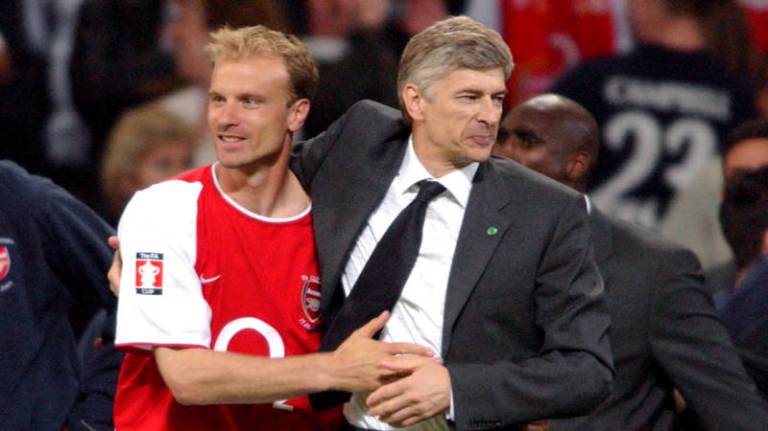
Wenger was great in 1) and 2). He knew his players in and out, improved them to serve their role in the squad, and developed his signature possession-based Wengerball with pleasing fluidity in attack, smart passes and total team football. Yet he was not a great tactician (3), and he probably thought that trying to be unpredictable (5) was beneath him. He drove his team into battle with their heads high looking for a straight and fair fight, and as long as Arsenal was the better team, he emerged victorious.
But as the Russian and Gulf billions changed the game, he often had to play against equal or superior teams, and the reluctance to customize the tactics as well as his inability to change the game from the inside – sorry to say that, but as far as +1) is concerned Arséne was a Championship level coach – inevitably let to his downfall. But for his contribution to English football, for the invention of Wengerball, for the undefeated 49 games, and his uncompromised youth development (4) his status of club legend is perfectly justified. And he was a genuine gentleman, a type that is almost extinct from modern football.
On the other hand, Emery doesn’t seem to be at the top of his 1) game, which is really a shame, because this is the only aspect Arsenal supporters really know and genuinely care about. He is not preoccupied with 2) either, but obviously because he is so much the undisputed friggin master of 3), that he probably subsumes reinventing the club DNA to customizing the tactics to the opponent.
I expect development in this department, because when Pepe, Auba and Laca get fully accustomed to each other, plus our best midfield gets tested and proven, we will have a potent team again, to which the opponents should be pressured to adapt if they know what’s good for them. 😊
So far I am really satisfied with his rotation and youth development (4) as well (I think the inclusion of Guendouzi, Nelson, Willock, Saka, Martinelli, Smith-Rowe and Mavropanos – as well as loaning Saliba and Nketiah – are more than enough for this season; I honestly don’t need Burton, Olayinka, Medley or Coyle further thrown in the mix… maybe John-Jules.)
Regarding Unai’s obsession to be unpredictable makes me tear my hair out (which is already in serious shortage), because even he manages to outsmart every Arsenal blogger, correspondent and supposedly all opponents as well, it doesn’t seem to bear fruit, and rather confuses the team. It seems that he is so good at 5) that is already counter-productive. But I have to give him that when it comes to change the game (+1) – often because he messed up the starting line-up in the first place – Emery is the real deal. He doesn’t mind experiencing, changing tactics midgame, admitting mistakes and making up for them.
All in all, Unai and Arséne have vastly different management styles and personalities, but were/are both capable of coaching the team properly. Both have strengths and weaknesses, but as Emery is a lot younger, I hope he can improve on his shortcomings without compromising his obvious talent and advantages.
By Pbarany









 Bergkampesque