The dilemma of squad size: rich tactical and rotation options vs. access to playing minutes.
This post is not about statistics, but will involve some – very basic – calculation.
Don’t worry if you don’t like playing with numbers, that will not be the heart of it.
In this article I would like to discuss how the minutes on the pitch could contribute to the development of the players, and analyse the actual figures from last season.
For this purpose I will consider competitive games only, so club friendlies and fitness checking PL2 games will be excluded.
How many – competitive – games are there in an average Arsenal season?
As a rule of thumb, I will calculate with 50, but every year we manage to compete in Europe the figures are 48-56.
In fact it was 54 last season, but we had an exceptional run-in the FA Cup.
So what is granted?
38 EPL games
6+ UCL/UEL games (we had 8 last season as after the 6 group stage games we lost against Olympiakos in the first round of the knockout phase)
1+ League Cup games (we had 2 last season)
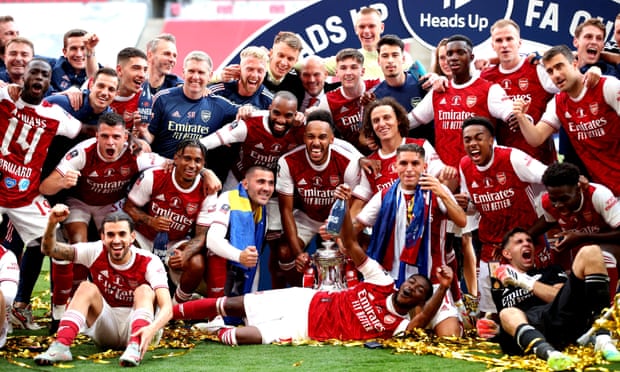
1+ FA Cup games (we had 6 last season as we won the tournament)
Charity Shield (we had zero last, but had 1 this season, and while it is friendly, I consider it competitive because of the trophy and the prestige)
So, with the guaranteed 38 Premier League games and 6 group matches in Europe, the 50 games is a safe bet.
In every game there are 11 players on a side. A single footballer plays 90 minutes, thus the whole team plays 990 (11*90).
In the season there are 50*990=49500 minutes. Let’s round it up to 50k taking extra time and stoppage time into account as well.
With the tools of rotation and substitution the manager divides this amount among the players. With a squad size of 25 this equals 2000 minutes of playing time on average.
Why do players need playing minutes?
Mostly to gain experience and for their skill and tactical development, as well as morale (mental hygiene), as the lads obviously like to play football and give their best.
They obviously want to increase their market value as well as negotiation power in a future contract extension; they can also achieve it only by playing many – excellent – games.
Furthermore, they want to call the attention of the public and the national team’s manager to their abilities.
When they play a lot on a consistently high level, they also get access to lucrative sponsorship deals, advertisements, etc.
If it was up to them, they would play as much as possible, but for fitness, tactical, rotational, stamina and other reasons they cannot always start and cannot always remain on the pitch until the final whistle.
We have to also take into consideration that most of these guys are close friends to each other. If more of them are dissatisfied due to his lack of playing time it not only decreases the individual’s morale, but in some extent reduces the team mood as well.
How to read the actual playing minutes?
Well, I have never played football on the highest level, so the explanations above are the mix of my amateur experience, opinions of sporting and medical experts and some common sense. But don’t hesitate to challenge them if you disagree. However for simplification purposes I will not differentiate according to age, assuming that the bodies of 19, 25 and 32 year-old players are equally capable of dealing with the workload.
But I by no means recommend any athlete to play 4500 minutes (50 games) a season; in fact my recommendation is in the 2000-3000 range. That should be handled easily in all relevant ages.
0-1000 minutes: Unless there is a proper justification of long or recurring injuries this is a major management failure. The development of the player is seriously hindered, and reduces the morale big time. Should be avoided.
1000-1500 minutes: Not desirable. Not much improvement there, probably no deterioration either, still a missed opportunity for both the player and the club. This could be alright in the first season of a youngster with the first team as well as last season of a senior player before retirement.
1500-2000 minutes: This is the reality of a squad player. 18-20 full games of the 50+ or around 8-10 starts and 15-20 substitute appearances. The player would surely demand more, but his excess motivation could provide healthy competition to the position, so this is not a manager’s failure by any means.
2000-2500 minutes: Needs no justification, as the athlete played about 50% of the available minutes. This provides proper development, yet still not poses a fitness threat. In this rage a player is respected, but not indispensable. If the majority of the players of the team falls to this range then you have a beautifully balanced squad and a talented professional coach on top of that as well.
2500-3000 minutes: That would be my preferred range. Albeit these extra minutes don’t contribute to the individual development any further, but the enjoyment of playing a lot of games and the increase of jersey sales and interviews make this interval slightly better than the previous.
3000-3500: Sign of a slight overuse of the player. Could be due to the lack of proper alternatives, or the player might be competing for a record. Maybe from leadership purposes must the player be on the pitch so often. I would try to avoid it, but if a couple of players fall into this range that is not a catastrophe either.
3500-4000: This is unhealthy. A significant injury risk for outfield players, that could also lead to mental overload or even burnout. Could also happen because of a long qualification season, but otherwise there should be no excuses. Or maybe the squad is too thin and all alternatives are injured.
4000-4500 minutes: Since the league games amount to 3420 minutes only, this range often shows a megalomaniac attitude, where the player wants to play every minute in every competition (Pickford, McGregor, ter Stegen, Moutinho.
4500+ minutes: Hell no! (Coady, Maguire, Patricio)
Let’s see, how are players “performed” in this department in the 2019/2020 season!
Yes, it was a crazy year, but the coronavirus only impacted the crowd and the schedule, but not the minutes (except for the last stages of the UCL/UEL).
Goalkeepers

This is a big kudos to Arteta (but maybe Leno’s injury played some part here). Leno competed 2860 minutes, while Martinez also had the opportunity to shine for 2030. They both improved, and had nice runs. Well done. (The only exception to the above rules is the #3 goalkeeper, as he should be somebody who is patient, not ambitious, yet reliable, because basically he is the contingency to the back-up plan. Macey played 720 minutes – of limited competitiveness – and sat on the bench 13 times. Furthermore he made valuable contributions to our trainings.) We are very well equipped and perfectly managed in the goalkeeper department.
Central defenders
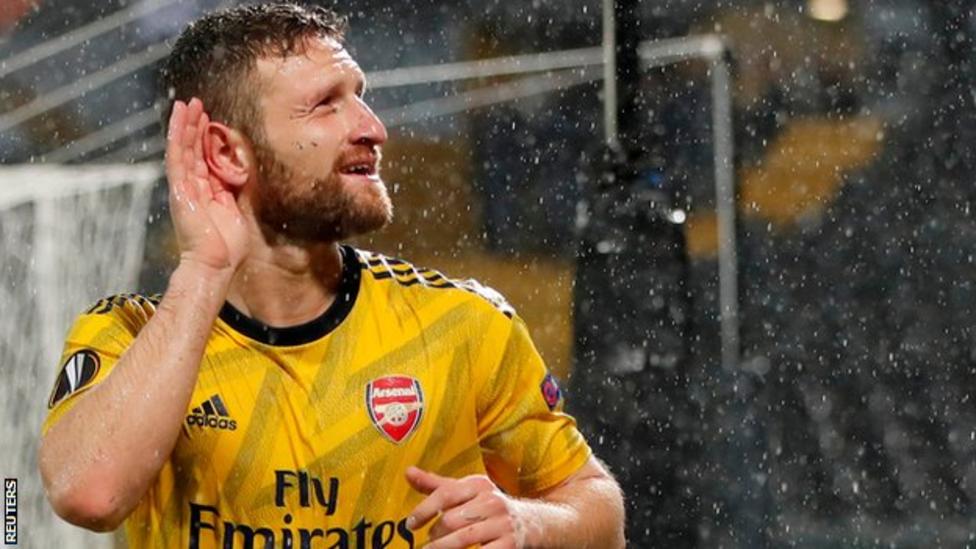
Well, Luiz played 3640 minutes which is more than my liking – and has nothing to do with his personality, defensive or leadership skills. Sokratis played 2320 minutes, majority of it in the first half of the season (where he was overused), but the handful of minutes since mid-March understandably made him disappointed. Mustafi had a similar 2250 minutes, but more evenly distributed throughout the season. That’s a perfect run considering his late injury, and he needs the minutes more for consistency than for skill development anyway. Chambers’ 1380 minutes looks too few, but he had a good start to the season followed by a serious and long injury. This has nothing to do with the manager. That excuse doesn’t apply to Rob Holding, as his 1280 competitive minutes cannot be explained by injuries. He was available in the majority of the season. I am disappointed on his behalf (mostly in Emery and Ljungberg). Finally, Mari played only 200 minutes, but he joined in January and suffered a long injury too. If 500-800 minutes from David would have ended up in Rob, then the overall picture would have looked better, but it is not too bad at all, and Luiz is the leader of our defense anyway.
Full and wingbacks
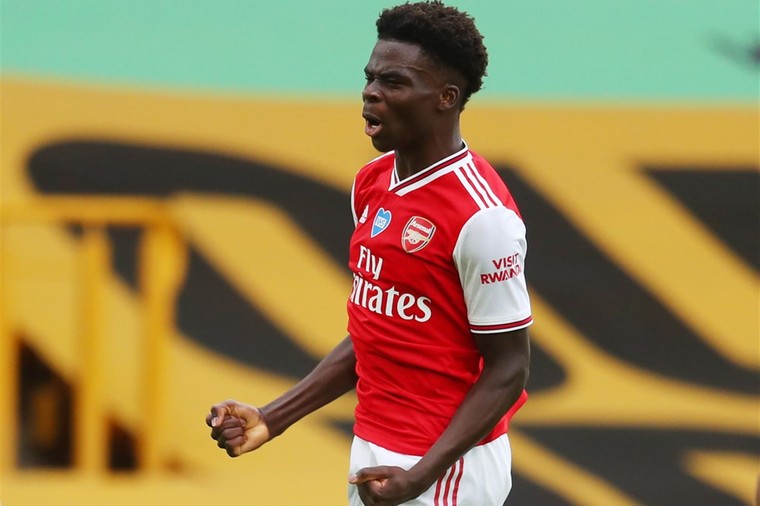
Tierney played 1710 minutes, but came injured and suffered another long injury. He progressed alright, and if he manages to get 2800 minutes under his belt this year that would be a major improvement to him and the club as well. To my surprise Kolasinac played 2040 minutes this season, so there is no need to complain. Bellerin played 1800 minutes only, but whenever he was fit, he started, so I don’t see any flaw here either. Ainsley Maitland-Niles was the other senior of the group with his 2030 minutes. He was always fit and played in many positions, but couldn’t apply much competitive pressure on those who were ahead of him in the pecking order. (That can change in the next season in both directions.) Cedric Soares played 250 minutes in his half season with us, but he (similarly to Kieran) had a couple of nasty injuries, so his minutes are justified, especially as he played additional 1510 minutes for Southampton earlier this season.
Midfielders
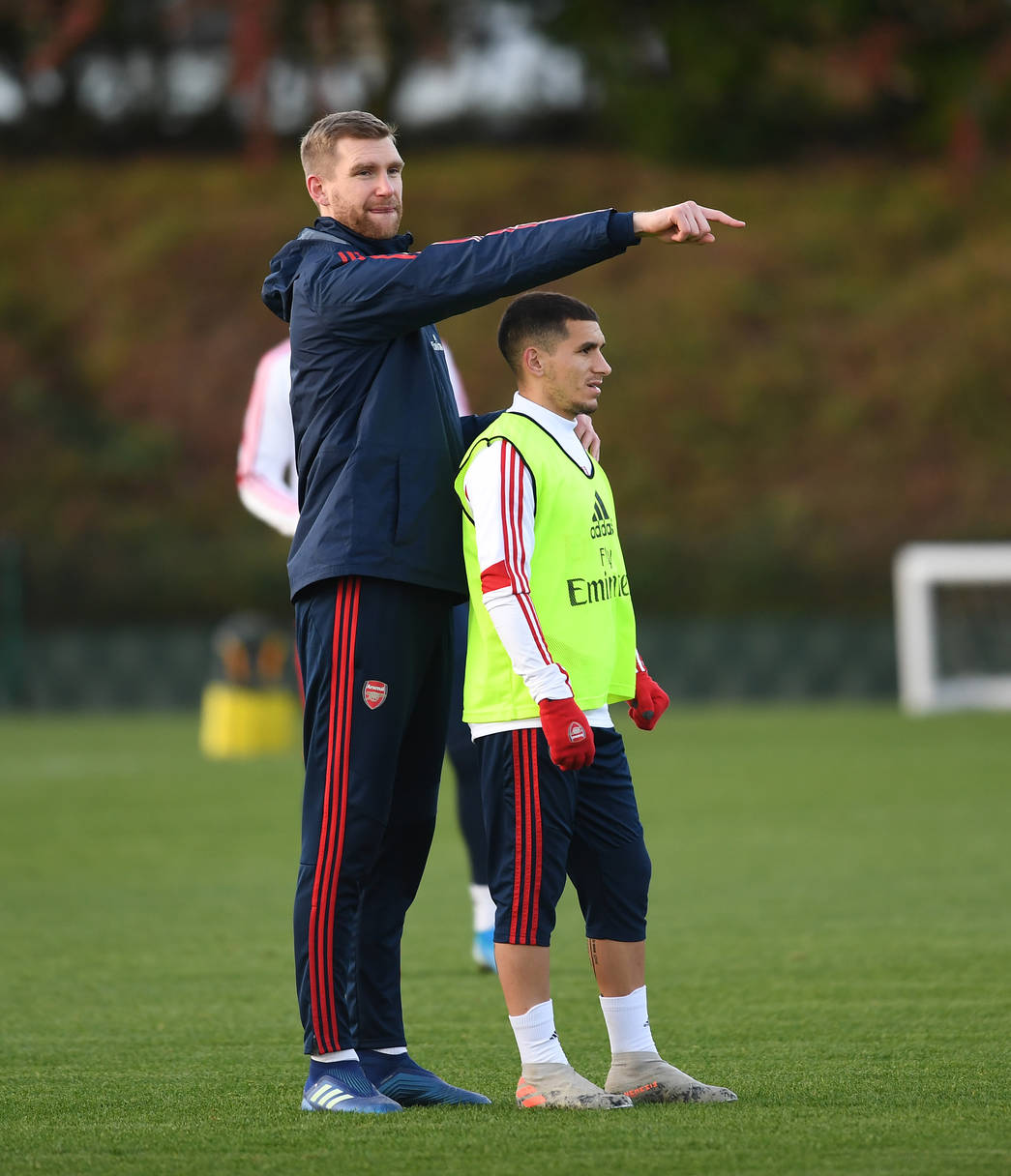
Lucas Torreira played 2040 minutes. And apart from his injury he was properly rotated in the squad. His disappointment has probably little to do with his time on the pitch and more of the roles and the quality of his play. I hope he stays though. Xhaka was the other player to get above 3k (in fact 3430), but he provided stability to our engine. The coaches made experiments, but at the end of the day without Granit we simply suffered. Guendouzi played a healthy 2380 minutes throughout the season, but not equally distributed. According to Transfermarket he suffered an Achilles tendon injury after the Brighton, which sounds bullshit to me, but who am I to challenge the portal? Anyway, Matteo is an undoubtedly talented young player, but he is not yet the saviour of Arsenal’s midfield. Him grabbing Maupay by the throat is a big whoGives’aSh*t, but his attitude and discipline could be a liability. Ceballos had 2340 minutes under his belt, which is a good figure considering he was out for 2 months with a torn muscle. He became an important part of Arsenal, I hope he returns. Joe Willock played 1860 minutes, but was more effective as a super-sub than as a starter. That’s not bad for a 20 years old, however he couldn’t convince Aidy Boothroyd to select him for England U21. Finally Ozil. He played 1810 minutes which is more than I remember, still about half of how much someone is supposed to play of his calibre. But that is a different story, we debated about it in this blog a few times already.
Wingers
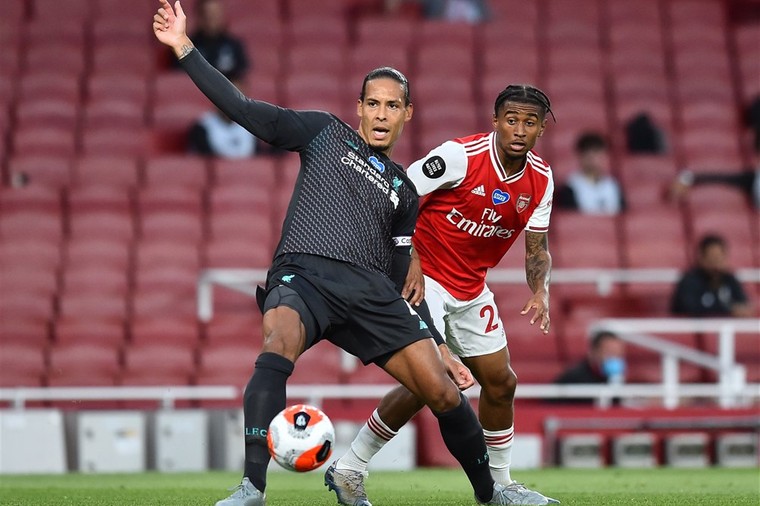
With 2700 minutes young Bukayo Saka is one of the winners of this season. He often played at left (wing)back, but managed to grab the opportunity with both hands there as well. He was talented in the first place, but he progressed the most in a year among our players. A similar trajectory was expected from Martinelli, but he suffered an unfortunate injury limiting his playing minutes to 1460. This is still not bad for a 18-year old in his debut year in the first team, but with some luck it could have been a lot more. And to make it worse he loses a few months in this season as well… Nicolas Pepe didn’t take the Premier League by storm, but his 2720 minutes and 18 goal contributions are not bad for a debut season even for a record signing. Similarly to Tierney, I expect more of him this season, hoping that he will prove that he has a seat among the very best. The other victim of the pecking order as well as head coaching mismanagement (besides Holding) is Nelson with his 1040 competitive minutes. The arrival of Willian and the prospect of Coutinho don’t look promising for him either. And unlike the 2.5 years older AMN, Reiss has (had?) a real chance to become one of the finest players in his position.
Strikers

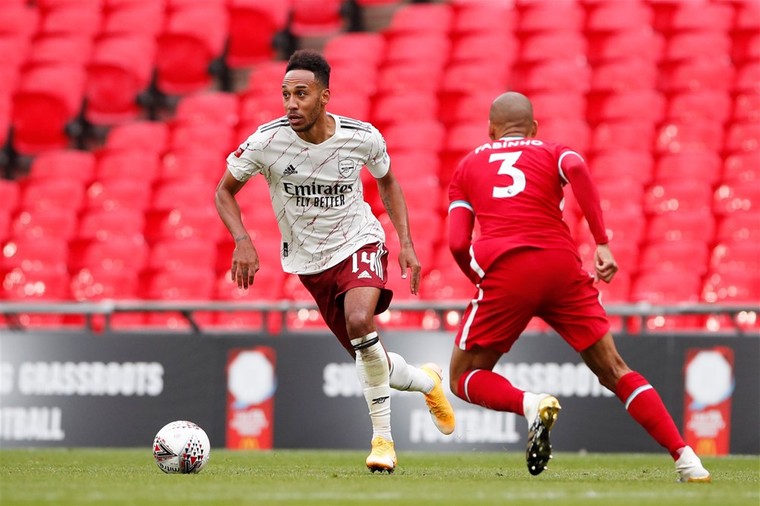
While Aubameyang mostly played on the left wing I list him here. Our captain racked the most minutes under his belt (3725), I assume partly due to his leadership qualities and partly because he wanted to retain the Golden Boot – as well as our most clinical striker. His 36 PL games (was suspended for the other 2) and his FA Cup appearances are perfectly justified, but his involvement in 6 EL games was a bit too much to my liking. Lacazette’s 2580 minutes fall into the perfect interval, and albeit his 12 goals seem a largely inferior return to Auba’s 29, if we take the net goal contributions into account (goals + assists – penalties) then his record of a net goal contribution every 136 minutes is quite close to PEA’s 128 minute figure. Eddie’s 1510 minutes are acceptable for a youngster playing his first (half) season with the senior team, but could have been a lot more if his loan spell in Leeds would have been more efficient. He managed to play more in the PL and the FA Cup than in the Championship and the Carabao, which is quite a performance from a 20-year-old. His development is fortunately still fast.
Coming back to the title dilemma
Shall we have a large squad with rich tactical and rotation options, or a skeleton crew to maximize individual development through a high volume of playing minutes?
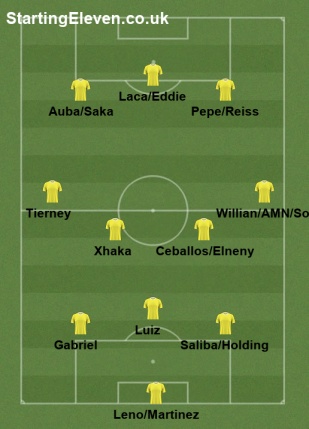
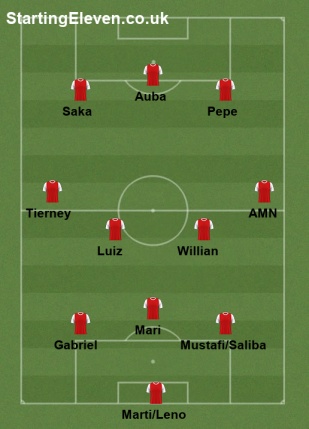
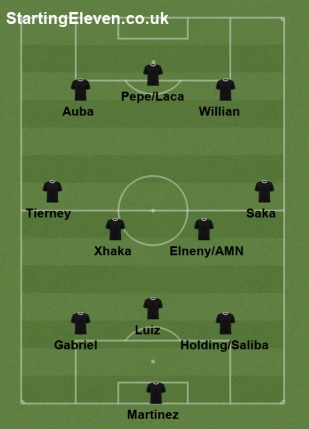
There is no correct answer; this is not science, rather a matter of values and philosophy. But let’s not forget that when we divided the 50.000 minutes by a hypothetical squad size of 25, the 2000 minutes result was the average value; and remember that according to yours truly the ideal threshold of playing minutes to maximize experience and skill development is between 2000 and 3000. As you could guess from my past comments as well as the paragraphs above I am an advocate of youth development, thus in favour of a smaller squad – aiming for 58 games to increase the average playing minutes of 24 footballers (3 GK + 5 CB + 4 FB/WB + 6 DM/CM + 4 W + 2 ST) to 2400. Because currently Arsenal has 30 players, which reduces the fraction (the expected average) to less than 1700 minutes. And while the club is trying to offload a few players, simultaneously working hard on signing new guys, so this 30-figure is a realistic squad size after the transfer window closes. Which is 20% more than my preference, but don’t hesitate to challenge or criticize my stance.
As long as we don’t have the funds like Chelsea to spend 150M on new players every transfer window, I would go for maximizing individual development – the best XI and the secondary team players equally. How about you?
By PBarany












 Bergkampesque