
Rotation v Fatigue
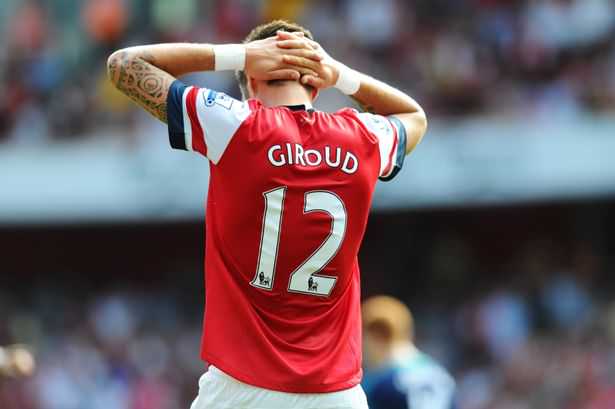
Rotation? Do it to beat fatigue? Or don’t do it and ignore fatigue as long as possible?
Fatigue? Is it all in the mind? Or is it a genuine reason for under-performing?
I must admit I do find it strange that so many see fatigue, either as an irrelevance, or should not apply to professional footballers. So that is my starting point.
In almost any sport you care to mention, from Darts and Snooker through to Tennis and Track and Field events, those involved will, without exception, say that back to back performances get harder and harder. So why should footballers be any different?
Dart players need to concentrate to repeat actions over and over again. You may think that is simply a mechanical thing, so that if you practice a lot you don’t have to think about it. Well certainly practice helps. But in the pressure of performing in front of a live audience needs control of both emotions and their concentration level. Distractions can mean just the slight deviation in the flight of the throw that can mean victory or defeat? Repeated demands on the concentration levels always leaves its mark.
In snooker too: you are in a one on one situation, where you alternate between playing and not playing, but with a difference. You never know how long the sitting out periods may be. In darts, it is three arrows from your opponent and you are on. With snooker you can sit out a whole frame without getting your cue in action. You can play short round matches that may only last and hour. Or you can play the longer matches over two days, with several sessions a day. Worst still, you could be playing late into the night getting through one round, and then have to be ready to do the same again the following day. So even if the previous night was one of great satisfaction, and a great boost to the confidence level, if you have beaten a higher ranking opponent. But the records show that it is rarely repeated at that same level the next time. All snooker players can claim to have an advantage if they have just one day off between each match.
Moreover, with both these high intensity sports that lack the physical aspect, the victors at the end of a long tournament say they need a break. A physical break, before they can look forward to competing again.
But if you want to throw in the physical aspect on to an individual sport, then singles tennis events are probably the most demanding? The intensity of a partisan(?) crowd, the strength of your opponent, and often the climatic conditions are all their to test their mental strength. They too, see an advantage of having longer gaps between games than their opponents, irrespective of how they played previously. They too are drained at the end of a tournament where these demands are the most extreme.
With track athletes it is all about the physical performance. So they may have to stretch their stamina resources when they have two elimination rounds in one day. By the time the final rounds come along, it is usually the ones with the most ability that have been able to ease through the qualifying rounds, without extending themselves too much, that come out on top.
So when it comes to football, they not only have the physical effort to manage, but also the concentration levels too. Not for the two hours of a marathon runner, unless their is extra time, but way above the 10 seconds of the 100 metres sprint. Yes it is a team game, and the players are not involved all off the time, not to the physical extreme that is true. But the concentration level should always be on alert, because you can never be sure when you are going to have to make a tackle, or receive the ball. Fatigue in this area is what is so costly. An unexpected error will throw out what your fellow players were planning for, and that can be more draining on them?
So, just because professional footballers are well paid, have good facilities to train and recover from matches, does not mean that playing up to 95 minutes once a week does not leave them below their full level of all round fitness – mental and physical.
I have read that top football coaches think as much as 50% is lost by the following day. This is probably why if they do any training the next day, it is only light by nature? They then go on to say that by the second day, a player may recover 75% of what was lost in their last match. Which is still a significant drop, and will vary amongst the players. Another variable is just how demanding the previous game was? Another may be just how many demanding games have gone before the latest one? Travelling too, is not as relaxing after a bit of light training?
On top of all that you have the different demands that these factors are taking on the individual players. I said with the track athletes, if they are real top class performers they can breeze through their early rounds. However, the athletes that just scrape into the qualifiers are very unlikely to beat these same athletes in the final round because of the extra effort it took out of them? It is the same with teams of footballers. Some players will be stretching their ability in every game, while others are capable of making hard things look simple, because they can. So, a team of all round better players will be able to get through matches easier. That does not necessarily happen because of the ‘one off’ factor, when a lesser team has a game when it all comes together. But over the longer term, a full season, ‘the usual suspects’ are invariably somewhere near the top?
So, I ask again. Why is it so difficult to accept that football is a demanding game, and fatigue will play its part?
Take the run of games that Arsenal played:
Sunday match v Everton: Tough match, slightly added to (mentally) by not holding the late lead?
Tuesday fly out to Italy, probably still only 70% recovered?
Wednesday they played Napoli: tough game. Guess a %age below peak around 90%
Fly back early hours Thursday, now only 45% fit
Friday, just getting up to 65/70%?
Saturday, early kick off. What? 85% recovered, playing away from home against a very talented side.
Well, you know what happened. Does it make a bit more sense why so many were way off their normal game?
I hope so. Because this is why rotation is not just an option. Playing every 3 days will mean if we played the same 11 players for all these matches, there are some that will not make it past the third game, given they will not have recovered fully by the time the next game comes along, which compounds the drop in their ability to deliver once more.
The pros and cons of our run over this periods are: We have 3 good days to recover from the Chelsea game; Away match against West Ham, no real travelling; Unlike 2 good days, but match messed up by travel to Newcastle – the tricky tie I identified earlier.: We then have two good days, before we play Cardiff at home. The previous three results will help, but we are going to be down on our levels. Be warned, Cardiff will be fighting for their survival!: Next, FA Cup v Spurs will be just the tonic, even the most knackered will find something deep down for this one, albeit with only 2 good recovery days on top of all the rest. But then we get a 9 day break before our repeat fixture with the Villa.
A bad result against West Ham could mean one set of 11 players will be running on empty by the time the Cup match comes around.
So, all agreed? Rotation Rotation Rotation.
Done sensibly of course?
Written by: Gerry







 Bergkampesque