FFP – Fundamentally Flawed Policy? Why Freedom is Best.

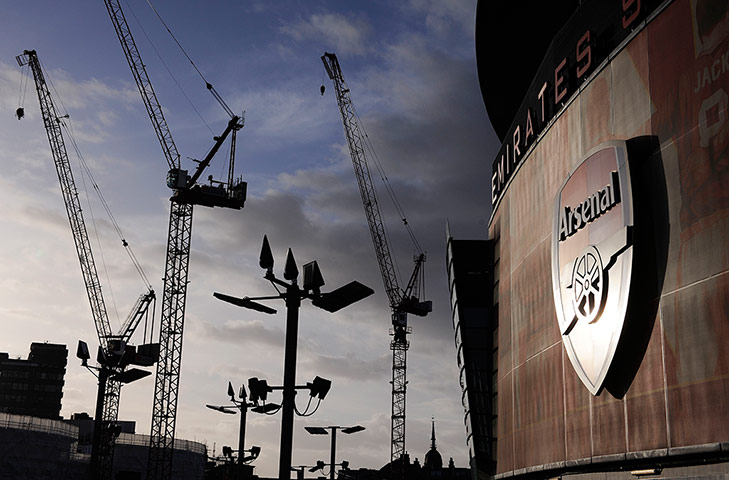
Emirates-Stadium-opens-©-Hufton+Crow-990x465

As many of you who may have followed my occasional warbling will have noticed, there is a common theme in which I have bemoaned the arrival of the ‘meddling’ multi-billionaires and oil rich state owned corporations into football, but also I have cast doubt on the equally meddling UEFA and EPL FFP regulations which will try to lamely control these wealthy entities.

Why do I describe these people as meddling?

Well both the multi-billionaires who now own football clubs, as well as the Arab or Eastern European state backed owners, and the state owners of clubs, do not really need to dabble in football at all, and neither do they show much personal interest or enjoyment in the sport itself, but they do clearly have their own agendas in plucking financially struggling clubs and transforming them at a stroke.

The average, and frequently penurious fan may goggle at the nine zeros  in a billion dollars, [$1,000,000,000] or 1,000, million dollars, which represents the sort of money (give or take) expended on Manchester City by Sheikh Mansour, and the very similar sums paid out for Chelsea, Manchester United and even Arsenal by the new owners.

For some of the oligarchs, football is a tasteless way of indulging themselves in a personal whimsy or fiefdom, and to play a real life version of FIFA 2012, and to show to the adoring fans how omniscient and clever they are by buying struggling clubs and injecting huge sums of money to enable them to be regenerated and start to become trophy winning giants.

For others, such as Silent Stan, it is a safe vehicle for their financial investment in a major sporting institution, in which they intend to see a rich reward in the medium to longer term.

Alternatively, for the state backed clubs, it is another way to give their countries some reflected glory from their involvement with world renowned clubs, or in the case of the state of Qatar, their purchase of PSG has underlined their credibility in ‘buying’ the World Cup venue and showing their state in a better footballing light.

To prevent the inevitable rampant distortion of the economic football environment, the powers at UEFA, closely followed by the English Premier League owner, have introduced the FFP regulations, which are purportedly to return to a financially level playing field in the European Leagues, particularly the EPL, and to stymie the runaway financial power of the mushrooming oligarch clubs.

That’s good isn’t it?

Well, not for every club, I am afraid.

Let us accept for the sake of this discussion that FFP will work, and then we can look at what the consequences will be for the different level of clubs in the PL.

UEFA decided to act on the inequalities and financial instability of many clubs throughout Europe, once it became obvious that the oligarchs and Arab states were also seriously affecting the footballing environment. They now require all clubs to introduce more discipline and rationality into their club football finances, particularly by decreasing the pressure on salaries and transfer fees, and limiting inflationary effects, by the simple expedient of requiring the clubs to compete only within their generated revenues, and to invest more in their youth teams and their club infrastructures.

Basically, they now require clubs to balance their books or break even. Simple!!

Under this concept, clubs cannot repeatedly spend more than their generated revenues, and they will be obliged to meet all their transfer and employee payment commitments and not build up unsustainable debt, or failing this they will be thrown out of European competitions.

Ok, that is a brief synopsis of the major requirements of FFP, with which we are all too familiar.

So why am I concerned that these seemingly very laudable objectives might achieve exactly the opposite of what was intended and will not result in a level financial playing field?

In large part, this whole concept has come about on the basis of shutting the stable doors after the horse has bolted. Chelsea and Man City have been transformed from also ran, financially struggling clubs who were rocketed up to become part of the prevailing elite, consisting of Arsenal and Man United, by the injection of vast sums of money from their wealthy owners.

It happened and it is not possible to turn the clock back.

The new FFP rules will still permit oligarch type owners to purchase a club such as Wigan or Sunderland, but they will not be able to pour outrageous sums of money into those clubs, and therefore they could not grow to challenge the existing elite. The same block on uncontrolled spending also applies to clubs who have already been bought by somewhat less wealthy owners, such as those at Reading or Southampton, and again they will not be able to challenge the existing elite because of this financial restriction.

Incidentally, should Usmanov manage to acquire the ownership of Arsenal, he too would be restricted as to the sums he could pour into Arsenal, subject to some magical accounting, of course.

What magical accounting you ask?

Well, this is a little digression from my theme, but there is a major difference between owner investment and owner personal loans. Loans can build up and will need to be repaid at some time – just ask the Portsmouth fans, whereas owner investment means to inject capital into the company usually by way of additional issued share capital in exchange for cash, and this can be extended to fan ownership too, as in Germany.

Anyway, so happy were Arsenal, Manyoo, Liverpool and even Spurs, with the provisions of the UEFA FFP that they sent out a joint message, on an Arsenal letter head, to all the other clubs, (which I am showing below) proposing that the Premiership should introduce their own version of FFP.

Last December, partly as a result of this letter and some arm twisting negotiations, the EPL FFP provisions were passed, much to the delight of the main proponents, and to the chagrin of clubs like Man Citeh, Fulham, Southampton, Reading etc, all of whom objected but were outvoted.
[Oddly Abramovich, against all reason, agreed the proposal – which he could have blocked].

The effect of this agreement is that all EPL clubs have to submit their financial accounts not only to UEFA for audit, but also to a Premier league appointed Investigator for certification.

OK, I can hear you say, so what?

[this is the Arsenal letter mentioned above]:

http://www.dailymail.co.uk/sport/football/article-2262027/Manchester-United-Liverpool-Arsenal-Spurs-join-forces-shackle-spending-Man-City-Chelsea.html

Here comes the rub with these FFP proposals. 

Clubs like Arsenal and Manure have the biggest stadia and the highest revenue streams, although Manyoo are really in a league all on their own, and can only benefit from linking expenditure on transfers and salaries to a percentage of turnover, which in turn means their transfer chests will, over time, become bigger and give them the greatest chance of buying the best players.

I can hear you thinking, so if Arsenal is likely to be one of the big beneficiaries of the new regime, why am I not happy with the outcome of FFP?

Well, Arsenal’s inclusion in a small group of clubs that will benefit, if as seems likely, the oligarchs and the state owned clubs are not permitted to ‘invest’ whatever monies they wanted into their clubs, is also balanced by the exclusion of the ‘lower’ clubs, such as Newcastle, Villa and West Brom etc, who will forever remain cannon fodder for the ‘elite’.

In effect, if a new oligarch happened along, as mentioned earlier, all they would be able to do is to maintain the status quo, with the elite group expanding their clubs profitability and influence, whereas  those with smaller revenues will only be able to watch them disappear into the distance.

Silent Stan must be rubbing his hands with glee that Arsenal now stand a very good chance of getting back to near the top in the medium term, which will not do his investment any harm, and I don’t suppose he will much care that it will be at the expense of our club submitting to the financial ‘power’ of Manyoo, who will, in all probability, win the Premiership every year, as they become unassailable.

There is another imperative downside to FFP, and that is the cost to all the loyal fans of clubs throughout the EPL, if these more stringent rules result in clubs failing to keep within them, or if sponsorship income dries up, or if player wages continue to increase, despite efforts to curtail them, there will be only one way to recoup additional funds, and that will be by charging fans even more for tickets to watch their teams.

As I hope I have shown you, what is a very well intentioned change in the administration of the game by using FFP to try and impose a level financial playing field, could very easily result in the exact opposite, with the establishment of a rigid regime that will prevent any clubs, except the privileged few including our own dear Arsenal, from having even the smallest chance of winning the Premiership, and making Manyoo into the sole English Galactico in the process.

I believe in freedom. 

Freedom to allow people to do what they want, within the Law, even if this means allowing all football club owners, whoever they may be, to spend as much or as little money as they want, on the clubs that they own, or to borrow what they, as businessmen, deem necessary.

A freedom, which will permit the Arsenal owners, should they wish, to stick rigidly to their policy of pursuing a self sustainable finance model.

A freedom, where perhaps eventually a small, well run club in the ‘lower’ echelons of the Premiership could emulate the success of the CL semi-finalists, Borussia Dortmund, who themselves, in 2005, accepted external short-term funding, from another wealthier club, Bayern Munich, which enabled BD to survive and prosper.

That freedom will not be permitted in the future because the whole premise of FFP is flawed and just downright wrong.

This is a simple choice – Freedom for the clubs to pursue their own rainbows, or statutory regulation forcing all clubs to strictly adhere to a straight jacket within a fundamentally unbalanced new system.

I vote for freedom – how about you?

Written by: Red Arse.
We Need An Oligarch, Please!

Arsenal-v-Man-Utd-001

It may be time to revisit an old conundrum which has divided the fan base for some time, and it regards the very essence of our club. It is an overview of the club’s ownership, and how that affects each of us.

This is not a rant against the club, or its hierarchy, and neither does it come into the category of an ‘I told you so’ diatribe.

Whenever a train of thought regarding the way the club is organized is set out, it encourages a plethora of opinions each of which may be valid in its own right, but which has the effect of confusing the main thrust of the argument.

So, this is a personal musing about a matter that has caused much changing of my mind over the last few years.

Whenever the question is put to me, ‘Do you want Arsenal to win trophies?’ my instant and instinctive response is ‘Yes, of course I do’.

The follow up question is inevitably, ‘Can we do so without a greatly increased investment in quality players?’

Now therein lies the rub, because it is obvious that with all our main competitors, Man City, Man United and Chelsea continuing to spend heavily on the best players available, it would be impossible to win a trophy without Arsenal doing likewise. But if we hold true to our avowed preference for our club to be run on a sustainable model of financial prudence, how do we square these diametrically conflicting requirements?

So by a circuitous route we have arrived, at last, at a clear choice, which is, how do we fund such an investment, and more to the point, how did we arrive at this financial impasse, and should it matter to us, the fans?

When I was a child and started to support the Arsenal, I was not in the slightest bit interested in who owned the club, and how they found the money to run the club.  This disinterest extended further than that – I did not know who the owners were, and neither did I care.

It carried on that way until fairly recently, when with access to the Internet and the all devouring media interest in the excruciating minutiae of every Premier League club, we all became aware in painful detail of every aspect of our club’s finances, and ownership, especially after the arrival of Abramovich and the Sheikhs who promptly changed the face of football.

Many fans have expressed the opinion that they would never want an alleged crook like Usmanov to take ownership of the club, and with that view have passively accepted that Arsenal will never be able to compete with the other ‘big’ clubs, but would be content to see us strive to compete and play ‘good football’.

That, if I am forced to admit it, is exactly where I placed myself too. Arsenal were far better than the other money grubbing teams, and we had too much class to follow Chelsea, and the Mancs down the path of mammon, taking ill gotten monies from such sources in order to further our football desires.

Then the thought struck me. This was giving up, and meekly accepting that we were resigning ourselves to a genteel descent into a ‘classy’ but ‘no hope’ future, as we watch the financially well endowed clubs competing for all the available trophies, while we are consigned to mid-table mediocrity. That cannot be right – that is not what Arsenal are all about – it’s not good enough.

The second thought to strike me, with a resounding clunk, is that Arsenal owe their presence in the current elite of football courtesy of Sir Henry Norris, who once owned the club, and not only wangled us into the old First Division by some seedy backroom deals which saw us shortly afterwards winning the First Division Championship, but was later banned as a director of any company, by the High Court, as a result of ‘accidentally’ and illegally taking money out of Arsenal.

So, perhaps our previous owners have not always been so classy and above reproach after all, have they? But thank goodness for Sir Henry!!

The fact is, I have gone full circle in my thinking, and have come to realize that I still don’t care who owns the club, and I still don’t really know who the present incumbent Stan Kroenke is, and what he is all about, or what his personal motives are.

One thing is crystal clear, he obviously does not love Arsenal the way I do, and seems to have very little interest in the club, other than as an investment vehicle, and rarely even watches Arsenal play.

What I also know is that I cannot bring myself to believe that any self made multi-billionaire is so pure that he should have my unquestioning support. The owners and the players will come and go, but my loyalty and support will never change, and my loyalty is to the club, and the team — not the owners, whoever they may be.

It seems to me, that FFP aside, the current oligarch clubs, or their owners, are so powerful that the only way to compete with them is to bring on our own oligarch, perhaps Usmanov, and if he provides us with the funds that will allow us to compete and win trophies, I am happy to join the fans of the other mega-rich clubs springing up all over Europe, and to metaphorically shrug my shoulders and think ‘bring it on!’

My view on Usmanov, is similar to my view on Kroenke, in that I do not know him any better than our current owner, and I suspect as a multi-billionaire he also has a chequered career behind him, but he is probably no better or worse than Sir Henry, and look what that naughty gentleman did for us, turning what was then a mediocre club into a magnificent club, and a hundred years later his legacy still lives on.

Come on you mighty Gunners – jump into the financial arena, and give us a level playing field!

Written by: Red Arse.

How many PL clubs are as fortunate as Arsenal? A strategic analysis

cropped-dennis-bergkamp-playing-f-008.jpg

Troubled times or big opportunities for Arsenal?

The name of this Blog is, in large part, a reflection on a great Arsenal footballer revered by many, who, together with Arsene Wenger, helped to introduce the concept of playing a wonderful style of football, which has become the epitome of The Arsenal, a club dedicated, under its much maligned manager, to the ethos of the beautiful game!

How appropriate then, that this summer, a statue of the great man, Dennis Bergkamp, will be unveiled to stand alongside those of other memorably magnificent servants of the club, such as Thierry Henry, Herbert Chapman and Tony Adams.

In the eyes of some fans, however, these statues have also served to point at what they see as being at the very core of the problems the club has experienced in its recent fallow years. Namely, that the statues tell the tale that these superb players were far superior in quality to those currently available at the Emirates.

Given this focus, these fans have extended their acerbic criticism to include the owner, the medical and coaching staff, and indeed the man responsible for the recruitment of today’s players, the coach, Arsene Wenger.

In truth, when we consider the likes of Sol Campbell, Patrick Viera, Marc Overmars, and Robert Pires, and many others, who brought us three League Championships, and four FA Cups, while playing stunning, enchanting, one touch, fast paced football, it is difficult to deny that there is a case to answer.

With the construction of the Emirates Stadium claiming most of the available funds, it was comforting to believe the claim from Arsene that he was building a new team, based on youth, which would provide the nucleus of a great team that in a few years would be title-winners. Sadly, this aspiration has fallen short, and project youth has left us short of the top quality players necessary to win the major competitions.

Each time Arsene has cobbled together a team which looked to be moving in the right direction, we have had our crown jewels in Fabregas, Nasri, and, most especially, Robin van Persie snatched away from us.

The ire of the fans has increased each time a promising team has been decimated by losing key players in this way, or with the realization that new blood from the youth teams, with notable exceptions, has simply not been good enough.

The dream of winning a title has become ever more distant, with Arsenal slowly descending down the elite latter; until now they are desperately trying to hold on to fourth place in order to qualify for the Champions League, with the attendant status, prestige and money that brings.

There is no shortage of advice for the manager from desolate Gooners.
They have erupted with demands for a more consistent defence unit, and the immediate recruitment of a big commanding centre back, and preferably one who can at least get up a canter when needed. No, no, say some, what we need is a big beast of a defensive midfielder to support Jack and Cazzor! Don’t be silly, say others, what we need to do is strengthen the forward line, or at least make sure we play players in their proper positions!!

Of course, others, and there are many of them, say the whole squad needs to be rebuilt from the goal keeper upwards.

These voices of despair have been counter balanced, to an extent, by the voices of reason — that is from fans who know that such root and branch restructuring can never be funded by any club without an oligarch benefactor.

They recognize that although Arsenal has two major shareholders who are billionaires, neither of them have ever invested in the club directly, other than to pay huge sums to acquire the shares of the previous owners, which only lined the pockets of those individuals.

That said, many fans and ex-players take the view that the current squad are not very far away from being a good side, although still a long way off being a great side, but they feel the basics are there, especially with a midfield containing Wilshere, Cazzorla, and Rosicky.

So who is responsible for the decline in quality of our team, and the dispiriting realization that they are just a shadow of the truly great Arsenal teams of ten years ago?

There are as many theories as to who or what is the culprit, because, as a club, Arsenal rather secretively keep everything ‘in house’ and Arsene Wenger is not prone to complain, but the obvious question that needs answering, is whether or not he has been given the financial support he needs, even though we have often been told that substantial money is available, if he needs it.

At root, the stadium project has sucked up Arsenal’s cash resources, and it would be difficult for any business to take on that sort of financial burden without it causing problems elsewhere. Viewed in that light, how can it be argued that Wenger has not done absolutely brilliantly to keep the club in the Champions League over those years, and with hopes growing that he can still do it this year, too.

Of course, Wenger is not off the hook, in terms of partial responsibility, because it seems he is at fault, in the author’s opinion, for failing to be as efficient and professional in recruiting players of the required quality, or, as also seems to be the case, for perhaps failing to move quickly enough to buy players that did become available, only to see them being gobbled up by the ‘big’ spenders because of apparent hesitation, on his part, for decision making.

This contrasts poorly when we take in the fantastic signings he was responsible for in his early Arsenal career, by the use of a meticulous and wide ranging scouting system, and it has long been accepted in footballing quarters that Real Madrid, Manure and subsequently Chelsea scouts were detailed to creep around and stalk the Arsenal scouts to see who they were looking at!

Unfortunately, over time the footballing world has become ‘smaller’ and hidden ‘jewels’ are now known by the scouts of all the major clubs – and, in the final analysis, money talks.

One of the old chestnuts brought up from time to time, alludes to Wenger’s reliance on David Dein, and how much Arsene has missed his adept handling of the club’s transfer business. It does seem that this is a task Mr Wenger still dislikes and is probably unsuited to, whereas Dein revelled in the cut and thrust of dealing with the selling clubs and the greedy, grasping player agents.  Let’s be clear, Dein’s day is done, and there can be no justification for bringing him back, but it does highlight a poor piece of management by Danny Fizzman and the rest of the Board of Directors that they did not replace him at the time.

Arsene is rightly renowned for his ability to take good-ish players and make them great players, and take great players and turn them into outstanding players and also to produce fantastic teams that played to these strengths.

But unless his transfer strategy changes the outlook is not so promising, and with owners and a Chief Executive who know nothing about football, the fear is that there is no one to quietly advise him or simply tell him he must change. Time will tell on that.

I have left until last the statement of the obvious, and that is that the team with the best players always win the trophies. And the clubs who have the teams with the best players are those with the most money available to buy them. 

The dreaded spector of the elephant in the room cannot be avoided, when trying to apportion the ‘blame’ for Arsenal’s slow decline.

Wenger was probably initially confident of remaining in the elite group when the oligarch owner of Chelsea first appeared, and for a time this seemed to be a reasonable hope. However, the rapid influx of commercial money into the coffers of big spending Manure which helped to fund player acquisitions, followed just as quickly by the huge outlay on players by the new oilygarch owners of Man Shitty, made it obvious that a hole had been shot in Arsenal’s hopes of competing as an equal in the transfer market, and by association has seriously damaged our chances of winning trophies.

Still, hope is not lost, Manure have still got a massive debt that needs annual servicing, and Chelsea and Shitty are totally dependent on the goodwill and continuing support of their iniquitous sugar daddies, and let us not forget that not only have the UEFA FFP regulations begun to bite, but the Premier League have also introduced strong FFP regulations of their own, effectively capping the transfer and salary spending of clubs to what they bring in from football related revenue.

Arsenal with their self sustainability model, and low debt ratios are not subject to the same pressures as these clubs. However there still needs to be a huge increase in our efforts to boost sponsorship revenues, and this in turn might see a very different marketing operation in the future, with Arsenal spreading their wings and visiting North America and Asia far more frequently.

Look! Having a healthy balance sheet is not in and of itself what Arsenal is about, it is just a means to an end. In order to have a successful business, you have to have a successful football team and, in recent seasons, Arsenal seem to have lost sight of that simple precept.

The fans have mainly stayed loyal, even though there is a general disappointment that Kroenke and Usmanov appear to see the club more as a personal investment vehicle waiting to be harvested.

Now is the time for the owners to shake themselves out of their self imposed silence and torpor, and get back to remembering that Arsenal is a great FOOTBALL club, and within its very substantial means, it should get back into the business of investing in players, and in reaping the rewards of winning trophies, which will consequently improve the worth and wealth of the club, to the benefit of both the fans and also the owners, as a result. 

I have high hopes that despite all the unfounded criticism of Arsene Wenger, and Arsenal’s current turmoil, that we will come through these troubled times with all flags flying.

Arsene Wenger

Ask yourselves — how many Premier League clubs are fortunate enough to have such a strong financial base, and also have such a superb manager, ready to go into the next season with all guns blazing? 

None?

Written by: Red Arse.

Wenger’s Arsenal; Past – Present – Future. How will it all end?

Arsene Wenger

As regards ‘Arsenal Past’ we all are aware of the fantastic trophy filled past successes of Arsene Wenger in the period from his appointment as coach in 1996 and through until 2005.

In the eyes of some fans, it has been all too easy to judge his amazing impact on the club only through the microscope of trophies, and to simply ignore the extraordinary and direct impact he has had on Arsenal, and, indirectly, all the other Premier League clubs and more generally on English football as a whole.

Let us not spend too much time on debating this, other than to note the incontestable revolutionary training, dietary discipline, worldwide scouting prowess and administrative genius that he brought with him, and which has since been widely copied by every other Premier League manager, hungry for success, and that has set the groundwork for our future financial and on-field success.

So what of ‘Arsenal Present’, post the move to the Emirates stadium, and the sad leaving behind of our venerable and much loved old home, Highbury?

Clearly we have already had a somewhat disappointing season, if it is to be judged solely from the perspective of challenging for the Premier League title, or one of the other Cups that we would so desperately have hoped to win.

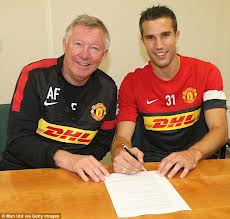
It cannot be denied that it has been yet another of our interminable transitional seasons, with yet another huge turnover of first team players resulting from the acquisition of Podolski, Cazzorla and Giroud, following the shock departures of our captain, Robin van Persie, to Man United and Song to Barcelona.

Indeed, for every promising step forward we have made in the current season, with an away win over ‘Pool and a good draw at Man City, there have been unedifying setbacks, not just to money bags Chelsea in the league, but also to the ‘lesser’ clubs like Blackburn Rovers and Bradford City in the Cups. Oops!

The fantastic Wengerball football produced at the beginning of the season, particularly driven by Cazorla and Wilshere, gave us, the fans, a certain optimistic confidence that perhaps, against all expectations, Arsenal would do very well after all, especially after the stunning 5:2 beating of the Spuds in the North London derby in November 2012 to add to the victories mentioned above. However, the net effect, of these patchy performances, has left us fighting hard to qualify for the ECL next season, with success still very much in the balance.

Before we leave ‘the present’, let us dwell for a second on the firm promises made by Arsene Wenger and Ivan Gazidis, in which they have made it clear that Arsenal, while remaining in a financially self sustaining mode, would be able to compete with the other top clubs in the transfer market this summer, and will do so.

This bodes well for our future trophy success, and commensurate enjoyment for long suffering Gooners.

OK, it cannot be avoided, but before we look at ‘Arsenal Future’, we need to briefly look at the club’s financial performance in recent times.

In the year 2011/12 Arsenal produced ‘another healthy set of full year results’ as our Chairman, Hill Wood declared, with a very creditable profit before tax of £36.6 million.

This is very much in line with an average annual profit of £38 million in each of the previous 5 years, and confirms our club as being among the very top echelon of the most profitable clubs in the world. 

Remember, the recognised top Spanish clubs, Barcelona and Real, only made £41 million and £27 million profits respectively, last year, and Manure made a £5 million loss before tax in the comparative year, after a measly £30 million profit in 2010/11.

Incidentally, let’s not even bother to look at the humongous hundreds of millions of pounds losses made by the oligarch and state sponsored clubs like Shitty, Chelsea and the likes.

Now we are beginning to touch on our future prospects which are intrinsically linked with the fortunes of the other competitor clubs, because the impending arrival of UEFA’s Financial Fair Play regulations, now in post implementation mode, which have already started to have an impact, with many Italian and Spanish clubs having to sell their ‘big-name’ players to the highest bidders, because of their own, and their countries’, financial and economic difficulties, while City have had to cut back on their transfer market dealings, until they can offload other players in order to conform.

With the imminent arrival of the new EPL deal with Sky, and our strong push for better commercial returns, which is already the 5th largest in Europe, and also, now that the initial necessary deals to help fund the building of the Emirates are reaching completion, the future profitability of the club will take on an even rosier glow, with the knock on beneficial impact on player purchases.

There is still much to be done to match the revenue incomes of our biggest competitors, but the Arsenal management are aware of this, and great efforts are being made to reduce the difference, between ourselves and the top earners, by concentrating more on sponsorship from the Far East, helped by promotional pre-season tours.

It is likely that Arsenal’s revenue will soon place them in the world top tier of revenue earners, with a clear division between that group and the rest of the pursuing clubs.

We are still a long way behind the top four clubs in generating revenues, particularly given the size of Arsenal, but unlike most of the other clubs we have a lot of wriggle room to enable us to build on our financial success, and that will have dramatic consequences on our ability to land trophies, in the very near future.

A well known adage tells us that every business has to invest before the revenues start flowing in, and in a football business this means buying, not just new players, but top quality new players, and to do so, the club has to be prepared to meet the very high wage demands now currently expected by the very top players, and they will help us in our bid to continue to qualify for the lucrative Champions League competition, and then to go on and win it.

What then of our peek into ‘Arsenal Future’ and where will we be in 5 years time?

There are, as we have seen, two distinct reasons for being quietly confident that Arsenal will rise to the top of the footballing world.

First, our revenue streams will exponentially increase as a result of our growing worldwide support, and with it the attendant increase in sponsorship money, as a consequence of competing for the very best players, which will result in the trophy cabinet starting to creak with our on field success, which will create a virtuous circle of increased funds flowing from that success, which will then be ploughed back into player acquisitions et seq.

And secondly, the UEFA, FFP regulations, as well as the Premier Leagues own version of FFP, will ensure that the heavily oligarch and state sponsored clubs will have a cap put on their non-football funded spending, which will, at last, curb their current advantage in hoovering up every top player that comes onto the market.

In five years – expect us to have regularly won competitions, courtesy of Arsene Wenger. We are all set to go!!

Go, Arsenal!!

Written by: Red Arse.

Why key players have left Arsenal and how to stop it happening again

vanJ

Nowadays in football there is no loyalty. This is because of one reason, and one reason alone: football is now a business, and everyone knows that there are no friends in business. Everyone now involved in football, whether that be players, managers, owners,or  clubs and agents, are looking out for no. 1. Behind every action of a player, manager, owner, club or agent, there is an ulterior motive that benefits whoever has instigated it.

Football fans see players moving clubs for a number of different reasons. The different scenarios include a player moving to a club that is more prestigious than the club they are currently at; a player moving to a club that offers them a higher wage than the club they are currently at; moving to a club that wins trophies; moving to a club for personal reasons (family, homesickness or because he does not feel respected by the club he is currently at); and even a player moving club because his friend has recommended him to do so.

As Arsenal fans, we are no strangers to players leaving our club, and our players who are still at the club are never far from transfer speculation. In recent years we have seen a lot of players leave our club. These include the likes of Clichy, Nasri, Fabregas, and recently Song and Van Persie (all of which have been our best players). Players will move clubs for many different reasons and there is no problem with this, but when you start to see a trend in the reasons why players leave a club (players leaving the club for the same reasons), you know that there is a deep lying problem within the club.

Arsenal are now one of these clubs and have been for a number of years, with players such as those mentioned above either leaving Arsenal for a more prestigious club, and/or a club that pays them higher wages, and/or a club that has won trophies in recent times.

Players who have left Arsenal are often branded as being selfish, greedy, sell-outs and traitors by us fans, but in my opinion I feel that they were right to leave Arsenal, and I will explain why.

Firstly, for most professional footballers, playing football is a job first and a hobby second. This means that to most football players this is their career. Like anyone else who has a career, you want to improve your career and climb the ladder to get yourself noticed. For the players who have left Arsenal in recent years, moving to a club which gives them a higher wage, a club that is more prestigious and a club that wins trophies is their way of improving their career; climbing the ladder and getting themselves noticed just like everyone in the world wants to do.

Secondly, many fans say that Arsenal players who have left the club should have been loyal and stayed at Arsenal, regardless of Arsenal not winning any trophies for 8 years. I have to disagree. Why should Arsenal players who have left the club, stayed at a club that is underperforming. Suppose it was the other way round and it was the player who was underperforming. The club would not stand by him. That player would more than likely be sold as quickly as possible or just kicked out the club (forced to go on loan). We have seen this with the likes of Park, Santos etc. Suppose your boss had been promising you a pay rise for 8 years and you never got it; you would leave the company you work for as well.

What Arsène Wenger and the board must do to stop more of our best players from leaving our club for the same reasons, is very simple. 

Wenger

Arsène Wenger and the board must abandon their current wage structure that Arsenal are using to reward their players. Arsenal pays the wages of their football players using the idea of a ‘socialist model’. This means that the gap paid in wages between the highest earners and the lowest paid players, are much narrower compared to the likes of Manchester United, Chelsea and Manchester City.

This is shown by the likes of Podolski and Walcott, who are regular first team players for Arsenal but get paid only around £90 000 a week, and the likes of Squillaci, who is a reserve player and our fifth choice centre back, and gets paid around £60 000 which is not a huge difference at all.

Arsenal’s collective wage bill every year is around £143 million which is the fourth highest collective wage bill in the Premier League; with Manchester United’s collective wage bill every year being around £160 million; Chelsea’s collective wage bill ever year being £171 million; and Manchester City’s collective wage bill every year being the highest in the Premier League at around £201.

Manchester United’s wage collective wage bill is not that much higher than ours but because they do not follow the ‘socialist model’ of paying wages this means that they can afford to pay the likes of Van Persie and Rooney around £220 000 a week, meanwhile we cannot afford to pay wages above the £110 000 mark to players. Arsène Wenger and the board need to start paying the wages of Arsenal players based on their performances, abilities and value to the team.

In addition quite a large chunk of Arsenal’s collective wage budget is made up from Arsenal paying other clubs to take Arsenal players on loan (for example Denilson whose loan deals just seem to never end). Arsène Wenger and the board would save a lot more money if they just sold these players or released them from their contracts.

This must stop, and with the money saved from selling or releasing players from their contracts, as opposed to just loaning them out, and by switching to a new wage structure, it would allow Arsenal to pay their best players what they deserve, and also have the money at their disposal to pay the wages needed for top quality players to come to Arsenal.

If Arsène Wenger and the board can do this, we will easily start to be able to win trophies again and our club will be able to be as prestigious as it used to be, and our best players will not want to leave Arsenal.

I would love to hear your thoughts on the topic.

Written by: AFC.

Financial Fair Play: The BIG Con?

The more reasonable minded fans have stuck with Arsenal’s financial self sustainability model, and understood the need for the financial restrictions under which Arsene Wenger has had to work in the transfer market.

They, like fans at other clubs, have done so because they have also, indirectly, placed their trust in the efficacy of UEFA’s Financial Fair Play policy, which has been drawn up to bring a level financial playing field for all the Premier League clubs, and prevent them from descending into unsustainable debt, by chancing their arm in the player transfer market, or by  paying obscenely high salaries to these self same players, and also to restrict the influence of certain mega-rich owners whose largesse in providing unlimited funds seems to know no bounds and distorts the transfer market!

There is an obvious problem with this, in that the very wealthiest clubs employ the very best accountants and lawyers and it is inevitable that they will pore over the fine print and juggle their books of account accordingly.

Now most fans will nod their heads and grudgingly admit that this is a likely scenario, but touchingly wave such concerns away because they also believe that UEFA are not fools and will have anticipated this turn of events. Really?!

In part, the reason for the fans’ mindset is that most do not understand or like accounting niceties and would much rather concentrate on keeping the quality players they already have, regardless of the salaries being paid, or search longingly through the media or online outlets for news or to marvel at the fantastical players they would really like the manager to sign up, again regardless of the transfer fee, while all the time saying “within reason, of course” while not meaning a word of it.

Let’s face it, most fans, whatever they may say publicly, really don’t give a f*ck about economic reality, except when it bites them in the ass when paying for tickets, or buying a pint or coughing up £14 for indifferent fish and chips, or when they buy yet another ‘new’ team shirt. No! What the fans want is players – and in the case of Arsenal fans they want great players, like Henry, Bergkamp and Viera were – as well as the trophies those high quality players will bring, and not, in the minds of some at least, the cheap, poor quality, also ran, trophyless failures they are expected to take to their hearts.

The fact is that this desire for quality players is intrinsically tied up with the plentiful supply of that modern evil – money. Money – players! Players – money! Don’t doubt it.

But is this all that FFP involves – is there more that is not immediately obvious?

The football world in which clubs now live, post-Abramovich,  and the other ‘big money owners’ is all about making as much money as possible by maximising their worldwide revenues, and keeping non-playing costs to a minimum, while apparently keeping a beady eye on FFP.

So what do the fans think, if at all, about the Premier League chairmen rubbing their hands while sitting around a table last week to discuss the £5billion television windfall they have negotiated for TV rights, and how they will carve it up, as well as trying to reach an agreement over the EPL’s own mini FFP charter??

Do the fans imagine that the price of their seat tickets, and the extras they work so hard to afford will be reduced? Or perhaps they imagine that the clubs will set aside some extra dosh for player wages and transfer fees to keep the fans happy?

I do not think so, my friends.

The club owners/Chairmen will have thought long and hard, for about 10 seconds, before coming to the conclusion that the most deserving recipients of this bounty is ……………….. THEM!!

But hold on, how do they ‘sell’ this wonderful notion to the fans, the players and their agents who each for their own purposes will be casting covetous eyes on this pile of extra dough and, in the case of the latter, carefully perusing their contracts?

The fans will want to throw their lot in with the players, each set of fans will demand their club pay the players more to keep them, or to duff up the continental European market to grab quality players from those Spanish and Italian clubs feeling the strain from the economic crisis engulfing them and their countries.

Well, it seems that UEFA and monsieur Platini have given the club owners the perfect mushroom to hide their private desires behind – the UEFA FFP rules, and a more modest fig leaf by the supplemental Premier League version of it! Yaay!!

The owners will wring their hands, and squirm while expressing false sympathy that if only these rules did not prohibit them from paying the players more, because of the impact on their profit margins and balance sheets, which FFP specifically forbids, they would be only too happy to pass on a chunk of the new dosh to the footballing stars, who, incidentally, just happen to be the ones the fans pay to see!! And reducing the ticket prices equates to reducing their revenues. So sad!!

This ploy might just work for the owners, if they play their cards right!

No, No, I hear you chorus, Arsenal and Manure are all for the UEFA FFP and are even pressing for a modified Premier League version, but the Chavs and City won’t go along with it, and who cares about the little clubs?

Well is that argument true?

The ‘big’ clubs, that is to say the elite clubs or their clever clog accountants, including Arsenal and Manure have calculated that they will benefit hugely by complying with the FFP rule that spending (on players) must be linked to revenues earned.

Consider the current situation;

  • A club in the Champions League receives a minimum of £30 million more than a rival who is not in the CL.
  • A club like Arsenal, who have  already moved to a 60,000 seat stadium with the additional revenues derived from that, or Manure who have developed Old Trafford into a massive 75,000 seat money generating colossus already have a huge advantage over the ‘lesser’ or smaller sized clubs.
  • The Chavs and Man Shitty have oligarchs who are willing to ‘bend’ the rules and pour private money into their pet projects, when necessary.

By complying with the FFP rules, the ‘smaller’ clubs, like Stoke or Bolton, would be ceding a permanent spot at the financial high table to Arsenal, Manure, Chelsea and Man Shitty because they will have been given a legal right to spend more than the others in the Premier League based on their huge comparative revenues.

The clubs will all say that the financial fair play rules must be introduced for the good of everyone in the Premier League and for the good of the game.

We can see that the ‘winners’ in all this are the acknowledged top 4 clubs, and their owners, so who are the losers?

The answer to that is obvious isn’t it? First it will be the smaller clubs who drop in and out of the premier League. Next will be the ‘second’ tier clubs like Everton, West Ham and all the others, who will never be able to compete with the ‘top 4’ for the very best players.

And most importantly of all, and undoubtedly the biggest losers — it’s YOU the fans, who will continue to pay the top prices for your seats and all the little ‘services’ like food and drink and club shirts.

FFP – is it all it has been made out to be? You tell me!!

Written by: Red Arse.

Although some bloggers might appear very familiar and informal with each others, please never hesitate to comment if you feel like it. Bergkampesque welcomes any contributions as long as they are made in a sensible and respectful way.