The (self) Happy One Returns: How Will Arsene Respond?

Prepare yourself for Maureen's continuous shenanigans next season!
Prepare yourself for Maureen’s continuous shenanigans next season!

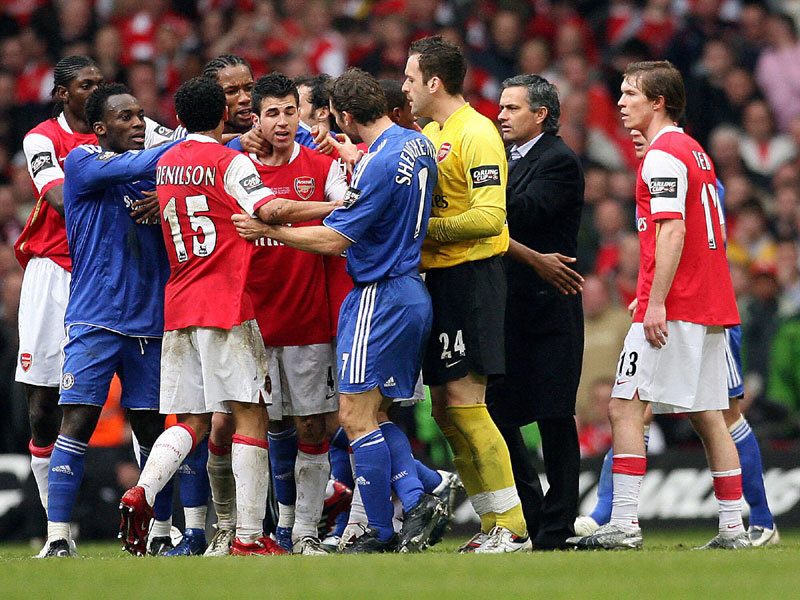
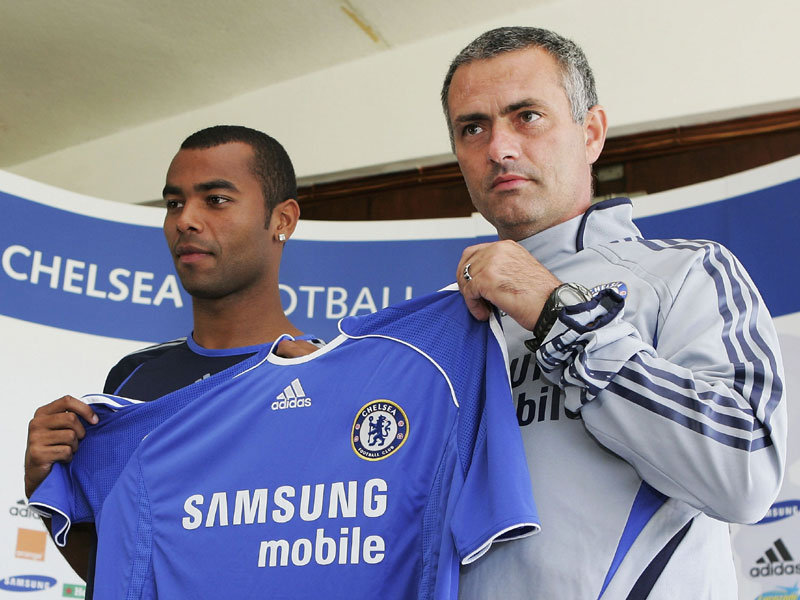
The self declared Special One returns. It was inevitable he would return to the PL this summer, and whether we like him or not, the PL will quickly find out he is back.

I remember a ‘rug-sack holiday’ in Portugal in the early nineties. My mates and I were eating at a seaside restaurant in Sesimbra, not far from Lisbon. My mate, Ron, detected a large fly in his soup. He was quite shy and was not going to say something about it. We spurred him on to get the waiter and when he arrived, Ron said: ‘there is a fly in my soup’. The waiter, who had a large, red, shiny boil protruding from one of his cheeks said without a care in the world: ‘you can eat it with the fly in it, or I can get you another one’. Ron wanted another one, which arrived 10 minutes later, handed to him with utter disdain by our Portuguese friend. It only took two seconds for Ron to cry out: ‘there are now two flies in my soup!’ Ron realised he was not going to win this, and as he was very hungry he ate the soup, which apparently was delicious!

Back to Maureen – our PL fly in the soup – and what his return will mean for Arsenal.

A bold statement: nobody will be able to win the PL conceding 43 goals in the process, like MU did last season, any time again soon.

We all know what Mourinho likes best, and it’s what he has done at Porto, Chelsea and Inter: being lean and mean at the back and very efficient up-front.

Jose16_573445

After the departure of Maureen in 2007, Abramovic has desperately tried to get Chelsea to play more attractive football, but since then, all seven managers have not been able to satisfy him; and their heads (except the interim ones) have rolled one after the other stuffed with lots of banknotes in them.

It looks like Abramovic wants stability (is he looking to sell the club in a few years, maybe?), and as he has seen and held the CL trophy in his own hands now, he appears to be willing to compromise on style in order to repeat the experience. Maureen’s ego is very low on strokes right now, and with the departure of Ferguson he will be bullish about his chances to become the dominant force in the PL.

There is little doubt in my mind that Wenger will now face one of his biggest challenges in his life, despite being in a better position than in any of the previous eight years (financially and no departures from his core team).

Will he continue towards developing another free-flowing, attack-minded Wengerball team next season, or will he adjust his plans in order to stop the exhibitionist from winning the silverware we so desperately want for ourselves?

If we want to win something next season, Chelsea will be our toughest competitor. Ooh, I want and need Wengerball football again, but I reckon we have to focus and invest first and for all in being a lean and mean defending machine next season, if we want to have a good chance. We have become one during the last quarter of last season, and by adding the much discussed beast of a DM, and a PL-experienced back-up GK, we can nail down that machine even more firmly.

We will also have  to continue with the disciplined double-DM pivot approach, with the main tasks of keeping it tight in midfield and  protecting our defence as much as possible.

And finally, we will need  the sort of players in attack who are very efficient, as in not needing many chances to win a match for us.

We will need to be solid and safe at the back, play with patience, discipline and maturity throughout the entire team, and be able to grind results out on a regular basis.

Is this the sort of football we want? Or should Wenger just go all out and aim to beat Maureen with a more adventurous and attractive style of football?

Not easy to answer, me thinks, but as per the anecdote of Ron’s soup with the fly in it, Maureen is back and, one way or another, we’ll have to overcome him. We are famished for silverware and it’s our time to shine now: time to decide how we’re going to do it and stick with it after that.

Let’s wipe the staged, sickly smile of the self-declared Special One this season!

Written by: TotalArsenal.

Is the need to qualify for the CL killing Arsenal’s style of football?

cropped-henry-dog-008.jpg

I was on a French campsite when Holland played the final against Spain in the 2010 World Cup. The bar was full with Dutchmen wearing the national colours and I was one of them.

The whole tournament had been quite a surreal experience for me and many fellow Dutchmen. Van Marwijk, the Holland Manager, had somehow managed to make the Dutch play like Germany used to do: save, solid and efficient. It was nevertheless an incredible feat to get this Holland team to the final with a defence consisting of Stekelenburg (GK), Van Der Wiel, Heitinga, Mathijsen and the veteran Van Bronckhorst (C).

In order to do so, Van Marwijk opted for a wall of steel and menace in front of this brittle defence: the notorious Van Bommel  and De Jong. Basically Holland played with two groups of players: seven defensive minded players with some licence for the full backs to roam forward, and four attackers to somehow between them bring home the bacon. It worked well, and Holland did what Germany used to do: get to the final without playing brilliant football, except for the quarter final victory against Brazil perhaps.

But Holland just was not Holland, as for generations of Dutchmen the national team is expected to play attacking, flowing, total football. It felt to a large extent that Van Marwijk had been denying our identity: our raison d’etre in the International football scene.

However, being in the final of the world cup is still a very special moment for most nations in the world and especially for a weeny one like Holland, and of course most Dutchmen wanted Holland to finally win a world cup final; this was the third attempt after all.

We all know what happened in the final: the footballing team won deservedly and Holland lost – not just the final but also quite a bit of its decennia old reputation.

The response of most Dutchmen in the campsite pub was both one of disappointment AND relief. Once again we finished runners-up, but at least we did not have to watch Holland play in such an unnatural, and mostly unattractive way again.

What has all this to do with Arsenal? Two things come to mind.

Firstly, the way we played in the final part of last season. In order to secure CL football next season, Arsene and Steve decided to sacrifice the style and philosophy of our football and play with two defensive minded midfielders in front of our brittle looking defence. It seemed  a similar solution as Van Marwijk had done with Holland. It resulted in a great return  of results but our football was hard to watch at times, as just like Holland, Arsenal played very un-Arsenal-like.

Secondly, I feel that our constant need to qualify for the CL is holding Arsene back to experiment with the team properly, and give our up and coming talents more chances to break through in the first team. Once again, I believe this is holding us back from playing attractive, attacking, Wengerball football.

Since the departure of Cesc, Arsene has been trying hard to get the team play some sort of Wengerball again, especially during the first five months of last season and  the season before. But for the second season running he has not been able to achieve this, as he had to revert back to result-orientated football during the final part of our seasons in order to secure CL football.

The big question is: will he get Arsenal back to playing a form of attacking, total football again, and if so, how is he going to do it?

Wirtten by: TotalArsenal.

Wenger is right to believe in our future: Sustainability is working!

Jack-Wilshere-Theo-Walcott-Arsenal-training_2902643

 Sustainability.  This has been identified as a main theme in all aspects of Arsene Wenger’s dealings with the club.  Whether it is financial sustainability, our style of play being constant or the caliber of player we are now buying, sustainability is continually highlighted.

In my opinion, Arsene is a wise manager who understands the necessity of keeping the majority of a team together over the years, while only adding a couple pieces each year, so as to not disturb chemistry and morale.  He is often accused of being a romantic, whose ideal of developing a squad that can grow together and form a dynasty will never be realized.  Unfortunately, I believe this philosophy has not been able to come to fruition the past eight years due to the immense pressure to cut costs and operate at a profit, in order to help finance the stadium debt.

Arsenal FC appear as though they are finally ready to enter a period of stability, in which key players are retained, unwanted players are released/sold, and new top quality signings are added in each transfer window if need be.

However, this new cycle would not be possible if our club was not run on the tenets of sustainability.  Being financially prudent means that we often cannot compete with other clubs for the best talent available, but that we are also not committing massive sums of money for underachieving players.  This philosophy has kept the club in line and poised to take advantage of the upcoming Financial Fair Play rules.  We’ve been operating with footballing profits for years without investment from our owner, and while the desired results have not been achieved, we’ve been consistent and produced respectably, when you consider our net spend relative to clubs like Chelsea and Manchester City.

One must also consider Arsene’s sustainability in fixating on one particular style of play.  His infatuation with free flowing, expressive football has also helped to form an identity that speaks to generations of footballers  – and supporters across the globe – and makes our club an attractive destination.

Arsene is not without his faults though.  In a way, he has handicapped our club with poor signings over the years, not replacing departing players with ones of equal or greater quality.  This has led to a few players whom cannot be offloaded due to inflated salaries who rarely, if ever, play.

On the flip side, his patience and unwavering faith in his players has also led to some pleasant surprises: Alex Song going from CB to DM to a wonderful creative B2B mid; RVP from injury-prone, bad boy to a top EPL striker; Theo from only pace and no finish to our leading goal scorer, etc.

Another aspect of sustainability where Arsene has come up short, has been our squad’s ability to stay healthy throughout a season.  Every team experiences their fair share of injuries, but this process seems to be more potent and frequent with some of Arsenal’s key players.  Squad players integral to the success of our club seem to suffer through recurring injuries or fall victim to new ones, namely Arteta, Wilshere, Diaby, Gibbs, Sagna and potentially even Podolski now.

The failure of key players to stay healthy inevitably leads to greater inconsistency and difficulty establishing chemistry with one another.  Whether it is injuries or transitioning new teammates into a squad, players take time adjusting to the varying skill sets and not all have an immediate, innate understanding of where one another will be on a given play.  The effects of unfamiliarity and inconsistent performances are then amplified through the combination of injuries and bedding new players into a side, thus negatively influencing squad sustainability.

The focus of my article is not to highlight Arsene’s shortcomings in sustainability, but to acknowledge that I am cognizant of them, and to point out his successes in the theme and what it means for our future (i.e. our transfer dealings).

If we follow the trend of AW’s most recent purchases in the past winter and summer transfer windows, there is gravitation towards established players nearing the prime of their careers.  Further, each player has been identified as skilled, team-oriented individuals who do not beleaguer the organisation in any way and strongly believe in our manager’s long-term vision/goal.

This is a stark contrast to some of his purchases in prior years, where several bought players were talented, but lacked the focus, discipline and affection or loyalty for our club (i.e. Adebayor, Nasri, Clichy, Cole, RVP etc.).

In a way, Arsene’s new purchases have reflected his ingenuity: purchase a collective group of individuals who still have room for further development and with a good head on their shoulders, in order to form a base from which higher quality talents can eventually be brought in as to complement the established group. 

My perspective is that it’s more difficult to buy top quality players and immediately integrate them into the foundation of a team, without an existing culture of stability and promise.  I believe the egos and selfishness several top players exhibit are more controllable in the aforementioned environment, as they look to impress not only the fans, but the already established group of players too.

Liverpool is a distinct example of this, where players have stayed committed to the club, despite their inability to qualify for Champions League in past years and Europa league next year.  Integral components to the team such as Gerrard, Reina, Carragher, G.Johnson, Skrtel, Leiva etc. have likely all played a role in convincing a top quality player like Suarez to stay.

So then, what can we expect (hope) to see in this coming summer transfer window? 

In my opinion, the time is ripe to add a world-class talent or burgeoning world-class talent if the funds are available.  I’m not advocating that we frivolously spend our transfer funds to purchase a ton of world-class players, as this would create imbalance within our organization. But, based on our established pillars of sustainability, it makes perfect sense to complement our foundation of skilled and team first players with a top quality talent.

As our great manager recently stated, “Everything is here to have a great future.  We have a good fan base, we have now a strong financial situation, we have good young players and a squad with a bright future with the quality of players we have.  It is just to manage it well now.”

In order for sustainability to be successful, it must resonate from the top of the organisation down to the individual daily tasks.  The owner and Board of Directors have initiated the process, by keeping their faith in Arsene and not replacing him with a different manager when Arsenal was not winning silverware.  Arsene repaid the club’s loyalty by honouring his contract, despite limited transfer funds and many top players he developed being sold, year after year.  What the club must now do to maintain the theme of sustainability is refuse to sell our top players, unless they are not 100% committed.

All the pieces are finally in place to enter a cycle of sustainability and success, and Arsenal must capitalize on their competitive advantage in FFP and stability. 

Do you, fellow Gooners, believe that our model of sustainability is the right one going forward? 

Or do you believe it is simply an excuse to compensate for the fact that we lack ambition and are unwilling to use the resources at our disposal to compete with the top clubs?

Written By: Highbury Harmony

Why Wenger has no choice but to buy Super Quality this summer

Edinson+Cavani+Torino+FC+v+SSC+Napoli+Serie+5dUrz5uUg-Ix
Edison Cavani – class and grit combined!

It’s been a considerable while since I gave my opinion on anything Arsenal (I’ve been incredibly busy), but it doesn’t mean I haven’t been keen on the happenings of the football world. In fact, after watching Barca and Real Madrid get annihilated by the Germans, I became uneasy. Not because I have a soft spot for either but these two defeats brought to my attention a looming eventuality that quite honestly made my stomach turn. This is what I’m going to discuss in this post.

I have to say, the Germans have taken the world by storm. The Bavarians dispatched Barca in a manner that would make a total stranger to football believe that the Catalans were a small town team. A side that, mind you, has been the bench mark for success in the last half decade. Same goes for Dortmund and Real Madrid. On top of that, despite their dominance, Bayern have already secured the services of Guardiola, Gotze and Lewandowski and counting. Scary!

I would also like to point out how PSG have come to birth. Some may argue that it is because of their billionaire backing, but however you look at it, they are now among the elite in European football, and from the looks of it, they’re here to stay whether we like it or not. Juventus and AC Milan are two very curious teams. They may only be dominant in Italy but you get the feeling that with a few top signings here and there they will join the aforementioned lot. Gleaning from all indications, they probably will sign top players this summer which means next year will be absolutely cut-throat.

So what does all this have to do with our beloved Arsenal? I will get there shortly.

Let me turn my attention to the Premier League. United were recently crowned champions with a whooping 15 point lead against local rivals, ManchesterCity. This kind of dominance, however, is a one off. I can attribute it to inconsistency and bad luck on the part of City and Chelsea, who over the season have dropped some unnecessary points. Credit to united where it is due, though; they have shown fantastic consistency throughout the season. My point here is, City and Chelsea will be angered by the manner of United’s triumph and will be looking to take revenge.

Even Fergie and Wenger have voiced concerns about the spending spree being planned by the two: not only for players, but managers too. And with Mourinho, Klopp and Heynckes future in their respective teams in doubt, there is no shortage of top class managers.

The teams in battle for the top 4 tell the same tale. Everton, Liverpool and Tottenham can no longer be termed as ‘mid table’. In fact, depending on what moves they make in the summer (Liverpool and Tottenham more so) they have an outside chance of becoming title contenders.

Which brings me to my whole bottom line for this article: Arsenal are facing a future defining crossroad this summer in various ways.

First of all, in terms of stature. Despite eight barren years, we are still widely regarded as a European giant and are even seeded top in the UCL draws. This can be attributed to our past success and tendency to finish in the top 4 every year. That said, you get the feeling that the goodwill that Thierry Henry and company afforded us with their victories have ran their course. In fact, even among our own fans, we are slowly realizing that Arsenal isn’t the powerhouse it once was. This can be typified by Luca Toni’s remarks to Jovetic, telling him not to join Arsenal as we aren’t a top club. Naturally, as a die hard fan I was outraged by those comments, but you have to admit, he has a point. We are no longer in the league of Barca, Bayern, United, PSG, City, Real and Chelsea.

And this is my second point: our attractiveness as a club – ability to attract top players. There are two things top class players chase and that is money and glory. Currently we can offer neither. Like I said earlier, in the past we’ve been skating on the efforts and reputation of our former stars to attract talent. You can clearly see (with Toni’s remarks) that that door is firmly shut now. With Arsenal notorious for their financial prudence in terms of player wages, you realize that we are in real trouble.

When there were rumours that we were chasing Gotze a few weeks ago, he quickly quashed them saying that he was angling for a move to one of Europe’s finest, stating Barca, Real, Man U and City as examples. You can disagree with me all you want, but these are the facts on the ground. All we have going for us now is Wenger’s reputation to make good players great and with some of his recent purchases (Arshavin, Sylvestre, Chamakh, Gervinho, Squillaci, Santos etc) even that isn’t iron clad.

Wenger is facing a monumental task to remain relevant in European football. This is a summer when his moves in the market will either push us back into that elite category, or banish us into a mediocre mid table dominion. Due to the developments I’ve pointed out above, he no longer has the luxury to gamble on players who will pay off later. If he allows these teams to strengthen while he watches, he will end up having a much tougher task in restoring our status which will take many seasons, just ask Liverpool.

He has no choice but to grit his teeth and spend big money on big players. It’s not all doom and gloom though as for the first time in a long time there is an abundance of talent in the market. There is Falcao, Cavani, Jovetic, Benzema, Hummels, Wanyama, Capoue, Begovic, Mignolet, Isco, Michu, James Rodriguez, Sanchez, Higuain: all on the market.

I hear talks for Jovetic are on going and that is a good start. However, Arsene can’t stop there. We need a DM, a top, top striker (or two) like say Jovetic and Michu; a top CB; and a top Goal keeper. For depth purposes, I also recommend a left winger. We also need to deal with the underachievers in our squad like Gervinho. Let’s face it, a team like Bayern often has Robben and Gomez on the bench, while we sometimes are forced to make due with Gervinho as a starter. City have players like Dzeko, Nasri on the bench. I think you get my point.

We need to assemble a squad with 15-17 top quality players so that with injuries, fatigue and loss of form, it remains business as usual. That kind of consistency is what will win us trophies.

COME ON YOU GUNNERS!!!

Written by: Marcus.

How many PL clubs are as fortunate as Arsenal? A strategic analysis

cropped-dennis-bergkamp-playing-f-008.jpg

Troubled times or big opportunities for Arsenal?

The name of this Blog is, in large part, a reflection on a great Arsenal footballer revered by many, who, together with Arsene Wenger, helped to introduce the concept of playing a wonderful style of football, which has become the epitome of The Arsenal, a club dedicated, under its much maligned manager, to the ethos of the beautiful game!

How appropriate then, that this summer, a statue of the great man, Dennis Bergkamp, will be unveiled to stand alongside those of other memorably magnificent servants of the club, such as Thierry Henry, Herbert Chapman and Tony Adams.

In the eyes of some fans, however, these statues have also served to point at what they see as being at the very core of the problems the club has experienced in its recent fallow years. Namely, that the statues tell the tale that these superb players were far superior in quality to those currently available at the Emirates.

Given this focus, these fans have extended their acerbic criticism to include the owner, the medical and coaching staff, and indeed the man responsible for the recruitment of today’s players, the coach, Arsene Wenger.

In truth, when we consider the likes of Sol Campbell, Patrick Viera, Marc Overmars, and Robert Pires, and many others, who brought us three League Championships, and four FA Cups, while playing stunning, enchanting, one touch, fast paced football, it is difficult to deny that there is a case to answer.

With the construction of the Emirates Stadium claiming most of the available funds, it was comforting to believe the claim from Arsene that he was building a new team, based on youth, which would provide the nucleus of a great team that in a few years would be title-winners. Sadly, this aspiration has fallen short, and project youth has left us short of the top quality players necessary to win the major competitions.

Each time Arsene has cobbled together a team which looked to be moving in the right direction, we have had our crown jewels in Fabregas, Nasri, and, most especially, Robin van Persie snatched away from us.

The ire of the fans has increased each time a promising team has been decimated by losing key players in this way, or with the realization that new blood from the youth teams, with notable exceptions, has simply not been good enough.

The dream of winning a title has become ever more distant, with Arsenal slowly descending down the elite latter; until now they are desperately trying to hold on to fourth place in order to qualify for the Champions League, with the attendant status, prestige and money that brings.

There is no shortage of advice for the manager from desolate Gooners.
They have erupted with demands for a more consistent defence unit, and the immediate recruitment of a big commanding centre back, and preferably one who can at least get up a canter when needed. No, no, say some, what we need is a big beast of a defensive midfielder to support Jack and Cazzor! Don’t be silly, say others, what we need to do is strengthen the forward line, or at least make sure we play players in their proper positions!!

Of course, others, and there are many of them, say the whole squad needs to be rebuilt from the goal keeper upwards.

These voices of despair have been counter balanced, to an extent, by the voices of reason — that is from fans who know that such root and branch restructuring can never be funded by any club without an oligarch benefactor.

They recognize that although Arsenal has two major shareholders who are billionaires, neither of them have ever invested in the club directly, other than to pay huge sums to acquire the shares of the previous owners, which only lined the pockets of those individuals.

That said, many fans and ex-players take the view that the current squad are not very far away from being a good side, although still a long way off being a great side, but they feel the basics are there, especially with a midfield containing Wilshere, Cazzorla, and Rosicky.

So who is responsible for the decline in quality of our team, and the dispiriting realization that they are just a shadow of the truly great Arsenal teams of ten years ago?

There are as many theories as to who or what is the culprit, because, as a club, Arsenal rather secretively keep everything ‘in house’ and Arsene Wenger is not prone to complain, but the obvious question that needs answering, is whether or not he has been given the financial support he needs, even though we have often been told that substantial money is available, if he needs it.

At root, the stadium project has sucked up Arsenal’s cash resources, and it would be difficult for any business to take on that sort of financial burden without it causing problems elsewhere. Viewed in that light, how can it be argued that Wenger has not done absolutely brilliantly to keep the club in the Champions League over those years, and with hopes growing that he can still do it this year, too.

Of course, Wenger is not off the hook, in terms of partial responsibility, because it seems he is at fault, in the author’s opinion, for failing to be as efficient and professional in recruiting players of the required quality, or, as also seems to be the case, for perhaps failing to move quickly enough to buy players that did become available, only to see them being gobbled up by the ‘big’ spenders because of apparent hesitation, on his part, for decision making.

This contrasts poorly when we take in the fantastic signings he was responsible for in his early Arsenal career, by the use of a meticulous and wide ranging scouting system, and it has long been accepted in footballing quarters that Real Madrid, Manure and subsequently Chelsea scouts were detailed to creep around and stalk the Arsenal scouts to see who they were looking at!

Unfortunately, over time the footballing world has become ‘smaller’ and hidden ‘jewels’ are now known by the scouts of all the major clubs – and, in the final analysis, money talks.

One of the old chestnuts brought up from time to time, alludes to Wenger’s reliance on David Dein, and how much Arsene has missed his adept handling of the club’s transfer business. It does seem that this is a task Mr Wenger still dislikes and is probably unsuited to, whereas Dein revelled in the cut and thrust of dealing with the selling clubs and the greedy, grasping player agents.  Let’s be clear, Dein’s day is done, and there can be no justification for bringing him back, but it does highlight a poor piece of management by Danny Fizzman and the rest of the Board of Directors that they did not replace him at the time.

Arsene is rightly renowned for his ability to take good-ish players and make them great players, and take great players and turn them into outstanding players and also to produce fantastic teams that played to these strengths.

But unless his transfer strategy changes the outlook is not so promising, and with owners and a Chief Executive who know nothing about football, the fear is that there is no one to quietly advise him or simply tell him he must change. Time will tell on that.

I have left until last the statement of the obvious, and that is that the team with the best players always win the trophies. And the clubs who have the teams with the best players are those with the most money available to buy them. 

The dreaded spector of the elephant in the room cannot be avoided, when trying to apportion the ‘blame’ for Arsenal’s slow decline.

Wenger was probably initially confident of remaining in the elite group when the oligarch owner of Chelsea first appeared, and for a time this seemed to be a reasonable hope. However, the rapid influx of commercial money into the coffers of big spending Manure which helped to fund player acquisitions, followed just as quickly by the huge outlay on players by the new oilygarch owners of Man Shitty, made it obvious that a hole had been shot in Arsenal’s hopes of competing as an equal in the transfer market, and by association has seriously damaged our chances of winning trophies.

Still, hope is not lost, Manure have still got a massive debt that needs annual servicing, and Chelsea and Shitty are totally dependent on the goodwill and continuing support of their iniquitous sugar daddies, and let us not forget that not only have the UEFA FFP regulations begun to bite, but the Premier League have also introduced strong FFP regulations of their own, effectively capping the transfer and salary spending of clubs to what they bring in from football related revenue.

Arsenal with their self sustainability model, and low debt ratios are not subject to the same pressures as these clubs. However there still needs to be a huge increase in our efforts to boost sponsorship revenues, and this in turn might see a very different marketing operation in the future, with Arsenal spreading their wings and visiting North America and Asia far more frequently.

Look! Having a healthy balance sheet is not in and of itself what Arsenal is about, it is just a means to an end. In order to have a successful business, you have to have a successful football team and, in recent seasons, Arsenal seem to have lost sight of that simple precept.

The fans have mainly stayed loyal, even though there is a general disappointment that Kroenke and Usmanov appear to see the club more as a personal investment vehicle waiting to be harvested.

Now is the time for the owners to shake themselves out of their self imposed silence and torpor, and get back to remembering that Arsenal is a great FOOTBALL club, and within its very substantial means, it should get back into the business of investing in players, and in reaping the rewards of winning trophies, which will consequently improve the worth and wealth of the club, to the benefit of both the fans and also the owners, as a result. 

I have high hopes that despite all the unfounded criticism of Arsene Wenger, and Arsenal’s current turmoil, that we will come through these troubled times with all flags flying.

Arsene Wenger

Ask yourselves — how many Premier League clubs are fortunate enough to have such a strong financial base, and also have such a superb manager, ready to go into the next season with all guns blazing? 

None?

Written by: Red Arse.
Wenger’s Arsenal; Past – Present – Future. How will it all end?

Arsene Wenger

As regards ‘Arsenal Past’ we all are aware of the fantastic trophy filled past successes of Arsene Wenger in the period from his appointment as coach in 1996 and through until 2005.

In the eyes of some fans, it has been all too easy to judge his amazing impact on the club only through the microscope of trophies, and to simply ignore the extraordinary and direct impact he has had on Arsenal, and, indirectly, all the other Premier League clubs and more generally on English football as a whole.

Let us not spend too much time on debating this, other than to note the incontestable revolutionary training, dietary discipline, worldwide scouting prowess and administrative genius that he brought with him, and which has since been widely copied by every other Premier League manager, hungry for success, and that has set the groundwork for our future financial and on-field success.

So what of ‘Arsenal Present’, post the move to the Emirates stadium, and the sad leaving behind of our venerable and much loved old home, Highbury?

Clearly we have already had a somewhat disappointing season, if it is to be judged solely from the perspective of challenging for the Premier League title, or one of the other Cups that we would so desperately have hoped to win.

It cannot be denied that it has been yet another of our interminable transitional seasons, with yet another huge turnover of first team players resulting from the acquisition of Podolski, Cazzorla and Giroud, following the shock departures of our captain, Robin van Persie, to Man United and Song to Barcelona.

Indeed, for every promising step forward we have made in the current season, with an away win over ‘Pool and a good draw at Man City, there have been unedifying setbacks, not just to money bags Chelsea in the league, but also to the ‘lesser’ clubs like Blackburn Rovers and Bradford City in the Cups. Oops!

The fantastic Wengerball football produced at the beginning of the season, particularly driven by Cazorla and Wilshere, gave us, the fans, a certain optimistic confidence that perhaps, against all expectations, Arsenal would do very well after all, especially after the stunning 5:2 beating of the Spuds in the North London derby in November 2012 to add to the victories mentioned above. However, the net effect, of these patchy performances, has left us fighting hard to qualify for the ECL next season, with success still very much in the balance.

Before we leave ‘the present’, let us dwell for a second on the firm promises made by Arsene Wenger and Ivan Gazidis, in which they have made it clear that Arsenal, while remaining in a financially self sustaining mode, would be able to compete with the other top clubs in the transfer market this summer, and will do so.

This bodes well for our future trophy success, and commensurate enjoyment for long suffering Gooners.

OK, it cannot be avoided, but before we look at ‘Arsenal Future’, we need to briefly look at the club’s financial performance in recent times.

In the year 2011/12 Arsenal produced ‘another healthy set of full year results’ as our Chairman, Hill Wood declared, with a very creditable profit before tax of £36.6 million.

This is very much in line with an average annual profit of £38 million in each of the previous 5 years, and confirms our club as being among the very top echelon of the most profitable clubs in the world. 

Remember, the recognised top Spanish clubs, Barcelona and Real, only made £41 million and £27 million profits respectively, last year, and Manure made a £5 million loss before tax in the comparative year, after a measly £30 million profit in 2010/11.

Incidentally, let’s not even bother to look at the humongous hundreds of millions of pounds losses made by the oligarch and state sponsored clubs like Shitty, Chelsea and the likes.

Now we are beginning to touch on our future prospects which are intrinsically linked with the fortunes of the other competitor clubs, because the impending arrival of UEFA’s Financial Fair Play regulations, now in post implementation mode, which have already started to have an impact, with many Italian and Spanish clubs having to sell their ‘big-name’ players to the highest bidders, because of their own, and their countries’, financial and economic difficulties, while City have had to cut back on their transfer market dealings, until they can offload other players in order to conform.

With the imminent arrival of the new EPL deal with Sky, and our strong push for better commercial returns, which is already the 5th largest in Europe, and also, now that the initial necessary deals to help fund the building of the Emirates are reaching completion, the future profitability of the club will take on an even rosier glow, with the knock on beneficial impact on player purchases.

There is still much to be done to match the revenue incomes of our biggest competitors, but the Arsenal management are aware of this, and great efforts are being made to reduce the difference, between ourselves and the top earners, by concentrating more on sponsorship from the Far East, helped by promotional pre-season tours.

It is likely that Arsenal’s revenue will soon place them in the world top tier of revenue earners, with a clear division between that group and the rest of the pursuing clubs.

We are still a long way behind the top four clubs in generating revenues, particularly given the size of Arsenal, but unlike most of the other clubs we have a lot of wriggle room to enable us to build on our financial success, and that will have dramatic consequences on our ability to land trophies, in the very near future.

A well known adage tells us that every business has to invest before the revenues start flowing in, and in a football business this means buying, not just new players, but top quality new players, and to do so, the club has to be prepared to meet the very high wage demands now currently expected by the very top players, and they will help us in our bid to continue to qualify for the lucrative Champions League competition, and then to go on and win it.

What then of our peek into ‘Arsenal Future’ and where will we be in 5 years time?

There are, as we have seen, two distinct reasons for being quietly confident that Arsenal will rise to the top of the footballing world.

First, our revenue streams will exponentially increase as a result of our growing worldwide support, and with it the attendant increase in sponsorship money, as a consequence of competing for the very best players, which will result in the trophy cabinet starting to creak with our on field success, which will create a virtuous circle of increased funds flowing from that success, which will then be ploughed back into player acquisitions et seq.

And secondly, the UEFA, FFP regulations, as well as the Premier Leagues own version of FFP, will ensure that the heavily oligarch and state sponsored clubs will have a cap put on their non-football funded spending, which will, at last, curb their current advantage in hoovering up every top player that comes onto the market.

In five years – expect us to have regularly won competitions, courtesy of Arsene Wenger. We are all set to go!!

Go, Arsenal!!

Written by: Red Arse.

Why did Wenger change to Bould-ball, and will he stick with it?

Bould and Wenger in harmony?

I’m a fan of Wenger, but over the last 8 years, he has come into a lot of criticism for his unwillingness to change from Plan A; criticisms which not even the most ardent Wenger supporter could fully refute. On the flip side, I do believe he comes under excessive criticism from some sectors over his stubbornness, the reason being his changes are normally subtle; rather than substituting or changing systems, he would rather change players’ roles or moves.

I also pose the question that if Wenger was such a poor tactician – as some fellow Gooners believe – we would not be the best second half team in the premiership this season; as it is in second halves when in-match tactical changes tend to show really well.

Despite my support, the defensive frailties are a tactical issue that Wenger has not really addressed for the vast portion of the season – much to the frustration of our fans, who grew wearisome of watching a Vermaelen cock-up that Mertesacker couldn’t keep up with to stop. Times were looking bleak until finally, at the Allianz Arena in Munich, it appeared that Wenger rectified the mistakes he was making at the back. The first question is why? What caused the change in system that had been plaguing our defence?

First things first, it is clear that in Munich we had nothing to lose. With no Wilshere, our midfield threatened to be overrun; we had lost 3-1 at home and were no longer under the illusion we could win this game stylishly. For once our team had the luxury of going for broke, and Wenger took it with both hands. With a team who had come under a lot of fire for shoddy-defending, Wenger saw the chance to try something new against top class opposition.

Secondly – The Tottenham loss and the missing game against Everton. Mertesacker spoke about how the Tottenham game caused the defence to have a closer look at their issues. I believe the break that was enforced due to Everton’s FA Cup game massively contributed to its effectiveness, as it gave the players a longer time to reflect.

In what was considered our biggest game of the season, two high-profile Vermaelen errors gave us the excuse to drop our captain – giving the now-impressing Koscielny his chance. I know it maybe too early to draw conclusion, but the Bayern game seemed to show me that the more disciplined Koscielny is a far better partner to Mertesacker than the gung-ho Vermaelen.

But what caused us to stick with Bould-ball? Well, quite clearly the performance against Bayern. Now I’m not just talking about the fact that we won, the crucial part of the win was that we scored twice, and could well have had an ONSIDE Walcott 3rd , or narrowly–missed Gervinho 4th. There is no point dwelling on the missed chances, but the point is that when fans watched the game they were thoroughly entertained, watching a defensively focused team that produced a game that in no-way could be labelled as anti-football.

Swansea, a fairly attacking team, then faced us next.This could not have been timed better; a slightly weaker team that like to attack enough to allow us to test out our new system once again. Despite early errors, we showed over the 90 minutes how sturdy our defence can potentially be. In spite of the praise received for the result, there is still reason to worry as questions can be raised as to when the system is effective. The deeper 4-2-3-1 sacrifices something in the attack, and that should be kept in mind when we are facing opposition that will look to lock us out. For example, don’t expect Reading or WBA to attack us like Bayern or Swansea.

My final and main reason I think this system will work, is actually due to the problems we’re having. The play is breaking down in the midfield; watching the silly passes, it seems to me that this is due to the lack of familiarity with the tactical style. It is very clear that our new defensive system requires our midfielders to step up. It is very plausible that in a few weeks we will still retain a serious attacking threat, without sacrificing our defensive strength.

You can view the decision to start dropping deeper as a negative way of playing, but I disagree: with more attacking fluency our team could play a beautiful attacking game, whilst maintaining defensive solidity. Others may disagree, but I believe we have the quality there, and as the crunch time approaches we might just be starting to show it.

Written by: Rohan

Rohan has recently started up his own Arsenal weblog: Ashburton Arsenal. It is a great blog with some fine articles for you to read, and I encourage you to have a look at it and a leave a comment on his site: 

http://ashburton-arsenal.blogspot.co.uk (see also BK’s blogrole).

TotalArsenal.

Is Wenger-ball being Bould-dozed over?

article-2223408-15B1C75C000005DC-640_468x286

We have all witnessed a significant change in the way Arsenal played in our two most recent games against Bayern and Swansea. Arsenal have played more compact and conservative, and we are playing not too dissimilar from the way we did during the first few games of the season.

Our full-backs are not bombing forwards as much anymore, and usually only one commits himself forward at any given time. Defence and midfield play closer together and move more up and down the pitch as a ‘double-bank’; and we also don’t play with a high defensive line as much as we used to do. Our two DMs stay closer together and operate more as a horizontal unit in front of the back four, and don’t often allow themselves anymore to get stretched vertically in midfield.

It now looks like we regularly have two sections in the team: ‘the back-seven’ and the ‘front-four’. The former makes us more solid and organised in terms of protecting our goal, and the latter is left with the task to somehow create chances and score goals.

During our first four games, we proved to be very solid at the back but we also did not create enough chances/ scored enough goals. It looked like Bould – who apparently had been given the task to make us defend better – had made us very solid at the back, but at the expense of our attacking endeavours, as well as our style of football to some extent.

Although Arsenal were not playing badly, especially if you take into account the large number of changes in personnel within the first team, but we were not scoring enough goals; leading to too many draws and us dropping too many points in the process.

I reckon Wenger changed our style of play by making the second DM play in a more advanced midfield position, in order to support our attack better: instead of a unit of seven and a unit of four, we played more with a unit of six at the back and a unit of five up-front. On top of that our FB’s were encouraged to constantly support our attackers and even one of CB’s was asked to join our attacking efforts.

We started to create more chances and score more goals, but gradually we also became weaker at the back and began to leak more goals; especially, and bizarrely, at home. Wengerball was not working very well, as we often gave games away during the first halves of our matches, whilst not being able to produce enough goals to compensate for this; despite some gutsy and productive second half performances.

Now that we are out of all cup-competitions and we still have a good chance to make it into the top-four, Wenger and Bould seem to have changed tactics again. I reckon Arsenal will be set up very similar to how we played against Bayern and Swansea for the rest of the season.

I reckon Bould will be most pleased with this, but Wenger will see it also as the best way of getting into the top-four this season. It won’t be pretty at times, and there is still a risk we will not score enough goals to get all three points from all our remaining games, but it is our best chance to get back into the CL again next season.

Wenger-ball will be kept on hold and I am sure Arsene and Bould will have another go next season, but for now it is the Bould-dozer that rules.

I reckon the next nine games will be an important building period for the team; as in becoming more solid and learning to defend and attack as team. Then come the summer, Arsene and Bould can get a couple of quality additions to tweak the team to the next level.

Written by: Total Arsenal.

Why key players have left Arsenal and how to stop it happening again

vanJ

Nowadays in football there is no loyalty. This is because of one reason, and one reason alone: football is now a business, and everyone knows that there are no friends in business. Everyone now involved in football, whether that be players, managers, owners,or  clubs and agents, are looking out for no. 1. Behind every action of a player, manager, owner, club or agent, there is an ulterior motive that benefits whoever has instigated it.

Football fans see players moving clubs for a number of different reasons. The different scenarios include a player moving to a club that is more prestigious than the club they are currently at; a player moving to a club that offers them a higher wage than the club they are currently at; moving to a club that wins trophies; moving to a club for personal reasons (family, homesickness or because he does not feel respected by the club he is currently at); and even a player moving club because his friend has recommended him to do so.

As Arsenal fans, we are no strangers to players leaving our club, and our players who are still at the club are never far from transfer speculation. In recent years we have seen a lot of players leave our club. These include the likes of Clichy, Nasri, Fabregas, and recently Song and Van Persie (all of which have been our best players). Players will move clubs for many different reasons and there is no problem with this, but when you start to see a trend in the reasons why players leave a club (players leaving the club for the same reasons), you know that there is a deep lying problem within the club.

Arsenal are now one of these clubs and have been for a number of years, with players such as those mentioned above either leaving Arsenal for a more prestigious club, and/or a club that pays them higher wages, and/or a club that has won trophies in recent times.

Players who have left Arsenal are often branded as being selfish, greedy, sell-outs and traitors by us fans, but in my opinion I feel that they were right to leave Arsenal, and I will explain why.

Firstly, for most professional footballers, playing football is a job first and a hobby second. This means that to most football players this is their career. Like anyone else who has a career, you want to improve your career and climb the ladder to get yourself noticed. For the players who have left Arsenal in recent years, moving to a club which gives them a higher wage, a club that is more prestigious and a club that wins trophies is their way of improving their career; climbing the ladder and getting themselves noticed just like everyone in the world wants to do.

Secondly, many fans say that Arsenal players who have left the club should have been loyal and stayed at Arsenal, regardless of Arsenal not winning any trophies for 8 years. I have to disagree. Why should Arsenal players who have left the club, stayed at a club that is underperforming. Suppose it was the other way round and it was the player who was underperforming. The club would not stand by him. That player would more than likely be sold as quickly as possible or just kicked out the club (forced to go on loan). We have seen this with the likes of Park, Santos etc. Suppose your boss had been promising you a pay rise for 8 years and you never got it; you would leave the company you work for as well.

What Arsène Wenger and the board must do to stop more of our best players from leaving our club for the same reasons, is very simple. 

Wenger

Arsène Wenger and the board must abandon their current wage structure that Arsenal are using to reward their players. Arsenal pays the wages of their football players using the idea of a ‘socialist model’. This means that the gap paid in wages between the highest earners and the lowest paid players, are much narrower compared to the likes of Manchester United, Chelsea and Manchester City.

This is shown by the likes of Podolski and Walcott, who are regular first team players for Arsenal but get paid only around £90 000 a week, and the likes of Squillaci, who is a reserve player and our fifth choice centre back, and gets paid around £60 000 which is not a huge difference at all.

Arsenal’s collective wage bill every year is around £143 million which is the fourth highest collective wage bill in the Premier League; with Manchester United’s collective wage bill every year being around £160 million; Chelsea’s collective wage bill ever year being £171 million; and Manchester City’s collective wage bill every year being the highest in the Premier League at around £201.

Manchester United’s wage collective wage bill is not that much higher than ours but because they do not follow the ‘socialist model’ of paying wages this means that they can afford to pay the likes of Van Persie and Rooney around £220 000 a week, meanwhile we cannot afford to pay wages above the £110 000 mark to players. Arsène Wenger and the board need to start paying the wages of Arsenal players based on their performances, abilities and value to the team.

In addition quite a large chunk of Arsenal’s collective wage budget is made up from Arsenal paying other clubs to take Arsenal players on loan (for example Denilson whose loan deals just seem to never end). Arsène Wenger and the board would save a lot more money if they just sold these players or released them from their contracts.

This must stop, and with the money saved from selling or releasing players from their contracts, as opposed to just loaning them out, and by switching to a new wage structure, it would allow Arsenal to pay their best players what they deserve, and also have the money at their disposal to pay the wages needed for top quality players to come to Arsenal.

If Arsène Wenger and the board can do this, we will easily start to be able to win trophies again and our club will be able to be as prestigious as it used to be, and our best players will not want to leave Arsenal.

I would love to hear your thoughts on the topic.

Written by: AFC.

Is lack of investment the only problem ailing Arsenal?

traffic-light
Are Arsenal on the way up or down? 😕

A lot has been said about Arsenal’s misfortunes over the past couple of years and rightly so. An eight year trophy drought represents a shocking fall in grace for a team that once won the premier league unbeaten: a feat that has not yet, and doesn’t look likely to be, matched in this premier league era. It is unanimous among those who watch this beautiful game that this dire trend is solely due to the fact that Arsene Wenger has to be the stingiest spender on the planet.

However, I am here to dispute that.

Please do not get me wrong, I do believe it is a major reason why we haven’t won anything, but there is a vital underlying issue that we seem not to take note of. Since we last won the FA cup in 2004, Arsenal have watched as their best players depart for greener pastures, season in season out. In this regard, Wenger is guilty; if not for failing to hold on to them, then for failing to replace them with players of similar quality. That said; let’s really examine the situation comprehensively. Save for Cesc Fabregas, who was returning home, every single player who has left us sings to the same tune. They all left to seek success elsewhere, which effectively brings me to the point of this article.

The one thing that Arsenal – through Wenger – have lost is the winning mentality; the spirit of champions if you will. This is a key aspect that leads me to believe that no matter who we draft in, not much will change. I know this is can be construed as an outlandish statement to make, but let me elaborate.

Arsenal have not won anything in 8 years. There is a point during this period when we had Van Persie, Fabregas, Nasri, Flamini, Vermaelen, Walcott, Rosicky, Hleb, Song, Gilberto, Toure, Clichy and many more; all in one squad. Not only that, these players were at their peaks and in their element at Arsenal, as evidenced by the fact that none of them, except Van Persie, has reached the kind of individual levels at their new clubs which they had at Arsenal. Even the great Cesc Fabregas is not the player he was at Arsenal. Add the fact that a player like Adebayor, who I perceive as average, was once second to Ronaldo, and above Torres, in the EPL scoring charts at Arsenal, and you begin to get my point.

Say what you will but give that squad to Fergie or Mourinho and watch how there will be a trophy flood.

This has gone on to the present day. Take a keen look at our squad, player for player. Our midfield of Wilshere, Cazorla, Arteta and Rosicky is on paper the best in the league: even superior to that of Chelsea. Ideally with the quality we have, we should boss possession by a large margin and create endless chances. Our defense has been criticized endlessly but did you know that statistically we have the fourth best defensive record in the league? Man city are the best having only conceded 24 goals, then Chelsea with 30 goals, then Man Utd with 31 goals; finally Arsenal with 32 goals. Shocking, isn’t it? Let’s Move on to our attack.

This season we have not been as prolific in terms of goals scored as we have in seasons past. This, however, I can attribute to the fact that we have acquired a whole new strike force since RVP’s departure. Let us carefully examine each signing. Lukas Podolski at Koln finished the season as the joint fourth highest scorer (tied with Claudio Pizzaro and Marco Reus) with 18 goals in the Bundesliga. On top of that, he has over 100 caps for Germany, one of the world’s best national teams, at 27 years of age. Olivier Giroud was the top scorer in the French league with 21 league goals. Gervinho, in his last season at Lille (who by the way won that years Ligue 1), finished with 18 goals in all competitions, beating then team mate Eden Hazard who was named the best young player that year.

Given these statistics, you are able to slowly come to terms with my point. Our squad (on paper) is not as weak as the performances we have been putting in suggest.

The problem is this: we do not have the belief or the spirit to fight, to win.

This is a problem that lies fully on the shoulders of Arsene Wenger. After we won our last trophy in 2004 at Highbury, we built and moved to the Emirates: a move that left us in massive debt. Wenger chose then to nurture talent rather than buy it ready made to save on costs. This was a great idea but poorly executed. I say this because it was a great idea based on the talent we were able to bring through (Fabregas, RVP, Wilshere, Clichy..etc). It was poorly executed because Wenger decided to put his faith ENTIRELY in talented youngsters. It doesn’t matter how talented those players were, experience is a vital ingredient of any title-winning side. This was the first stage of our descent.

Arsenal-v-Man-Utd-001

Inevitably, we went trophy-less but that was not the problem. The problem was that instead of quickly remedying this by acquiring one or two experienced heads to complement the talented youngsters, Wenger began making excuses for his squad saying “they will come good”. This ushered in the second stage, and worst part, of our decline from glory. This is because no matter how true his excuses were, subconsciously he was accepting defeat. With the talent those youngsters had, it was guaranteed that they would come good. Problem is, until they did, Wenger had accepted failure.

Ultimately his plan back fired and here is why: Wenger had banked on all the players developing at the same rate and eventually peaking at the same time. This of course was not the case.

Some players like Cesc developed and peaked faster than the rest. This meant that they were talismen at a tender age and they shouldered the team’s fortunes. It worked for a while but eventually they realized that to win trophies they needed to play alongside players of their caliber; so they moved on. Of course with Wenger’s new philosophy he replaced these outgoing stars with raw young talent beginning the cycle again. We were stuck in a loop where some players would bloom faster, carry the team for a while, then eventually depart leaving the mantle to the younger, developing players. We were never going to win anything. David Dein our vice chairman was the first to notice this trend and when he couldn’t convince Wenger to change his ways, he too left.

Then Wenger began blaming our shortcomings on our financial policies that, ironically, were set up by him in the first place. He also began looking at finishing in the top four as an achievement. This ushered in the final stage of our fall from grace. This is because he began making the players and the board believe that finishing in the top four was an achievement worthy of praise, and Arsenal football club began operating as such. Players no longer had the desire/mentality to fight for honours and when they didn’t, nobody in the club raised a finger against the gaffer. This continued for years until the fans began to get restless. Wenger then started buying sub-par players to appease the fans’ demand for signings. I mean, can you believe that the same Wenger who bought Santos, Mertesacker, Park, Chamakh, Squillaci is also the one who bought Henry, Pires, Vieira etc?

What we are seeing today is a result of years of this flawed policy. Even when we buy top players such as Cazorla we still cannot, and will not, achieve anything because of the mentality currently possessed in the Arsenal dressing room.

Sure, Wenger may decide to go all out and splash funds on several top players, but I believe that until this mentality is rectified, we are fighting a losing battle.

There is no way we will achieve anything when Arsene can insist on playing a player like Ramsey week in week out expecting results. It is a clear indicator the he has lost his edge, and unless he can quickly and radically change this mentality; first and foremost in himself and then in the team, I believe that his time at the helm is quickly coming to an end.

What say you fellow Gooners?

Written by: Marcus

Please note the article was written before this weekend’s games (TotalArsenal).