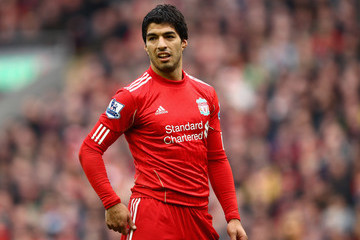
Should Arsenal have offered £42m for Suarez – will lessons be learned?

Luis+Suarez+6kfrToVimIPm

Looking back on the season at this point at the beginning of March, one can say that there have been positive signs in terms of us being competitive with Manchester City and Chelsea, two clubs backed by enormously wealthy owners. Some say that this was a season of opportunity with management of Chelsea and both Manchester clubs in transition, but at this point it could also be said that we could have been standing in a much worse position at this juncture, not least taking into account the mood of the club after our season opening loss at home to Aston Villa. The 2013/14 season as a whole is now very much in the balance following the disappointing away loss to Stoke, but we still have a decent shot at a trophy, most likely the FA Cup, with the Premier League title still an outside shot.

Over the weekend we have had a revelation courtesy of Liverpool’s club owner, John Henry, who said this in a filmed panel discussion at the MIT Sloan Sports Analytics Conference:

“Luis Suarez is the top scorer in the English Premier League which is arguably the top soccer league in the world”

“And he had a buy-out clause – I don’t know what degree I should go into this – but he had a buy-out clause of £40million – more than 60 million (US) dollars. So Arsenal, one of our prime rivals this year … they offered £40million and one pound for him and triggered his buy-out clause.”

“But what we’ve found over the years is that contracts don’t seem to mean a lot in England – actually not in England, in world football. It doesn’t matter how long a player’s contract is, he can decide he’s leaving.”

It is very rare for us fans to know details of the ins and outs of backroom dealings, but by John Henry being so clear in his own words we now have some explicit clarity with regards to the Luis Suarez transfer saga last summer.

One can only imagine where we would be placed at this point in the season if we had pulled off the signing of Suarez. It is largely water under the bridge now but I do think the rare clarity of information we have received courtesy of John Henry enables a revisit of what likely happened from our side, as a club, in attempting to pull off the Suarez signing, but ultimately failing. The most important thing is that there are lessons to be learned, and perhaps justifiable calls for some accountability.

Obviously at some point last summer we had been tipped off about a £40m release clause in Suarez’s contract, most likely by Pere Guardiola, his agent. One would suggest timing linked with a rather suspect flurry of betting activity in Spain, reported in various media sources in early July of that summer. The fact that we were tipped off indicates that Suarez was at that time very interested in a move to Arsenal. Based on this information our club proceeded to the infamous £40m + £1 bid which we rightly expected would trigger the release clause. However, John Henry refused to cooperate and Liverpool used the media to embarrass us regarding the nature of the bid, and by doing so the suits in executive offices of our club (our executive management) were instantly rocked back onto their heels; a position from which they never recovered in regaining an upper hand.

Refusing to allow a player to proceed to negotiate personal terms with a club that has triggered a release clause is pretty unprecedented. John Henry has boasted that words in Suarez’s contract counted for little, but I take this as bluster. Liverpool would have been left wide open to pressure, be it from the PFA, the FA, UEFA, FIFA, or even a combination of these bodies because challenging the whole framework of contracts is not something that authorities can readily accept, as it would ultimately risk chaos in the professional sport as a whole, in England, and possibly globally. One has to ask, when it was clear at the time that Luis Suarez very much wanted to join Arsenal for Champions League football, why pressure, with or without legal recourse, was not exerted on LFC. I will explain why it probably was not, at least not to any significant level.

For all we know, there could have been some action behind the scenes, at least a lot of discussions amongst executive management at Arsenal as to potential strategies of how to outmaneuver Liverpool. However, this tracks back to our bid of £40m + £1. The nature of this bid was an overt admission that we had been tipped off on Suarez’s release clause, and by the letter of the law of professional football such tip offs are illegal. Although technically illegal, it is pretty widely known within the football community that players’ agents talk with clubs and divulge contract details, and such communications reside in a gray area which is largely tolerated. Murky gray area notwithstanding, there was no way that we could deny that we had been tipped off regarding Suarez’s release clause and that very likely put our executive management in a bit of a legal straightjacket.

In hindsight, although we know that any money included in a bid over and above a release clause is perhaps unnecessary money spent, if we had put in a bid of £42m there is no way that it could have been definitively proven by Liverpool that we had put in a bid for Suarez after gaining inside information. A bid of £42m in all likelihood would have secured the signing of Suarez in my humble opinion. Arsenal’s backroom were outfoxed by Liverpool’s backroom despite having a strong upper hand initially because of poor strategic thinking that allowed an opportunity to slip through our fingers. Remember Arsenal did not reveal the +£1 bid, that was John Henry and Liverpool, in a very high profile manner, i.e. they used the media to outfox us.

I wanted to share this revisiting of the Suarez transfer saga last summer, because it is very rare that fans know all the ins and outs of transfer dealings; but in this case, we have John Henry in his own words as firm evidence. The opportunity for signing Suarez has in all likelihood come and gone. While we hope that the suits in our executive offices have reflected on how they were likely outfoxed, I believe it is right for fans to have confidence that indeed lessons are being learned moving forwards. We should demand some accountability, so that improvements can be built into our overall approach, and perhaps a review and reorganisation of individual staff responsibilities. Doing so can only help, in terms of future transfer dealings.

So where should accountability lie?

Personally I do not lay any blame with Arsène Wenger. Where we fell short in the Luis Suarez saga was in poor strategic thinking, and although the football manager may play a role, responsibility for such strategic thinking should lie within a core team within the club’s executive management. If the football manager overtly oversaw the process then that is not necessarily his fault; he is an employee of the club and those higher up in the club’s structure should understand his limitations and recognise the need to assert themselves more. Ultimately in this case, I believe we have clarity that points us to our Chief Executive, i.e. Ivan Gazidis (IG). One could perhaps consider Dick Law, but IG should have been in the loop of details every step of the way. If IG wasn’t, one has to question his oversight as Chief Executive. One could perhaps consider Stan Kroenke, but I don’t believe Kroenke should be expected to know every detail; he employs IG and should trust him to perform competently with a degree of autonomy in the lofty, well paid, position of Chief Executive.

To make it clear, I am not asking for IG to be sacked. Indeed, one can point to much good that he has done for the club in enhancing commercial revenues. Perhaps what is needed is a little restructuring of our executive management with someone with ultimate responsibility for transfer dealings, at an organisational level in between IG and Dick Law. Many clubs nowadays employ a Director of Football, but I do not recommend one. I prefer a football manager to have full responsibility for players he wants to sign because he has to manage those players. A person in between IG and Dick Law wouldn’t be a Director of Football; indeed, he would be more like David Dein. Last summer we hired Chips Keswick as Chairman, as successor to Peter Hill Wood. I do not know what Chips Keswick exactly does, but perhaps we can question this hire and whether we should have brought back David Dein (or someone similar to David Dein) at that juncture. Nevertheless, there is room for IG, Chips Keswick (as successor to PHW), as well as a David Dein. This would take any ambiguity of transfer dealing oversight largely away from IG, so that he can focus largely on continuing to grow commercial revenues.

On a side note, obviously John Henry felt free to divulge details at this juncture because Liverpool are in a good position in the Premier League table, Luis Suarez appears fully satisfied there now, and they are in a good position to secure Champions League football for next season. John Henry had an up close and personal view of effectiveness of our executive management in transfer dealings last summer, outsmarting them in the process – one could argue very easily. He used the media very well in going so public with our £40m + £1 bid, perhaps with a level of faux outrage.

Ultimately, he made our executive management look like a bunch of amateurs, and in saying what he did in a filmed panel discussion at MIT over the weekend it was the equivalent of him smoking one of his cigars while enjoying how he got one over on Arsenal Football Club. We should perhaps see the glass half full and draw on this as motivation as fans to demand from the club’s executive management some transparency of lessons learned and associated adjustments, in line with my humble suggestions, or otherwise.

Iceman_10
Economics, Terror Windows and why we pay more for the same thing…

A new era for the mighty red and white?


So, another terror/transfer window (TW) is upon us and just in time for the injury gods to strike down our own TW (Theo Walcott), along with the usual other collateral damage of the holiday season (Bendtner, Ozil, Ramsey,  …. list until squad is finished).

However, like modern asymmetric warfare, terror, in this case the TW, and should we add an ! to that, TW!, is the solution. A chance to buy what you need, and loan out (metaphor for leave at the curb) that which you don’t. It sparks something akin to Christmas fever among otherwise sane adults who suddenly dream of that star ST, DM, CB, RB, … that might be “theirs” for just (insert large number of millions). All SQ of course! 🙂

2012 lexus lfa profile chain

So, we know right away that the TW! Is like a car. Put a normally sane person in one and you may well end up with a wild-eyed crazy person. This article is about adding some sanity and fun economics to ever growing lists of “what we need,” where just today I read an article that for just 7 new starters Arsenal will be solid for the rest of the year.

Seven!? That’s not a change, it’s a whole new team, kind of like Spurs this year, who have done oh so well with that plan!

Anyway, we all know the basics and have discussed them ad nauseum, but let us review so I can get my word count up:

  • Release clause: specifies the amount of money for which a player may leave, key point here, if they wish to. No car lot bargaining here, stump up and a willing player is yours. Imagine if the car could look at you and go “nah, I don’t think that he/she is my type of owner, …”
  • Available: an adjective describing the state of being open to offers. Often overused in the TW! To mean “desperately desiring”
  • Interest: a noun that means lightly intrigued in principle, but in a TW! It suffers inflation to mean “stalking and acting quite anti-socially weird”

All of which is to say that all wish lists are subject to a player in question being willing to leave if a suitable deal arrives and they have a release clause, as well as a team being willing to part with that player for a price if they don’t.

Lesson 1: Embrace Reality: It’s all well and good to say “get XXX” and all his friends, but if he isn’t interested in Arsenal or moving just now, or his team won’t sell then … This is despite the fact that all supermodels desperately want me, even now, which is to say,

à It helps to see the world as it is rather than how you may want it to be.

Lesson 2: Strength from Scarcity: If a hundred SQ strikers were all available due to the simultaneous collapse of the Spanish, Italian and several other economies, then getting a good deal would be easy. Alas, never true when you need it! Scarcity is what drives prices in the TW! Scarcity, and fear of missing out on a one chance opportunity. How do you beat scarcity? You look for weak teams or those who need money, or who need something else even more. AW knows this, and has basically said so, good economist that he is, and we see it every game that Santi and Nacho play. And Ozil, and many others who were bought for needed money when the time was right. Players entering the last year of their contracts, forcing teams to cash in before losing them on a free, in effect reverse scarcity, which is to say create desperation for the team, by their desire to leave. At least towards the end of a TW!

à Need and player are only two elements, timing matters. Who are the teams that need something even more and have the player we want? How can we create a reverse scarcity with the teams we deal with?

Lesson 3: Marginal is of central importance: An economist will tell you that when the price of a good and its value are about equal, you are in an area where small margins of interest or need determine the final price. Another way to look at it is that lower priced, more available players who turn out to be great, with some input work usually, are a far better bargain then buying a star. For Ozil’s 40M how many youngsters and training years could we have bought. Figure TW and AR together didn’t cost that much. Hence, AWs preference for youth, it’s a better buy. If you can wait.

à It would indicate that buying now should be an act of desperation. If we consider Lesson 2 then, the real moral of this story is to find someone more desperate. With some SQ to spare. Who are those teams? Who is this year’s Malaga or Anzhi?

Lesson 4: Prices are optional: The price set is optional. I can charge you $100 for a coffee from my brand new espresso machine, and 17HT might pay it! But, if you have other options (see Lesson 2, or Lesson 1 if you are addressing my price), then I likely wont get many buyers after 17.

However, more interestingly, they thus reveal information. The price set in a release clause for example shows not only the players value to the team, but also the added value they derive from not losing him. A form of insurance if you will. Find a desperate team and you will find that the second price component comes down, and you have a Santi or Nacho for example.

à Use the quoted price (and total cost) to determine how much a team feels “not losing” a player is worth to them. Who are the teams with a player we want who can “afford” to lose them the most?


Lesson 5: Much of business is figuring out how to get a customer to pay more for the same thing: This is fundamental and to me denotes much of the TW! You’re at the movies and of course you get overpriced popcorn. It’s like $10 for a small, and immediately the perky teenager behind the bar says “Would you like the next size up (appears to be about 50% more) for another $1?” Whoa, really?!? What a deal… And so we grow fatter. But, that’s not it really. What has really happened is that you paid $1 (10%) more for about $0.01 (1 cent) more of cost. I.e. you just paid more for the same thing!

TW! time concentrates the market and its desperation, and thus we pay more for the same thing. Far more then if we had a more open market. That should clearly point out that the TW! benefits not teams, nor players, but agents and leagues who profit directly and, by the publicity of large sums for players in their leagues, indirectly.

Please don’t go on about how we can make it up in shirt sales. I agree, but, that money also goes towards infrastructure development, paying the person who sells you your tickets or keeps Arsenal player online so Gerry and I can watch the games. Like a bonus or a tax return you should save, you can, or at least should, only spend it once.

The real question is how to pay the same for the same thing. Something I think AW has been very good at over the years but, with all the other lessons above, requires patience, and a willingness to be creative. We didn’t *need* Ozil, but he was available for the “same” price when you compare his cost to Bale for example.

Now, before you leap on the “he’s a cheapskate, kill him!” wagon. This is not about being cheap. Our friends across the way at Spurs are the classic case of paying more for the same thing. They took £80-100M of Bale money and spent it on just about a whole team. That played the same. One 40M Ozil or similar might have been a better deal and a way of paying less for more. ‘Nuff said!

à How can Arsenal and AW buy more for less or the same price, rather then paying more for the same thing (or less if you buy the “Arshavin Corollary”)? To me it’s about being creative, need a ST, buy a DM and play different perhaps… How can AW be creative and still get Arsenal where we want to be at the end of the year?

So, just some thoughts to keep in mind when reading those wish lists and figuring out who we might want and who we might get. Consider them tools to use in analyzing what might really be going on.

Who’s really willing? Who’s desperate? Who’s “scarce” and who’s not? Are we being super-sized to pay more for the same thing? Should we care? Who’s the player we don’t need that will turn out to be the player we absolutely needed (keeping in mind another midfielder wasn’t top of many folks lists this past TW!)?

What are your thoughts?


Cheers — jgc

Could Arsenal be in a better position right now to end trophy-drought?

A new era for the mighty red and white?

Towards the end of last season, I wrote about the five things that Arsenal would need to look at if the club wanted to be serious in its pursuit of silverware.  A solid start to the new season (including a win against the “strongest ever” Spurs – which for some reason made me so very very very happy!!) and one harrowing, frustrating and ultimately exciting transfer window later, it’s a good time to go back to those five points and reassess where the club stands:

1 – Sort out the squad by the middle of July, have a consistent first team and timely rotations

When the transfer window started, the club had three objectives: a) get rid of the deadwood, b) keep our good players at the club, and c) bring in new players who would add value to the squad, ideally a superstar or two. Ivan Gazidis went out and put the cat amongst the pigeons by saying Arsene had a huge kitty to spend from, that we’d get in our players nice and early and that we could afford the likes of Rooney etc. Cue, huge expectations.

Did we achieve those objectives? A categorical yes to a) and b). We did very well with the deadwood, and we retained all of our core players. As far as bringing in new players was concerned, I felt the club struggled. Key areas to be strengthened were ST, GK, DM and defense.

Sanogo came in early, and was a victim of being a free signing. I rate him, but he is at best a third option striker, so the ST position still needed to be strengthened. Links with Higuain and Rooney arose, and Higuain was all but signed. Then came Suarez, and from what I understand, we were led up the garden path by his agent regarding the 40 mn + 1 offer. The only good thing that came out of that was a statement that we were willing to spend huge money.

Flamini came in next, again on a free, after being linked with Gotze, Fabregas, Cabaye, Fellaini, Gundogan, Illarmendi etc. At the time, I felt that Flamini was a brilliant and shrewd signing, but underwhelming when you compare him to the likes that we were being linked too. A word on Flamini before we move on: he should never have left. He was brought in to replace Viera and for a while did a great job. Seeing him back against Spurs really made me happy, because he’s one of those players who can take the bit between his teeth and push everyone around him to be better. He’s a shouter, an organizer, a tackler… and Gosh, how we have missed someone like that.

Then came the deadline day and we ended up with Oh My God… Ozil! And in that one signing Arsene showcased that he is still well respected around the world and an attractive option to superstar players. Remember, Ozil did not want to leave Madrid or come to Arsenal, he had an offer from PSG and unconvincing interest from Man U, but he signed for us after Arsene convinced him that we mean business. You can’t ask for more than that. And in doing so, Ozil became the 3rd most expensive British signing and the most expensive German ever signed. 42.5 mn… wow! Arsenal paid that!

So was the first point achieved? Yes in the sense that the team remained stable, no players important to us were sold and our first team is gelled and ready (unlike others who have spent 100 mn +) and that was on show in the last 4 games that we have played and particularly against Spurs. Spurs on the other hand looked disjointed at times and will take a while to gel.

However we did go off-track in the sense that despite ending up with Ozil, we could have planned the window a bit better, and gotten good players in early. I still find it head-scratching that we couldn’t get a striker. I’m not going to pretend to understand how a lot of things work in the transfer window between clubs, but surely in two months you can sign one striker.

Ozil should have been a bonus (he still is), the cherry on top of 4/5 players that we needed to strengthen. Having said that, we did strengthen, and the only place I feel we are light now is the ST position.

I would point out that this was the first window where Wenger, Gazidis and co. could spend big money, and talk to big players (hopefully we should have a similar kitty in upcoming windows), so to an extent it may have been a learning process for all involved. I feel Higuain and Suarez could have been handled a lot better.

Having said all of that at least we didn’t end up paying 5 mn extra for a player who could have been signed a few weeks before via the get-out clause in his contract! Guess who I’m talking about!

2 – A strong vocal performing captain

In my article I had put forward Arteta as one possible option. Arteta has been our spiritual leader in many ways, and a player that the team can look up to. Unfortunately, along with TV, Arteta too is out for now and the mantle of the captaincy has fallen upon the BFG! And I’ll tell you what, he has done a bang up job so far in terms of organizing and leading the team. However, I do not feel he can be a long term solution.

It is clear that Arsene plans on keeping TV as the club captain, so it becomes vital for a) TV to recapture his old form and force his way back into the side, and b) for all of our other leaders to make their collective mark and push the team forward. I’m referring to Per, Arteta and Flamini.

3 – Capture the fans imagination, change the press narrative

Oh how well we have achieved this is: absolutely utterly phenomenal! Not since Bergkamp has such a superstar been signed. Arguably the greatest playmaker in the world, Mesut Ozil! Dear oh dear… I still get goose bumps! However, we need to keep in mind that we were very close to ending the window with a narrative that would have been worse than where we started from. I do believe that Arsene had his eye out on a big signing, and delivered accordingly.

The narrative is now exciting, the fans are now excited! We are a team that is intent on making a statement, we are a team that is together and gelled, we are a team that has just trebled its record transfer in one go, signing the best in the world; and we are a team led by a man who may be flawed, who may be misunderstood, but one who is still well respected and who still, in my opinion, is something of a genius!

Could we possibly be in a better position right now to mount a challenge on ending the barren trophy run?


4 – Be strong against the top six, and clinical against lower half opposition

We have started off OK. A loss to Villa was a perfect example of everything going wrong, but since then we have been solid and we have been strong. That is very heartening. Add to that the incomparable form of Ramsey, Kos, Per, Scez, Ollie and Santi, and we are looking good. The win against Spurs was all about positive work going forward and being solid at the back, and as a supporter you can’t ask for more. I recall thinking during the last five minutes that I can’t really fault them even if Spurs get an equalizer, even though we deserved to win. But we pulled through… in many a season ago that win might have been a draw or even a late loss, but our team ran themselves to the ground and won the game. It may be a big statement, but its matches like these rather than 5-0 thrashings that define a championship/cup winning team and breeds the winner mentality.

5 – Do the basics right and have clear objectives

So what do we expect from this team and this squad? As much as I would love to believe that with Ozil we can challenge for the title, I feel that may be a step too far. For me in the premiership we should finish second (although we are dark horses for sure). I firmly believe that with the squad Arsenal have, we should win both the League Cup and the FA Cup, if not one of them. The Champions League we can only take one step at a time, and for now the biggest challenge is to get through the group.

Bottom line though, if someone tells me right now that we win one cup at the end of this season, I will gladly take it! If nothing, that would make the narrative more positive and enhance the winning mentality with which we can look to win the league next season, with the possible addition of a couple of more quality players.

I would love to hear what you guys think!

Written by: Umair Naeem

27 goals/81 assists in 157 games: Arsenal just signed a world top-ten footballer

Mesut Ozil - our very own toad in the hole ;)
Mesut Ozil – our very own toad in the hole! 😉


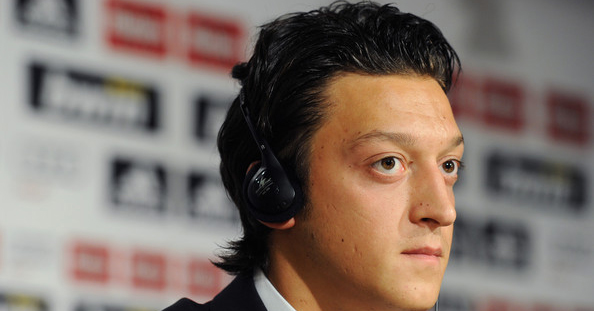
The second biggest transfer fee in British history belongs to Arsenal!!!  The acquisition of Mesut Ozil from Real Madrid for £42.4 million almost triples our previous highest transfer fee paid of £15 million.  His rumoured wages of £130k/week is £25k more than our next highest player (rumoured to be Walcott).

So, did Arsenal get a bargain or overpay the odds to acquire Ozil’s services?  Well, transfermarkt has him appraised at a value of €40 million (or £34 million).  However, given today’s transfer market and the inflation of player price tags, I believe that we have paid market value for an individual widely considered to be the best playmaker outside of Barcelona’s Iniesta.

With 27 goals and 81 assists in 157 appearances for Real Madrid, it’s easy to see why Ozil is rated so highly.  In the last three La Liga seasons, he’s finished 2nd, 1st and 2nd in the assist table.  One may be quick to point out that Ozil’s stats are inflated due to playing alongside other world-class players, in addition to one of the most clinical finishers in the game today in Ronaldo.  But, having watched Ozil play both live and on TV over the years, he was indeed the player that made Real tick.  When Ozil was not on his best form Real inevitably suffered, and the creative playmaker was often shut out in those contests.

images

This brings me to the criticism that generally follows a player of Ozil’s world-class quality; because of his vast amount of skill, he seems disinterested at times and does not appear to have the work rate/passion to allow him to be seen in the same light as players like Messi, Ronaldo, Iniesta and Xavi.  Ozil can occasionally drift in and out of games, but can easily change the outcome of a game with one defence-splitting pass or a run up field on the counter.

Unlike Theo or Podolski, whom are often criticized for doing nothing for large portions of the game before ultimately scoring, Ozil is constantly involved and likes to make things happen.  His weakness comes from his own frustration – he becomes visibly upset when he does not receive the ball frequently enough, or the players around him do not finish the plethora of chances he creates for them in every game.

That said, you will rarely see Ozil waving his arms in the air, complaining to the referee or diving.  He is the type of player that stays up through contact and just likes to get on with the game.  When pushed, Ozil has a bit of a mean streak in him and is not afraid to get into the face of the opposition  – watch him get pissed off at Villa in the El Classico brawl: http://www.youtube.com/watch?v=E_Pp3O7v1EI

Last season, Ozil started 23 La Liga games, in addition to 9 substitute appearances.  He managed to contribute 9 goals and 13 assists in 2,022 minutes played, providing 2.9 key passes per game (more than any other player at Real Madrid) and creating a total of 24 big chances.  For every 22.1 minutes played, Ozil contributed a key pass.  On the other hand, Silva, statistically the best in key passes per minute played in the EPL, contributed a key pass every 24.2 minutes played.  In fact, across the 5 big leagues (EPL, La Liga, Bundesliga, Serie A and Ligue 1), Ozil contributed the most key passes in comparison to minutes played!  (All stats courtesy of whoscored.com.)

Now that we’ve established that Ozil is one of the elite playmakers in the modern game, it’d be a disservice to not highlight his pace and ball control.  He’s got an exquisite touch and his ability to control a ball in the air or along the ground is something to behold; in fact, the EPL has not seen anyone with his ability since Ronaldo left for Real Madrid in 2009.  Ozil’s speed can be compared to that of Jack when he’s 100%, as his acceleration, change of pace, lateral agility and speed with or without the ball, make him unplayable on most days.

Then, one must also consider the fact that Ozil is only 24 years old.  He is still yet to reach his peak and with the world already at his feet, there’s no telling just how good he could be if buys into Arsene’s tutelage and the overall plan.

Now the big question remains, how will Ozil slot into Arsenal’s starting 11?

In all likelihood, Ozil will play in his favoured CAM role.  He’s most influential when played there and he’s capable of breaking down a defence on the counter, around the edge of the box or with deep over the top/long balls.  Playing him centrally also allows him to drive our team forward with his darting runs to give shape to our attack.  This will also allow him to find the seams to play either Theo cutting in from the right, OG in front of him or Santi on the left.

Santi is most effective when played wide left, mainly because he’s the type of player that likes to see the play develop and join in on the attack at a moment’s notice.  Ozil, on the other hand, enjoys making things happen on the pitch and to be in full control of the game.  I have no doubt in my mind that the two will form an outstanding partnership with some of the most gorgeous combinations that the EPL and Gooners will have ever seen.

Whether we want to admit it or not, the fate of Arsenal’s future will be intertwined with this record breaking transfer – if Ozil continues his world-class production or betters it, it will surely convince management that spending big in the transfer market can yield positive results for our club.  The appetite for risk will slowly increase and perhaps we’ll see more signings in and around the £20-40 million mark.

However, if Ozil by some fluke loses form and does not work out like the much-maligned Torres at Chelsea, we may see the end of massive spending by our beloved club.  Unlike Abramovich at Chelsea, Arsenal do not have unlimited funds and we generally work under a conservative basis – this failure would then represent further proof that spending big in the transfer market is not the answer to our club’s woes.

Still, I believe that Ozil will be a massive success, and Arsenal FC will be reaping the benefits of Real overlooking a top 10 footballer in the world for years to come.

Written by: Highbury Harmony

ARSENAL FC – Sacrificing Trophies for Profit? You decide

Do Arsenal have the real appetite to spend?

Just some food for thought….

Since we last won the PL, The only winners have been Man United, Chelsea and ManCity.

We all know this. Yes, Chelsea, the club with no history have spent Megabucks to achieve all that they have achieved, same goes for ManCity. This is not news to any of us.

The game changed years ago since our Invincibles achieved what most believed would never happen. Roman invested heavily into a team that had not had much success at all, same with all the oil money now at City. The Mancs continued as per usual by investing in talent when they needed to.

My main gripe with what has happened to our club is that we have done quite the opposite. Selling our main core of players and re-investing in players who normally would not get a look into our team. Santi is one of the few shining stars who we have picked up due to the distress of another club.

Since the inception of the PL, what has The Arsenal actually spent on players?? If we look at the total amount we have made from selling players vs what we have spent on players since the start of the premier league, we have spent £20,216,000 (in 20 years). In comparison Man United have spent £230,810,000,

Chelsea £618,165,000 and ManCity £565,927,000.

We have spent considerably less than the winners of the past 10 years; a lot less, actually.

I do not expect us to spend the same crazy money that others have spent. Firstly, we would not have to spend a lot of money if we had not been soft and sold all our core players to direct rivals. Isn’t it funny that when we are looking at buying players from rival clubs, no one is crazy enough to sell to us. Rightly so!!

We have strengthened the likes of ManCity and even handed the title to Man United last season. Who is to blame? We are! In favour of making profits, we have sold our players and jeopardized our chances of winning any titles.

Did we need to sell the likes of Cesc (soon after signing a new contract) and RVP to a direct rival? My answer is NO!!  By selling RVP to a rival club we are saying that we are:

1)     more interested in making money

2)     Not serious about challenging for titles

3)     We are a selling club (in order to make profits)

I am not saying that I want Wenger Out. I appreciate all that he has done for the club. All I am saying is that we need a change of direction or leadership.
We have heard all the excuses over the past few years, and I do not buy it. Success brings in more commercial money, and the success we could have had with the players we have sold would have meant that we would not have needed to sell players in order to make a profit for the club. Success also makes you more attractive to other players; and from what we are witnessing now, we do not have the same pull on the Transfer Window as we once did. This is definitely evident.

Whilst the current TW is still open and we will make a few panic buys, I am not convinced that we are being led the way that a club such as The Arsenal should.

Yes, they will be panic buys because we’ve had the whole off season to plan and buy, and nothing has happened so far. It’s the same pattern as the past few seasons. We get thrashed by ManUre 8-2, we pick up Zorro, Per, Santos and Park.

Gibbs gets injured mid-season, we pick up Nacho.

How can the fans accept what is going on when we clear the dead wood from our books and still no one has come in. 17 out, 1 in on a free. Does that sound like a sound planning? Definitely not to me.

I now put it to you fine BK’ers out there: in your opinion, what do we need to change to get our fine club back to where it should be?

Written by: Alexgunners.

FFP – Fundamentally Flawed Policy? Why Freedom is Best.

Emirates-Stadium-opens-©-Hufton+Crow-990x465

As many of you who may have followed my occasional warbling will have noticed, there is a common theme in which I have bemoaned the arrival of the ‘meddling’ multi-billionaires and oil rich state owned corporations into football, but also I have cast doubt on the equally meddling UEFA and EPL FFP regulations which will try to lamely control these wealthy entities.

Why do I describe these people as meddling?

Well both the multi-billionaires who now own football clubs, as well as the Arab or Eastern European state backed owners, and the state owners of clubs, do not really need to dabble in football at all, and neither do they show much personal interest or enjoyment in the sport itself, but they do clearly have their own agendas in plucking financially struggling clubs and transforming them at a stroke.

The average, and frequently penurious fan may goggle at the nine zeros  in a billion dollars, [$1,000,000,000] or 1,000, million dollars, which represents the sort of money (give or take) expended on Manchester City by Sheikh Mansour, and the very similar sums paid out for Chelsea, Manchester United and even Arsenal by the new owners.

For some of the oligarchs, football is a tasteless way of indulging themselves in a personal whimsy or fiefdom, and to play a real life version of FIFA 2012, and to show to the adoring fans how omniscient and clever they are by buying struggling clubs and injecting huge sums of money to enable them to be regenerated and start to become trophy winning giants.

For others, such as Silent Stan, it is a safe vehicle for their financial investment in a major sporting institution, in which they intend to see a rich reward in the medium to longer term.

Alternatively, for the state backed clubs, it is another way to give their countries some reflected glory from their involvement with world renowned clubs, or in the case of the state of Qatar, their purchase of PSG has underlined their credibility in ‘buying’ the World Cup venue and showing their state in a better footballing light.

To prevent the inevitable rampant distortion of the economic football environment, the powers at UEFA, closely followed by the English Premier League owner, have introduced the FFP regulations, which are purportedly to return to a financially level playing field in the European Leagues, particularly the EPL, and to stymie the runaway financial power of the mushrooming oligarch clubs.

That’s good isn’t it?

Well, not for every club, I am afraid.

Let us accept for the sake of this discussion that FFP will work, and then we can look at what the consequences will be for the different level of clubs in the PL.

UEFA decided to act on the inequalities and financial instability of many clubs throughout Europe, once it became obvious that the oligarchs and Arab states were also seriously affecting the footballing environment. They now require all clubs to introduce more discipline and rationality into their club football finances, particularly by decreasing the pressure on salaries and transfer fees, and limiting inflationary effects, by the simple expedient of requiring the clubs to compete only within their generated revenues, and to invest more in their youth teams and their club infrastructures.

Basically, they now require clubs to balance their books or break even. Simple!!

Under this concept, clubs cannot repeatedly spend more than their generated revenues, and they will be obliged to meet all their transfer and employee payment commitments and not build up unsustainable debt, or failing this they will be thrown out of European competitions.

Ok, that is a brief synopsis of the major requirements of FFP, with which we are all too familiar.

So why am I concerned that these seemingly very laudable objectives might achieve exactly the opposite of what was intended and will not result in a level financial playing field?

In large part, this whole concept has come about on the basis of shutting the stable doors after the horse has bolted. Chelsea and Man City have been transformed from also ran, financially struggling clubs who were rocketed up to become part of the prevailing elite, consisting of Arsenal and Man United, by the injection of vast sums of money from their wealthy owners.

It happened and it is not possible to turn the clock back.

The new FFP rules will still permit oligarch type owners to purchase a club such as Wigan or Sunderland, but they will not be able to pour outrageous sums of money into those clubs, and therefore they could not grow to challenge the existing elite. The same block on uncontrolled spending also applies to clubs who have already been bought by somewhat less wealthy owners, such as those at Reading or Southampton, and again they will not be able to challenge the existing elite because of this financial restriction.

Incidentally, should Usmanov manage to acquire the ownership of Arsenal, he too would be restricted as to the sums he could pour into Arsenal, subject to some magical accounting, of course.

What magical accounting you ask?

Well, this is a little digression from my theme, but there is a major difference between owner investment and owner personal loans. Loans can build up and will need to be repaid at some time – just ask the Portsmouth fans, whereas owner investment means to inject capital into the company usually by way of additional issued share capital in exchange for cash, and this can be extended to fan ownership too, as in Germany.

Anyway, so happy were Arsenal, Manyoo, Liverpool and even Spurs, with the provisions of the UEFA FFP that they sent out a joint message, on an Arsenal letter head, to all the other clubs, (which I am showing below) proposing that the Premiership should introduce their own version of FFP.

Last December, partly as a result of this letter and some arm twisting negotiations, the EPL FFP provisions were passed, much to the delight of the main proponents, and to the chagrin of clubs like Man Citeh, Fulham, Southampton, Reading etc, all of whom objected but were outvoted.
[Oddly Abramovich, against all reason, agreed the proposal – which he could have blocked].

The effect of this agreement is that all EPL clubs have to submit their financial accounts not only to UEFA for audit, but also to a Premier league appointed Investigator for certification.

OK, I can hear you say, so what?

[this is the Arsenal letter mentioned above]:

http://www.dailymail.co.uk/sport/football/article-2262027/Manchester-United-Liverpool-Arsenal-Spurs-join-forces-shackle-spending-Man-City-Chelsea.html

Here comes the rub with these FFP proposals. 

Clubs like Arsenal and Manure have the biggest stadia and the highest revenue streams, although Manyoo are really in a league all on their own, and can only benefit from linking expenditure on transfers and salaries to a percentage of turnover, which in turn means their transfer chests will, over time, become bigger and give them the greatest chance of buying the best players.

I can hear you thinking, so if Arsenal is likely to be one of the big beneficiaries of the new regime, why am I not happy with the outcome of FFP?

Well, Arsenal’s inclusion in a small group of clubs that will benefit, if as seems likely, the oligarchs and the state owned clubs are not permitted to ‘invest’ whatever monies they wanted into their clubs, is also balanced by the exclusion of the ‘lower’ clubs, such as Newcastle, Villa and West Brom etc, who will forever remain cannon fodder for the ‘elite’.

In effect, if a new oligarch happened along, as mentioned earlier, all they would be able to do is to maintain the status quo, with the elite group expanding their clubs profitability and influence, whereas  those with smaller revenues will only be able to watch them disappear into the distance.

Silent Stan must be rubbing his hands with glee that Arsenal now stand a very good chance of getting back to near the top in the medium term, which will not do his investment any harm, and I don’t suppose he will much care that it will be at the expense of our club submitting to the financial ‘power’ of Manyoo, who will, in all probability, win the Premiership every year, as they become unassailable.

There is another imperative downside to FFP, and that is the cost to all the loyal fans of clubs throughout the EPL, if these more stringent rules result in clubs failing to keep within them, or if sponsorship income dries up, or if player wages continue to increase, despite efforts to curtail them, there will be only one way to recoup additional funds, and that will be by charging fans even more for tickets to watch their teams.

As I hope I have shown you, what is a very well intentioned change in the administration of the game by using FFP to try and impose a level financial playing field, could very easily result in the exact opposite, with the establishment of a rigid regime that will prevent any clubs, except the privileged few including our own dear Arsenal, from having even the smallest chance of winning the Premiership, and making Manyoo into the sole English Galactico in the process.

I believe in freedom. 

Freedom to allow people to do what they want, within the Law, even if this means allowing all football club owners, whoever they may be, to spend as much or as little money as they want, on the clubs that they own, or to borrow what they, as businessmen, deem necessary.

A freedom, which will permit the Arsenal owners, should they wish, to stick rigidly to their policy of pursuing a self sustainable finance model.

A freedom, where perhaps eventually a small, well run club in the ‘lower’ echelons of the Premiership could emulate the success of the CL semi-finalists, Borussia Dortmund, who themselves, in 2005, accepted external short-term funding, from another wealthier club, Bayern Munich, which enabled BD to survive and prosper.

That freedom will not be permitted in the future because the whole premise of FFP is flawed and just downright wrong.

This is a simple choice – Freedom for the clubs to pursue their own rainbows, or statutory regulation forcing all clubs to strictly adhere to a straight jacket within a fundamentally unbalanced new system.

I vote for freedom – how about you?

Written by: Red Arse.

We Need An Oligarch, Please!

Arsenal-v-Man-Utd-001

It may be time to revisit an old conundrum which has divided the fan base for some time, and it regards the very essence of our club. It is an overview of the club’s ownership, and how that affects each of us.

This is not a rant against the club, or its hierarchy, and neither does it come into the category of an ‘I told you so’ diatribe.

Whenever a train of thought regarding the way the club is organized is set out, it encourages a plethora of opinions each of which may be valid in its own right, but which has the effect of confusing the main thrust of the argument.

So, this is a personal musing about a matter that has caused much changing of my mind over the last few years.

Whenever the question is put to me, ‘Do you want Arsenal to win trophies?’ my instant and instinctive response is ‘Yes, of course I do’.

The follow up question is inevitably, ‘Can we do so without a greatly increased investment in quality players?’

Now therein lies the rub, because it is obvious that with all our main competitors, Man City, Man United and Chelsea continuing to spend heavily on the best players available, it would be impossible to win a trophy without Arsenal doing likewise. But if we hold true to our avowed preference for our club to be run on a sustainable model of financial prudence, how do we square these diametrically conflicting requirements?

So by a circuitous route we have arrived, at last, at a clear choice, which is, how do we fund such an investment, and more to the point, how did we arrive at this financial impasse, and should it matter to us, the fans?

When I was a child and started to support the Arsenal, I was not in the slightest bit interested in who owned the club, and how they found the money to run the club.  This disinterest extended further than that – I did not know who the owners were, and neither did I care.

It carried on that way until fairly recently, when with access to the Internet and the all devouring media interest in the excruciating minutiae of every Premier League club, we all became aware in painful detail of every aspect of our club’s finances, and ownership, especially after the arrival of Abramovich and the Sheikhs who promptly changed the face of football.

Many fans have expressed the opinion that they would never want an alleged crook like Usmanov to take ownership of the club, and with that view have passively accepted that Arsenal will never be able to compete with the other ‘big’ clubs, but would be content to see us strive to compete and play ‘good football’.

That, if I am forced to admit it, is exactly where I placed myself too. Arsenal were far better than the other money grubbing teams, and we had too much class to follow Chelsea, and the Mancs down the path of mammon, taking ill gotten monies from such sources in order to further our football desires.

Then the thought struck me. This was giving up, and meekly accepting that we were resigning ourselves to a genteel descent into a ‘classy’ but ‘no hope’ future, as we watch the financially well endowed clubs competing for all the available trophies, while we are consigned to mid-table mediocrity. That cannot be right – that is not what Arsenal are all about – it’s not good enough.

The second thought to strike me, with a resounding clunk, is that Arsenal owe their presence in the current elite of football courtesy of Sir Henry Norris, who once owned the club, and not only wangled us into the old First Division by some seedy backroom deals which saw us shortly afterwards winning the First Division Championship, but was later banned as a director of any company, by the High Court, as a result of ‘accidentally’ and illegally taking money out of Arsenal.

So, perhaps our previous owners have not always been so classy and above reproach after all, have they? But thank goodness for Sir Henry!!

The fact is, I have gone full circle in my thinking, and have come to realize that I still don’t care who owns the club, and I still don’t really know who the present incumbent Stan Kroenke is, and what he is all about, or what his personal motives are.

One thing is crystal clear, he obviously does not love Arsenal the way I do, and seems to have very little interest in the club, other than as an investment vehicle, and rarely even watches Arsenal play.

What I also know is that I cannot bring myself to believe that any self made multi-billionaire is so pure that he should have my unquestioning support. The owners and the players will come and go, but my loyalty and support will never change, and my loyalty is to the club, and the team — not the owners, whoever they may be.

It seems to me, that FFP aside, the current oligarch clubs, or their owners, are so powerful that the only way to compete with them is to bring on our own oligarch, perhaps Usmanov, and if he provides us with the funds that will allow us to compete and win trophies, I am happy to join the fans of the other mega-rich clubs springing up all over Europe, and to metaphorically shrug my shoulders and think ‘bring it on!’

My view on Usmanov, is similar to my view on Kroenke, in that I do not know him any better than our current owner, and I suspect as a multi-billionaire he also has a chequered career behind him, but he is probably no better or worse than Sir Henry, and look what that naughty gentleman did for us, turning what was then a mediocre club into a magnificent club, and a hundred years later his legacy still lives on.

Come on you mighty Gunners – jump into the financial arena, and give us a level playing field!

Written by: Red Arse.

How many PL clubs are as fortunate as Arsenal? A strategic analysis

cropped-dennis-bergkamp-playing-f-008.jpg

Troubled times or big opportunities for Arsenal?

The name of this Blog is, in large part, a reflection on a great Arsenal footballer revered by many, who, together with Arsene Wenger, helped to introduce the concept of playing a wonderful style of football, which has become the epitome of The Arsenal, a club dedicated, under its much maligned manager, to the ethos of the beautiful game!

How appropriate then, that this summer, a statue of the great man, Dennis Bergkamp, will be unveiled to stand alongside those of other memorably magnificent servants of the club, such as Thierry Henry, Herbert Chapman and Tony Adams.

In the eyes of some fans, however, these statues have also served to point at what they see as being at the very core of the problems the club has experienced in its recent fallow years. Namely, that the statues tell the tale that these superb players were far superior in quality to those currently available at the Emirates.

Given this focus, these fans have extended their acerbic criticism to include the owner, the medical and coaching staff, and indeed the man responsible for the recruitment of today’s players, the coach, Arsene Wenger.

In truth, when we consider the likes of Sol Campbell, Patrick Viera, Marc Overmars, and Robert Pires, and many others, who brought us three League Championships, and four FA Cups, while playing stunning, enchanting, one touch, fast paced football, it is difficult to deny that there is a case to answer.

With the construction of the Emirates Stadium claiming most of the available funds, it was comforting to believe the claim from Arsene that he was building a new team, based on youth, which would provide the nucleus of a great team that in a few years would be title-winners. Sadly, this aspiration has fallen short, and project youth has left us short of the top quality players necessary to win the major competitions.

Each time Arsene has cobbled together a team which looked to be moving in the right direction, we have had our crown jewels in Fabregas, Nasri, and, most especially, Robin van Persie snatched away from us.

The ire of the fans has increased each time a promising team has been decimated by losing key players in this way, or with the realization that new blood from the youth teams, with notable exceptions, has simply not been good enough.

The dream of winning a title has become ever more distant, with Arsenal slowly descending down the elite latter; until now they are desperately trying to hold on to fourth place in order to qualify for the Champions League, with the attendant status, prestige and money that brings.

There is no shortage of advice for the manager from desolate Gooners.
They have erupted with demands for a more consistent defence unit, and the immediate recruitment of a big commanding centre back, and preferably one who can at least get up a canter when needed. No, no, say some, what we need is a big beast of a defensive midfielder to support Jack and Cazzor! Don’t be silly, say others, what we need to do is strengthen the forward line, or at least make sure we play players in their proper positions!!

Of course, others, and there are many of them, say the whole squad needs to be rebuilt from the goal keeper upwards.

These voices of despair have been counter balanced, to an extent, by the voices of reason — that is from fans who know that such root and branch restructuring can never be funded by any club without an oligarch benefactor.

They recognize that although Arsenal has two major shareholders who are billionaires, neither of them have ever invested in the club directly, other than to pay huge sums to acquire the shares of the previous owners, which only lined the pockets of those individuals.

That said, many fans and ex-players take the view that the current squad are not very far away from being a good side, although still a long way off being a great side, but they feel the basics are there, especially with a midfield containing Wilshere, Cazzorla, and Rosicky.

So who is responsible for the decline in quality of our team, and the dispiriting realization that they are just a shadow of the truly great Arsenal teams of ten years ago?

There are as many theories as to who or what is the culprit, because, as a club, Arsenal rather secretively keep everything ‘in house’ and Arsene Wenger is not prone to complain, but the obvious question that needs answering, is whether or not he has been given the financial support he needs, even though we have often been told that substantial money is available, if he needs it.

At root, the stadium project has sucked up Arsenal’s cash resources, and it would be difficult for any business to take on that sort of financial burden without it causing problems elsewhere. Viewed in that light, how can it be argued that Wenger has not done absolutely brilliantly to keep the club in the Champions League over those years, and with hopes growing that he can still do it this year, too.

Of course, Wenger is not off the hook, in terms of partial responsibility, because it seems he is at fault, in the author’s opinion, for failing to be as efficient and professional in recruiting players of the required quality, or, as also seems to be the case, for perhaps failing to move quickly enough to buy players that did become available, only to see them being gobbled up by the ‘big’ spenders because of apparent hesitation, on his part, for decision making.

This contrasts poorly when we take in the fantastic signings he was responsible for in his early Arsenal career, by the use of a meticulous and wide ranging scouting system, and it has long been accepted in footballing quarters that Real Madrid, Manure and subsequently Chelsea scouts were detailed to creep around and stalk the Arsenal scouts to see who they were looking at!

Unfortunately, over time the footballing world has become ‘smaller’ and hidden ‘jewels’ are now known by the scouts of all the major clubs – and, in the final analysis, money talks.

One of the old chestnuts brought up from time to time, alludes to Wenger’s reliance on David Dein, and how much Arsene has missed his adept handling of the club’s transfer business. It does seem that this is a task Mr Wenger still dislikes and is probably unsuited to, whereas Dein revelled in the cut and thrust of dealing with the selling clubs and the greedy, grasping player agents.  Let’s be clear, Dein’s day is done, and there can be no justification for bringing him back, but it does highlight a poor piece of management by Danny Fizzman and the rest of the Board of Directors that they did not replace him at the time.

Arsene is rightly renowned for his ability to take good-ish players and make them great players, and take great players and turn them into outstanding players and also to produce fantastic teams that played to these strengths.

But unless his transfer strategy changes the outlook is not so promising, and with owners and a Chief Executive who know nothing about football, the fear is that there is no one to quietly advise him or simply tell him he must change. Time will tell on that.

I have left until last the statement of the obvious, and that is that the team with the best players always win the trophies. And the clubs who have the teams with the best players are those with the most money available to buy them. 

The dreaded spector of the elephant in the room cannot be avoided, when trying to apportion the ‘blame’ for Arsenal’s slow decline.

Wenger was probably initially confident of remaining in the elite group when the oligarch owner of Chelsea first appeared, and for a time this seemed to be a reasonable hope. However, the rapid influx of commercial money into the coffers of big spending Manure which helped to fund player acquisitions, followed just as quickly by the huge outlay on players by the new oilygarch owners of Man Shitty, made it obvious that a hole had been shot in Arsenal’s hopes of competing as an equal in the transfer market, and by association has seriously damaged our chances of winning trophies.

Still, hope is not lost, Manure have still got a massive debt that needs annual servicing, and Chelsea and Shitty are totally dependent on the goodwill and continuing support of their iniquitous sugar daddies, and let us not forget that not only have the UEFA FFP regulations begun to bite, but the Premier League have also introduced strong FFP regulations of their own, effectively capping the transfer and salary spending of clubs to what they bring in from football related revenue.

Arsenal with their self sustainability model, and low debt ratios are not subject to the same pressures as these clubs. However there still needs to be a huge increase in our efforts to boost sponsorship revenues, and this in turn might see a very different marketing operation in the future, with Arsenal spreading their wings and visiting North America and Asia far more frequently.

Look! Having a healthy balance sheet is not in and of itself what Arsenal is about, it is just a means to an end. In order to have a successful business, you have to have a successful football team and, in recent seasons, Arsenal seem to have lost sight of that simple precept.

The fans have mainly stayed loyal, even though there is a general disappointment that Kroenke and Usmanov appear to see the club more as a personal investment vehicle waiting to be harvested.

Now is the time for the owners to shake themselves out of their self imposed silence and torpor, and get back to remembering that Arsenal is a great FOOTBALL club, and within its very substantial means, it should get back into the business of investing in players, and in reaping the rewards of winning trophies, which will consequently improve the worth and wealth of the club, to the benefit of both the fans and also the owners, as a result. 

I have high hopes that despite all the unfounded criticism of Arsene Wenger, and Arsenal’s current turmoil, that we will come through these troubled times with all flags flying.

Arsene Wenger

Ask yourselves — how many Premier League clubs are fortunate enough to have such a strong financial base, and also have such a superb manager, ready to go into the next season with all guns blazing? 

None?

Written by: Red Arse.

Wenger’s Arsenal; Past – Present – Future. How will it all end?

Arsene Wenger

As regards ‘Arsenal Past’ we all are aware of the fantastic trophy filled past successes of Arsene Wenger in the period from his appointment as coach in 1996 and through until 2005.

In the eyes of some fans, it has been all too easy to judge his amazing impact on the club only through the microscope of trophies, and to simply ignore the extraordinary and direct impact he has had on Arsenal, and, indirectly, all the other Premier League clubs and more generally on English football as a whole.

Let us not spend too much time on debating this, other than to note the incontestable revolutionary training, dietary discipline, worldwide scouting prowess and administrative genius that he brought with him, and which has since been widely copied by every other Premier League manager, hungry for success, and that has set the groundwork for our future financial and on-field success.

So what of ‘Arsenal Present’, post the move to the Emirates stadium, and the sad leaving behind of our venerable and much loved old home, Highbury?

Clearly we have already had a somewhat disappointing season, if it is to be judged solely from the perspective of challenging for the Premier League title, or one of the other Cups that we would so desperately have hoped to win.

It cannot be denied that it has been yet another of our interminable transitional seasons, with yet another huge turnover of first team players resulting from the acquisition of Podolski, Cazzorla and Giroud, following the shock departures of our captain, Robin van Persie, to Man United and Song to Barcelona.

Indeed, for every promising step forward we have made in the current season, with an away win over ‘Pool and a good draw at Man City, there have been unedifying setbacks, not just to money bags Chelsea in the league, but also to the ‘lesser’ clubs like Blackburn Rovers and Bradford City in the Cups. Oops!

The fantastic Wengerball football produced at the beginning of the season, particularly driven by Cazorla and Wilshere, gave us, the fans, a certain optimistic confidence that perhaps, against all expectations, Arsenal would do very well after all, especially after the stunning 5:2 beating of the Spuds in the North London derby in November 2012 to add to the victories mentioned above. However, the net effect, of these patchy performances, has left us fighting hard to qualify for the ECL next season, with success still very much in the balance.

Before we leave ‘the present’, let us dwell for a second on the firm promises made by Arsene Wenger and Ivan Gazidis, in which they have made it clear that Arsenal, while remaining in a financially self sustaining mode, would be able to compete with the other top clubs in the transfer market this summer, and will do so.

This bodes well for our future trophy success, and commensurate enjoyment for long suffering Gooners.

OK, it cannot be avoided, but before we look at ‘Arsenal Future’, we need to briefly look at the club’s financial performance in recent times.

In the year 2011/12 Arsenal produced ‘another healthy set of full year results’ as our Chairman, Hill Wood declared, with a very creditable profit before tax of £36.6 million.

This is very much in line with an average annual profit of £38 million in each of the previous 5 years, and confirms our club as being among the very top echelon of the most profitable clubs in the world. 

Remember, the recognised top Spanish clubs, Barcelona and Real, only made £41 million and £27 million profits respectively, last year, and Manure made a £5 million loss before tax in the comparative year, after a measly £30 million profit in 2010/11.

Incidentally, let’s not even bother to look at the humongous hundreds of millions of pounds losses made by the oligarch and state sponsored clubs like Shitty, Chelsea and the likes.

Now we are beginning to touch on our future prospects which are intrinsically linked with the fortunes of the other competitor clubs, because the impending arrival of UEFA’s Financial Fair Play regulations, now in post implementation mode, which have already started to have an impact, with many Italian and Spanish clubs having to sell their ‘big-name’ players to the highest bidders, because of their own, and their countries’, financial and economic difficulties, while City have had to cut back on their transfer market dealings, until they can offload other players in order to conform.

With the imminent arrival of the new EPL deal with Sky, and our strong push for better commercial returns, which is already the 5th largest in Europe, and also, now that the initial necessary deals to help fund the building of the Emirates are reaching completion, the future profitability of the club will take on an even rosier glow, with the knock on beneficial impact on player purchases.

There is still much to be done to match the revenue incomes of our biggest competitors, but the Arsenal management are aware of this, and great efforts are being made to reduce the difference, between ourselves and the top earners, by concentrating more on sponsorship from the Far East, helped by promotional pre-season tours.

It is likely that Arsenal’s revenue will soon place them in the world top tier of revenue earners, with a clear division between that group and the rest of the pursuing clubs.

We are still a long way behind the top four clubs in generating revenues, particularly given the size of Arsenal, but unlike most of the other clubs we have a lot of wriggle room to enable us to build on our financial success, and that will have dramatic consequences on our ability to land trophies, in the very near future.

A well known adage tells us that every business has to invest before the revenues start flowing in, and in a football business this means buying, not just new players, but top quality new players, and to do so, the club has to be prepared to meet the very high wage demands now currently expected by the very top players, and they will help us in our bid to continue to qualify for the lucrative Champions League competition, and then to go on and win it.

What then of our peek into ‘Arsenal Future’ and where will we be in 5 years time?

There are, as we have seen, two distinct reasons for being quietly confident that Arsenal will rise to the top of the footballing world.

First, our revenue streams will exponentially increase as a result of our growing worldwide support, and with it the attendant increase in sponsorship money, as a consequence of competing for the very best players, which will result in the trophy cabinet starting to creak with our on field success, which will create a virtuous circle of increased funds flowing from that success, which will then be ploughed back into player acquisitions et seq.

And secondly, the UEFA, FFP regulations, as well as the Premier Leagues own version of FFP, will ensure that the heavily oligarch and state sponsored clubs will have a cap put on their non-football funded spending, which will, at last, curb their current advantage in hoovering up every top player that comes onto the market.

In five years – expect us to have regularly won competitions, courtesy of Arsene Wenger. We are all set to go!!

Go, Arsenal!!

Written by: Red Arse.

Why key players have left Arsenal and how to stop it happening again

vanJ

Nowadays in football there is no loyalty. This is because of one reason, and one reason alone: football is now a business, and everyone knows that there are no friends in business. Everyone now involved in football, whether that be players, managers, owners,or  clubs and agents, are looking out for no. 1. Behind every action of a player, manager, owner, club or agent, there is an ulterior motive that benefits whoever has instigated it.

Football fans see players moving clubs for a number of different reasons. The different scenarios include a player moving to a club that is more prestigious than the club they are currently at; a player moving to a club that offers them a higher wage than the club they are currently at; moving to a club that wins trophies; moving to a club for personal reasons (family, homesickness or because he does not feel respected by the club he is currently at); and even a player moving club because his friend has recommended him to do so.

As Arsenal fans, we are no strangers to players leaving our club, and our players who are still at the club are never far from transfer speculation. In recent years we have seen a lot of players leave our club. These include the likes of Clichy, Nasri, Fabregas, and recently Song and Van Persie (all of which have been our best players). Players will move clubs for many different reasons and there is no problem with this, but when you start to see a trend in the reasons why players leave a club (players leaving the club for the same reasons), you know that there is a deep lying problem within the club.

Arsenal are now one of these clubs and have been for a number of years, with players such as those mentioned above either leaving Arsenal for a more prestigious club, and/or a club that pays them higher wages, and/or a club that has won trophies in recent times.

Players who have left Arsenal are often branded as being selfish, greedy, sell-outs and traitors by us fans, but in my opinion I feel that they were right to leave Arsenal, and I will explain why.

Firstly, for most professional footballers, playing football is a job first and a hobby second. This means that to most football players this is their career. Like anyone else who has a career, you want to improve your career and climb the ladder to get yourself noticed. For the players who have left Arsenal in recent years, moving to a club which gives them a higher wage, a club that is more prestigious and a club that wins trophies is their way of improving their career; climbing the ladder and getting themselves noticed just like everyone in the world wants to do.

Secondly, many fans say that Arsenal players who have left the club should have been loyal and stayed at Arsenal, regardless of Arsenal not winning any trophies for 8 years. I have to disagree. Why should Arsenal players who have left the club, stayed at a club that is underperforming. Suppose it was the other way round and it was the player who was underperforming. The club would not stand by him. That player would more than likely be sold as quickly as possible or just kicked out the club (forced to go on loan). We have seen this with the likes of Park, Santos etc. Suppose your boss had been promising you a pay rise for 8 years and you never got it; you would leave the company you work for as well.

What Arsène Wenger and the board must do to stop more of our best players from leaving our club for the same reasons, is very simple. 

Wenger

Arsène Wenger and the board must abandon their current wage structure that Arsenal are using to reward their players. Arsenal pays the wages of their football players using the idea of a ‘socialist model’. This means that the gap paid in wages between the highest earners and the lowest paid players, are much narrower compared to the likes of Manchester United, Chelsea and Manchester City.

This is shown by the likes of Podolski and Walcott, who are regular first team players for Arsenal but get paid only around £90 000 a week, and the likes of Squillaci, who is a reserve player and our fifth choice centre back, and gets paid around £60 000 which is not a huge difference at all.

Arsenal’s collective wage bill every year is around £143 million which is the fourth highest collective wage bill in the Premier League; with Manchester United’s collective wage bill every year being around £160 million; Chelsea’s collective wage bill ever year being £171 million; and Manchester City’s collective wage bill every year being the highest in the Premier League at around £201.

Manchester United’s wage collective wage bill is not that much higher than ours but because they do not follow the ‘socialist model’ of paying wages this means that they can afford to pay the likes of Van Persie and Rooney around £220 000 a week, meanwhile we cannot afford to pay wages above the £110 000 mark to players. Arsène Wenger and the board need to start paying the wages of Arsenal players based on their performances, abilities and value to the team.

In addition quite a large chunk of Arsenal’s collective wage budget is made up from Arsenal paying other clubs to take Arsenal players on loan (for example Denilson whose loan deals just seem to never end). Arsène Wenger and the board would save a lot more money if they just sold these players or released them from their contracts.

This must stop, and with the money saved from selling or releasing players from their contracts, as opposed to just loaning them out, and by switching to a new wage structure, it would allow Arsenal to pay their best players what they deserve, and also have the money at their disposal to pay the wages needed for top quality players to come to Arsenal.

If Arsène Wenger and the board can do this, we will easily start to be able to win trophies again and our club will be able to be as prestigious as it used to be, and our best players will not want to leave Arsenal.

I would love to hear your thoughts on the topic.

Written by: AFC.